SKU: WM1605 Categories: ,

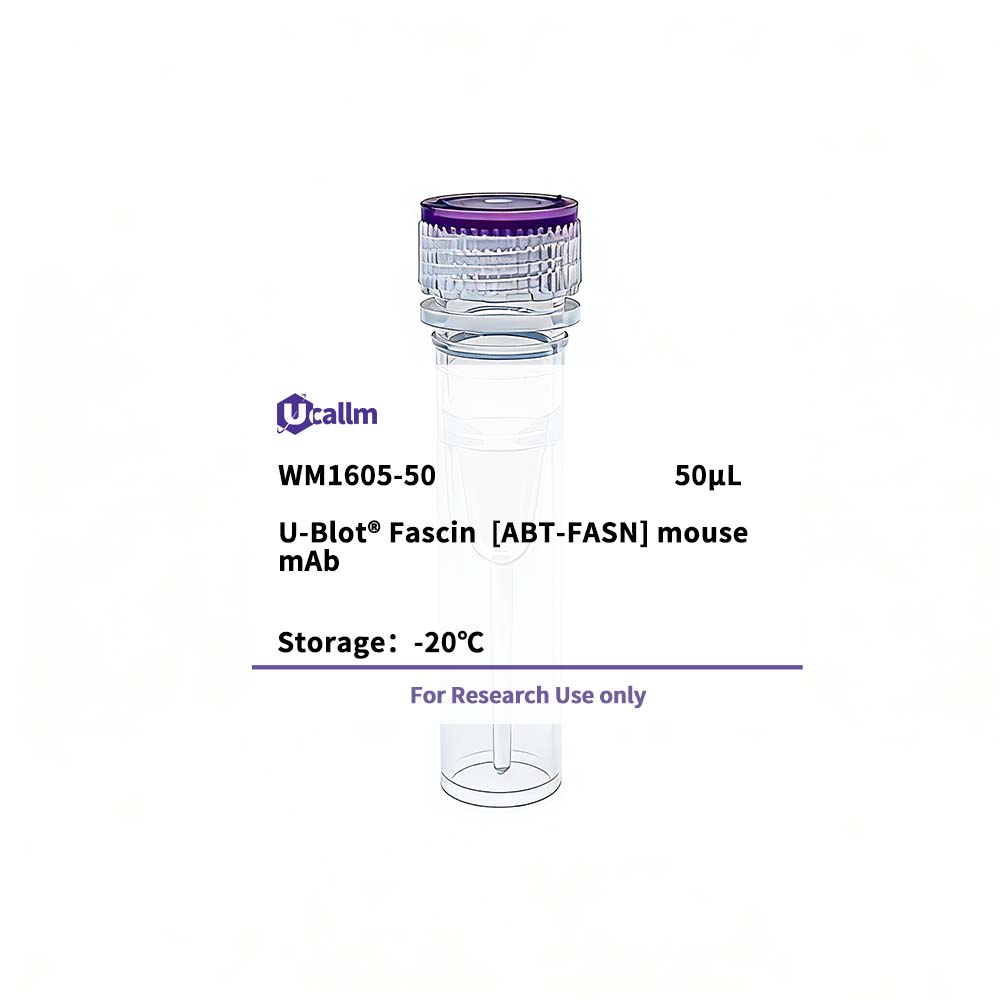
Fascin [ABT-FASN] mouse mAb

Price range: $268.00 through $328.00

SKU: WM1605-50
Enter the quantity you would like, or drag the panel to find the quantity and price that best for you
Bulk QuoteAuthorize OEM & ODM

Product details

Background:
This gene encodes a member of the fascin family of actin-binding proteins. Fascin proteins organize F-actin into parallel bundles, and are required for the formation of actin-based cellular protrusions. The encoded protein plays a critical role in cell migration, motility, adhesion and cellular interactions. Expression of this gene is known to be regulated by several microRNAs, and overexpression of this gene may play a role in the metastasis of multiple types of cancer by increasing cell motility. Expression of this gene is also a marker for Reed-Sternberg cells in Hodgkin's lymphoma. A pseudogene of this gene is located on the long arm of chromosome 15. [provided by RefSeq, Sep 2011],


Specifications

Size50μL/100μL
TargetFascin
ReactivityHuman, Mouse, Rat
ApplicationsIHC, ELISA
MW(Calculated)55kD
MW(Observed)55kD
Host SpeciesMouse
IsotypeIgG1,Kappa
Conjugate/ModificationUnmodified
Recommended Dilution RatioIHC 1:200-400; ELISA 1:500-5000 / Note: For IHC, we suggest antigen retrieval with TE buffer pH 9.0 (Cat#WT1004)
FormulationPBS, 50% glycerol, 0.05% Proclin 300, 0.05%BSA
PurificationThe antibody was affinity-purified from ascites by affinity-chromatography using specific immunogen.
Storage-15°C to -25°C/1 year(Do not lower than -25°C)
Concentration
ClonalityMonoclonal
Clone NumberRMM-FASN
ImmunogenSynthesized peptide derived from human Fascin AA range: 250-350
SpecificityThe antibody can specifically recognize human Fascin protein.
Gene NameFSCN1 FAN1 HSN SNL
Protein NameFascin (55 kDa actin-bundling protein) (Singed-like protein) (p55)
Other Name
SpeciesHuman
Gene ID6624
UniprotQ16658,
Species.1Mouse
Gene ID.114086
Uniprot.1Q61553,
Species.2Rat
Gene ID.2683788
Uniprot.2P85845
Cellular LocalizationCytoplasmic
Tissue ExpressionUbiquitous.
Signaling_pathwayHuman Diseases >> Cancer: overview >> MicroRNAs in cancer
Research Areas>>MicroRNAs in cancer
FunctionDisease:Marks and mediates breast cancer metastasis to the lungs. FSCN1 is not functionally validated but achieves the highest statistical significance (P less than 0.000001). Those subjects expressing the lung metastasis signature have a significantly poorer lung metastasis-free survival, but not bone metastasis-free survival, compared to subjects without the signature.,Function:Organizes filamentous actin into bundles with a minimum of 4.1:1 actin/fascin ratio. Probably involved in the assembly of actin filament bundles present in microspikes, membrane ruffles, and stress fibers.,PTM:Phosphorylation on Ser-39 inhibits the actin-binding ability of fascin.,similarity:Belongs to the fascin family.,subunit:Associates with beta-catenin.,tissue specificity:Ubiquitous.,
Please login to post questions
Back to Top
Product has been added to your cart
