SKU: WM0190 Categories: ,

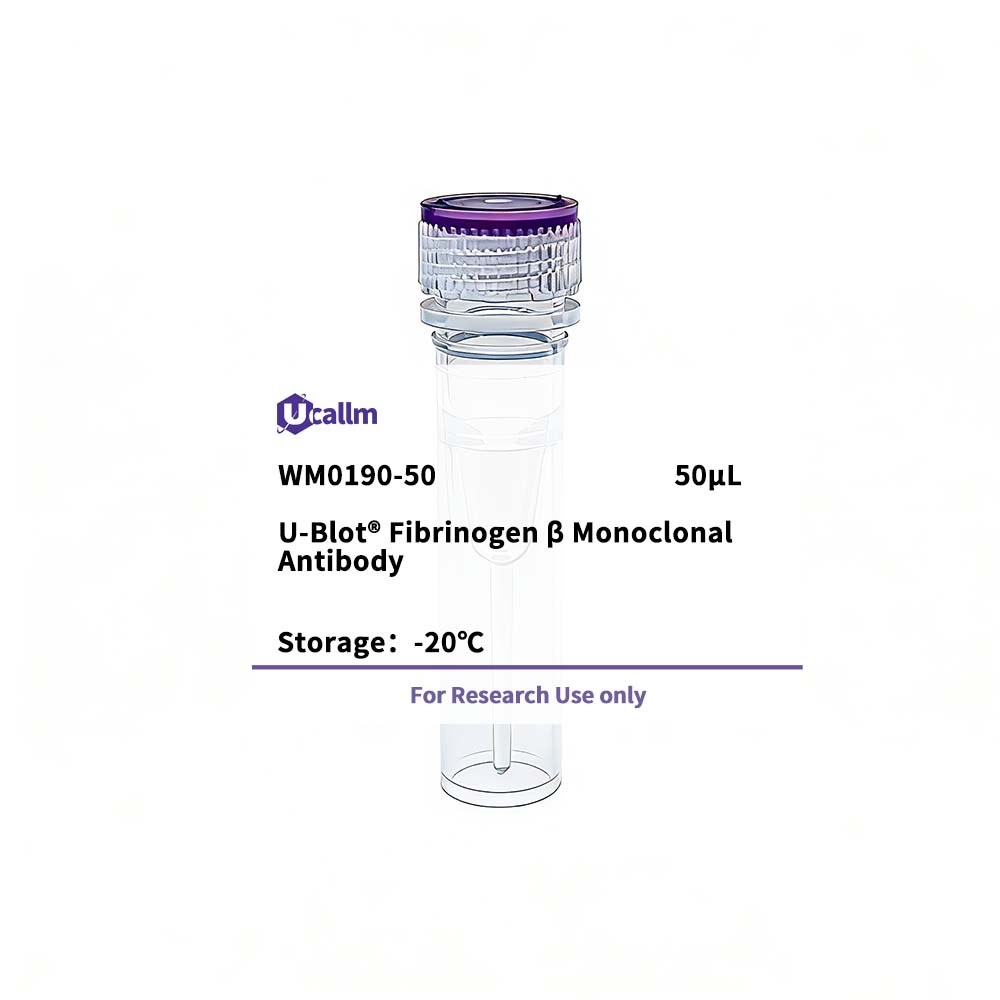
Fibrinogen β Monoclonal Antibody

Price range: $268.00 through $328.00

SKU: WM0190-50
Enter the quantity you would like, or drag the panel to find the quantity and price that best for you
Bulk QuoteAuthorize OEM & ODM

Product details

Background:
The protein encoded by this gene is the beta component of fibrinogen, a blood-borne glycoprotein comprised of three pairs of nonidentical polypeptide chains. Following vascular injury, fibrinogen is cleaved by thrombin to form fibrin which is the most abundant component of blood clots. In addition, various cleavage products of fibrinogen and fibrin regulate cell adhesion and spreading, display vasoconstrictor and chemotactic activities, and are mitogens for several cell types. Mutations in this gene lead to several disorders, including afibrinogenemia, dysfibrinogenemia, hypodysfibrinogenemia and thrombotic tendency. Alternatively spliced transcript variants encoding different isoforms have been found for this gene. [provided by RefSeq, Jun 2014],

Specifications

Size50μL/100μL
TargetFibrinogen β
ReactivityHuman
ApplicationsWB, ELISA
MW(Calculated)56kD
MW(Observed)
Host SpeciesMouse
Isotype
Conjugate/ModificationUnmodified
Recommended Dilution RatioWB 1:500-1:2000; ELISA 1:10000; Not yet tested in other applications.
FormulationLiquid in PBS containing 50% glycerol, 0.5% BSA and 0.02% sodium azide.
PurificationAffinity purification
Storage-15°C to -25°C/1 year(Do not lower than -25°C)
Concentration
ClonalityMonoclonal
Clone Number11H8
ImmunogenPurified recombinant fragment of human Fibrinogen β (aa30-300) expressed in E. Coli.
SpecificityFibrinogen β Monoclonal Antibody detects endogenous levels of Fibrinogen β protein.
Gene NameFGB
Protein NameFibrinogen beta chain
Other NameFGB; / Fibrinogen beta chain
SpeciesHuman
Gene ID2244
UniprotP02675,
Species.1Mouse
Gene ID.1
Uniprot.1Q8K0E8
Species.2
Gene ID.2
Uniprot.2
Cellular LocalizationSecreted .
Tissue ExpressionDetected in blood plasma (at protein level).
Signaling_pathwayOrganismal Systems >> Immune system >> Complement and coagulation cascades;Organismal Systems >> Immune system >> Platelet activation;Organismal Systems >> Immune system >> Neutrophil extracellular trap formation
Research Areas>>Complement and coagulation cascades; / >>Platelet activation; / >>Neutrophil extracellular trap formation; / >>Coronavirus disease - COVID-19
FunctionDisease:Defects in FGB are a cause of congenital afibrinogenemia [MIM:202400]. This rare autosomal recessive disorder is characterized by bleeding that varies from mild to severe and by complete absence or extremely low levels of plasma and platelet fibrinogen.,Disease:Defects in FGB are a cause of thrombophilia.,Domain:A long coiled coil structure formed by 3 polypeptide chains connects the central nodule to the C-terminal domains (distal nodules). The long C-terminal ends of the alpha chains fold back, contributing a fourth strand to the coiled coil structure.,Function:Fibrinogen has a double Function: yielding monomers that polymerize into fibrin and acting as a cofactor in platelet aggregation.,online information:Fibrinogen entry,online information:The Singapore human mutation and polymorphism database,PTM:Conversion of fibrinogen to fibrin is triggered by thrombin, which cleaves fibrinopeptides A and B from alpha and beta chains, and thus exposes the N-terminal polymerization sites responsible for the formation of the soft clot. The soft clot is converted into the hard clot by factor XIIIA which catalyzes the epsilon-(gamma-glutamyl)lysine cross-linking between gamma chains (stronger) and between alpha chains (weaker) of different monomers.,similarity:Contains 1 fibrinogen C-terminal domain.,subunit:Heterohexamer; disulfide linked. Contains 2 sets of 3 non-identical chains (alpha, beta and gamma). The 2 heterotrimers are in head to head conformation with the N-termini in a small central domain.,
Please login to post questions
Back to Top
Product has been added to your cart
