SKU: WR4967 Categories: ,

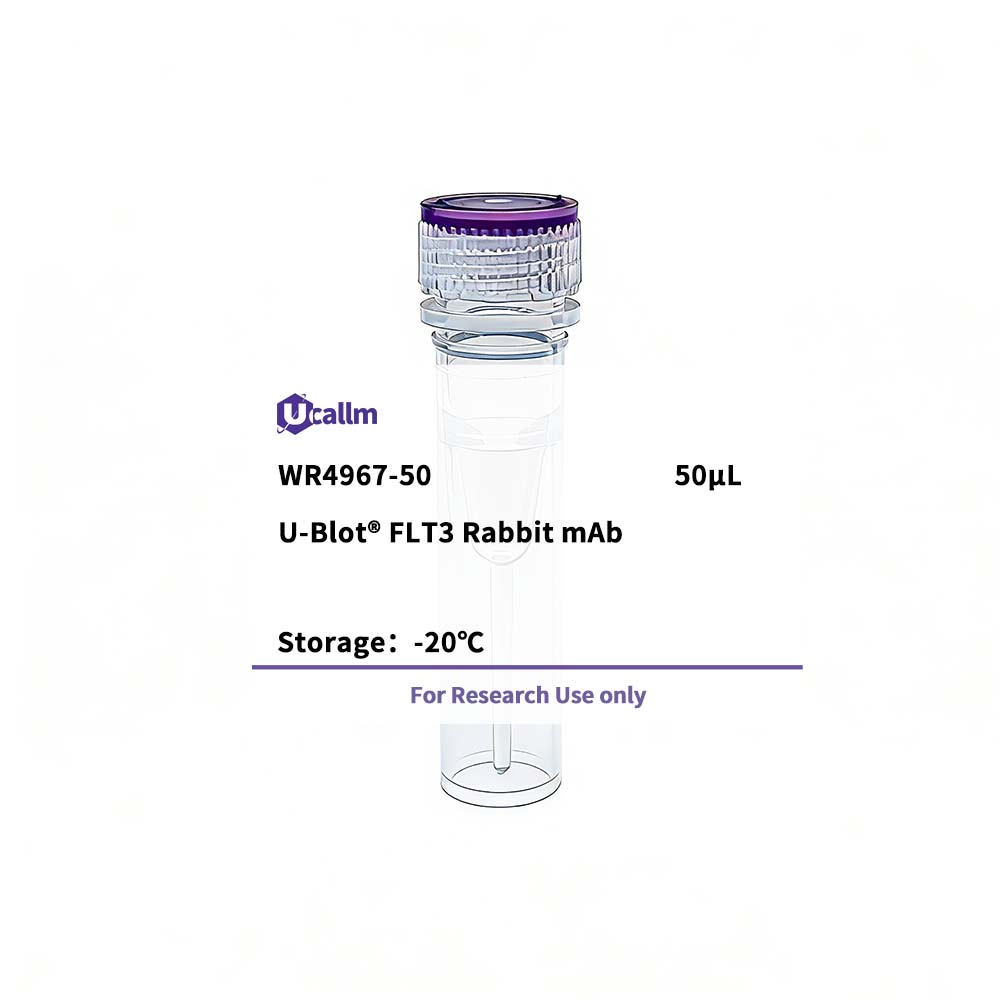
U-Blot® FLT3 Rabbit mAb

Price range: $268.00 through $328.00

SKU: WR4967-50
Enter the quantity you would like, or drag the panel to find the quantity and price that best for you
Bulk QuoteAuthorize OEM & ODM

Product details

Background:This gene encodes a class III receptor tyrosine kinase that regulates hematopoiesis. This receptor is activated by binding of the fms-related tyrosine kinase 3 ligand to the extracellular domain, which induces homodimer formation in the plasma membrane leading to autophosphorylation of the receptor. The activated receptor kinase subsequently phosphorylates and activates multiple cytoplasmic effector molecules in pathways involved in apoptosis, proliferation, and differentiation of hematopoietic cells in bone marrow. Mutations that result in the constitutive activation of this receptor result in acute myeloid leukemia and acute lymphoblastic leukemia. [provided by RefSeq, Jan 2015],


Specifications

Size50μL/100μL
TargetFlt3
ReactivityHuman, Mouse
ApplicationsWB, IHC, IF, IP, ELISA
MW(Calculated)113kD
MW(Observed)160kD
Host SpeciesRabbit
IsotypeIgG,Kappa
Conjugate/ModificationUnmodified
Recommended Dilution RatioIHC 1:200-1:1000; WB 1:2000-1:10000; IF 1:200-1:1000; ELISA 1:5000-1:20000; IP 1:50-1:200; / Note: For IHC, we suggest antigen retrieval with TE buffer pH 9.0 (Cat#WT1004)
FormulationPBS, 50% glycerol, 0.05% Proclin 300, 0.05%BSA
PurificationRecombinant Antibody expressed in animal component-free (ACF) media, purified via Protein A affinity chromatography.
Storage-15°C to -25°C/1 year(Do not lower than -25°C)
Concentration
ClonalityMonoclonal
Clone NumberRM1191R
ImmunogenThe specific immunogen used to produce this antibody is proprietary information.
SpecificityEndogenous
Gene NameFLT3
Protein NameReceptor-type tyrosine-protein kinase FLT3
Other NameFLT3; / CD135; / FLK2; / STK1; / Receptor-type tyrosine-protein kinase FLT3; / FL cytokine receptor; / Fetal liver kinase-2; / FLK-2; / Fms-like tyrosine kinase 3; / FLT-3; / Stem cell tyrosine kinase 1; / STK-1; / CD antigen CD135
SpeciesHuman
Gene ID2322
UniprotP36888,
Species.1Mouse
Gene ID.114255
Uniprot.1Q00342
Species.2
Gene ID.2
Uniprot.2
Cellular LocalizationMembrane; Single-pass type I membrane protein. Endoplasmic reticulum lumen. Constitutively activated mutant forms with internal tandem duplications are less efficiently transported to the cell surface and a significant proportion is retained in an immature form in the endoplasmic reticulum lumen. The activated kinase is rapidly targeted for degradation.
Tissue ExpressionDetected in bone marrow, in hematopoietic stem cells, in myeloid progenitor cells and in granulocyte/macrophage progenitor cells (at protein level). Detected in bone marrow, liver, thymus, spleen and lymph node, and at low levels in kidney and pancreas. Highly expressed in T-cell leukemia.
Signaling_pathwayOrganismal Systems >> Immune system >> Hematopoietic cell lineage;Human Diseases >> Cancer: overview >> Pathways in cancer;Human Diseases >> Cancer: overview >> Transcriptional misregulation in cancer;Human Diseases >> Cancer: overview >> Central carbon metabolism in cancer;Human Diseases >> Cancer: specific types >> Acute myeloid leukemia;Environmental Information Processing >> Signal transduction >> MAPK signaling pathway;Environmental Information Processing >> Signal transduction >> Ras signaling pathway;Environmental Information Processing >> Signal transduction >> PI3K-Akt signaling pathway
Research Areas>>MAPK signaling pathway; / >>Ras signaling pathway; / >>PI3K-Akt signaling pathway; / >>Hematopoietic cell lineage; / >>Pathways in cancer; / >>Transcriptional misregulation in cancer; / >>Acute myeloid leukemia; / >>Central carbon metabolism in cancer
FunctionCatalytic activity:ATP + a [protein]-L-tyrosine = ADP + a [protein]-L-tyrosine phosphate.,Function:Receptor for the FL cytokine. Has a tyrosine-protein kinase activity.,similarity:Belongs to the protein kinase superfamily. Tyr protein kinase family.,similarity:Belongs to the protein kinase superfamily. Tyr protein kinase family. CSF-1/PDGF receptor subfamily.,similarity:Contains 1 Ig-like C2-type (immunoglobulin-like) domain.,similarity:Contains 1 protein kinase domain.,subunit:Interacts with FIZ1 following ligand activation.,tissue specificity:Bone marrow cells.,
Please login to post questions
Back to Top
Product has been added to your cart