

Fractalkine Polyclonal Antibody
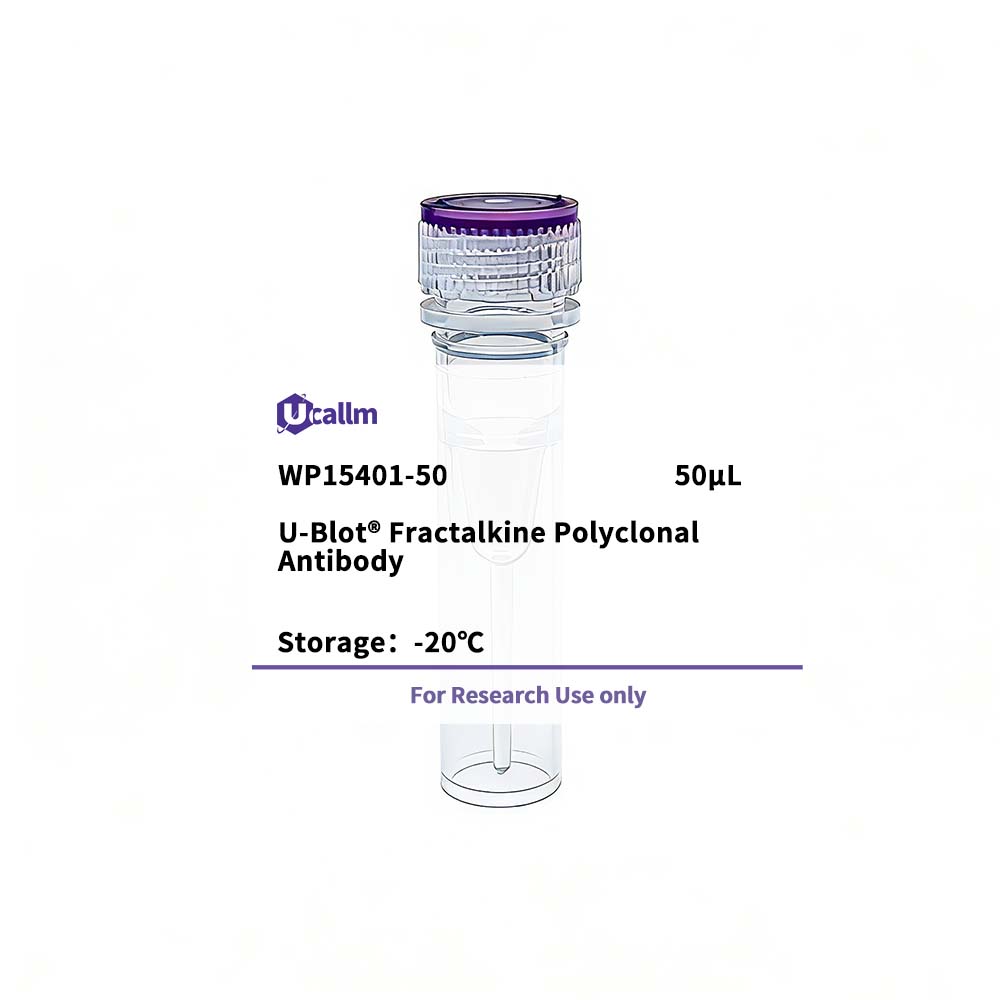
Ucallm_WP15401-50
Price range: $268.00 through $328.00
Product details
Background:
function:The soluble form is chemotactic for T-cells and monocytes, but not for neutrophils. The membrane-bound form promotes adhesion of those leukocytes to endothelial cells. May play a role in regulating leukocyte adhesion and migration processes at the endothelium. Binds to CX3CR1., induction:By TNF and IL-1 in pulmonary endothelial cells and umbilical vein endothelial cells., online information:CX3CL1 entry, PTM:A soluble short 95 kDa form may be released by proteolytic cleavage from the long membrane-anchored form., similarity:Belongs to the intercrine delta family., subunit:Monomer., tissue specificity:Small intestine, colon, testis, prostate, heart, brain, lung, skeletal muscle, kidney and pancreas.,
Specifications
| Size | 50μL/100μL |
| Target | Fractalkine |
| Reactivity | Human, Mouse, Rat |
| Applications | WB, IHC, IF, ELISA |
| MW(Calculated) | |
| MW(Observed) | 42kD |
| Host Species | Rabbit |
| Isotype | IgG |
| Conjugate/Modification | Unmodified |
| Recommended Dilution Ratio | WB 1:500-1:2000; IHC: 1:100-1:300; ELISA 1:20000; IF 1:50-200 / Note: For IHC, we suggest antigen retrieval with TE buffer pH 9.0 (Cat#WT1004) |
| Formulation | Liquid in PBS containing 50% glycerol, 0.5% BSA and 0.02% sodium azide. |
| Purification | The antibody was affinity-purified from rabbit antiserum by affinity-chromatography using epitope-specific immunogen. |
| Storage | -15°C to -25°C/1 year(Do not lower than -25°C) |
| Concentration | 1 mg/ml |
| Clonality | Polyclonal |
| Clone Number | |
| Immunogen | The antiserum was produced against synthesized peptide derived from the Internal region of human CX3CL1. AA range:231-280 |
| Specificity | Fractalkine Polyclonal Antibody detects endogenous levels of Fractalkine protein. |
| Gene Name | CX3CL1 |
| Protein Name | Fractalkine |
| Other Name | CX3CL1; / FKN; / NTT; / SCYD1; / A-152E5.2; / Fractalkine; / C-X3-C motif chemokine 1; / CX3C membrane-anchored chemokine; / Neurotactin; / Small-inducible cytokine D1 |
| Species | Human |
| Gene ID | 6376 |
| Uniprot | P78423, |
| Species.1 | Mouse |
| Gene ID.1 | |
| Uniprot.1 | O35188 |
| Species.2 | |
| Gene ID.2 | |
| Uniprot.2 | |
| Cellular Localization | Cell membrane; Single-pass type I membrane protein .; [Processed fractalkine]: Secreted . |
| Tissue Expression | Expressed in the seminal plasma, endometrial fluid and follicular fluid (at protein level). Small intestine, colon, testis, prostate, heart, brain, lung, skeletal muscle, kidney and pancreas. Most abundant in the brain and heart. |
| Signaling_pathway | Organismal Systems >> Immune system >> Chemokine signaling pathway;Environmental Information Processing >> Signal transduction >> TNF signaling pathway;Environmental Information Processing >> Signaling molecules and interaction >> Cytokine-cytokine receptor interaction;Environmental Information Processing >> Signaling molecules and interaction >> Viral protein interaction with cytokine and cytokine receptor |
| Research Areas | >>Cytokine-cytokine receptor interaction; / >>Viral protein interaction with cytokine and cytokine receptor; / >>Chemokine signaling pathway; / >>TNF signaling pathway; / >>Human cytomegalovirus infection |
| Function | Function:The soluble form is chemotactic for T-cells and monocytes, but not for neutrophils. The membrane-bound form promotes adhesion of those leukocytes to endothelial cells. May play a role in regulating leukocyte adhesion and migration processes at the endothelium. Binds to CX3CR1.,induction:By TNF and IL-1 in pulmonary endothelial cells and umbilical vein endothelial cells.,online information:CX3CL1 entry,PTM:A soluble short 95 kDa form may be released by proteolytic cleavage from the long membrane-anchored form.,similarity:Belongs to the intercrine delta family.,subunit:Monomer.,tissue specificity:Small intestine, colon, testis, prostate, heart, brain, lung, skeletal muscle, kidney and pancreas., |
Please login to post questions
Related products




