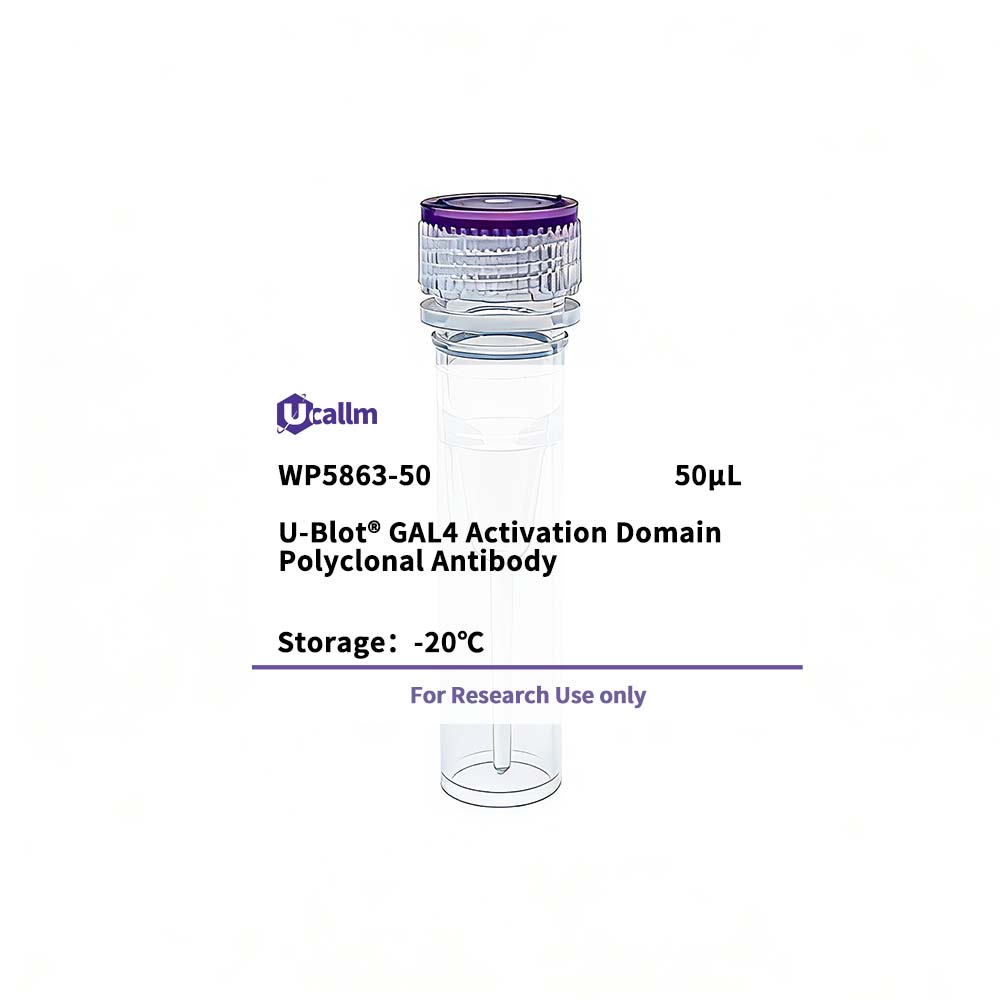
SKU: WP5863 Categories: ,

GAL4 Activation Domain Polyclonal Antibody

Price range: $268.00 through $328.00

SKU: WP5863-100
Enter the quantity you would like, or drag the panel to find the quantity and price that best for you
Bulk QuoteAuthorize OEM & ODM

Product details

Background:

The GAL4 protein of Saccharomyces cerevisiae is one of the most thoroughly characterized transcriptional activators. Since the N-terminal 147 amino acid residues of GAL4 are sufficient to mediate specific and strong binding to DNA, but are incapable of efficient transcriptional activation , this protein fragment has frequently been used to confer specific DNA binding in experiments examining transcriptional activation functions of heterologous proteins. This approach is facilitated by the finding that higher eukaryotes lack endogenous proteins that enhance transcription from the consensus GAL4-binding site. Fusions between GAL4 (aa 1-147) and activating domains from a variety of transcriptional regulatory proteins can activate transcription in yeast, plant, insects and mammalian cells. A unique “two-hybrid” system has been developed using GAL4 fusions in yeast to identify specific protein-protein interactions.


Specifications

Size50μL/100μL
TargetGAL4 Activation Domain
Reactivity
ApplicationsWB
MW(Calculated)
MW(Observed)
Host SpeciesRabbit
IsotypeIgG
Conjugate/ModificationUnmodified
Recommended Dilution RatioWB 1:10000-50000
FormulationPBS, pH 7.4, containing 0.5%BSA, 0.02% sodium azide as Preservative and 50% Glycerol.
PurificationThe antibody was affinity-purified from rabbit antiserum by affinity-chromatography using epitope-specific immunogen.
Storage-15°C to -25°C/1 year(Do not lower than -25°C)
Concentration
ClonalityPolyclonal
Clone Number
ImmunogenRecombinant Protein of GAL4 Activation Domain
SpecificityThe antibody detects endogenous GAL4 Activation Domain protein.
Gene Name
Protein Name
Other NameYM3410
Species
Gene ID
Uniprot
Species.1
Gene ID.1
Uniprot.1
Species.2
Gene ID.2
Uniprot.2
Cellular Localization
Tissue Expression
Signaling_pathway
Research Areas
Function
Please login to post questions
Back to Top
Product has been added to your cart

