SKU: WP12413 Categories: ,

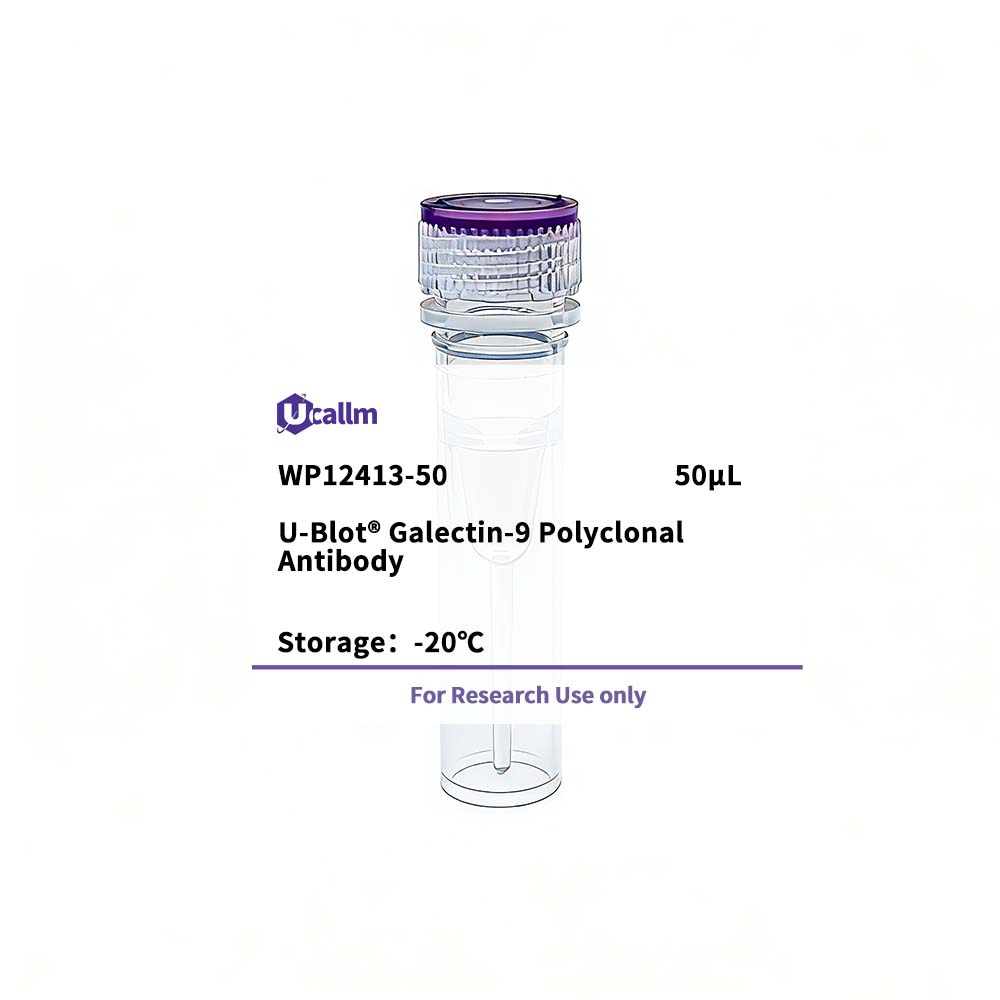
Galectin-9 Polyclonal Antibody

Price range: $268.00 through $328.00

SKU: WP12413-100
Enter the quantity you would like, or drag the panel to find the quantity and price that best for you
Bulk QuoteAuthorize OEM & ODM

Product details

Background:

The galectins are a family of beta-galactoside-binding proteins implicated in modulating cell-cell and cell-matrix interactions. The protein encoded by this gene is an S-type lectin. It is overexpressed in Hodgkin's disease tissue and might participate in the interaction between the H&RS cells with their surrounding cells and might thus play a role in the pathogenesis of this disease and/or its associated immunodeficiency. Multiple alternatively spliced transcript variants have been found for this gene. [provided by RefSeq, Jul 2008],

Specifications

Size50μL/100μL
TargetGalectin-9
ReactivityHuman, Mouse, Rat
ApplicationsWB, IHC, IF, ELISA
MW(Calculated)
MW(Observed)40kD
Host SpeciesRabbit
IsotypeIgG
Conjugate/ModificationUnmodified
Recommended Dilution RatioWB 1:500-1:2000; IHC 1:100-1:300; IF 1:200-1:1000; ELISA 1:10000; Not yet tested in other applications. / Note: For IHC, we suggest antigen retrieval with TE buffer pH 9.0 (Cat#WT1004)
FormulationLiquid in PBS containing 50% glycerol, 0.5% BSA and 0.02% sodium azide.
PurificationThe antibody was affinity-purified from rabbit antiserum by affinity-chromatography using epitope-specific immunogen.
Storage-15°C to -25°C/1 year(Do not lower than -25°C)
Concentration1 mg/ml
ClonalityPolyclonal
Clone Number
ImmunogenThe antiserum was produced against synthesized peptide derived from human LEG9. AA range:51-100
SpecificityGalectin-9 Polyclonal Antibody detects endogenous levels of Galectin-9 protein.
Gene NameLGALS9
Protein NameGalectin-9
Other NameLGALS9; / Galectin-9; / Gal-9; / Ecalectin; / Tumor antigen HOM-HD-21
SpeciesHuman
Gene ID3965
UniprotO00182,
Species.1Mouse
Gene ID.116859
Uniprot.1O08573,
Species.2Rat
Gene ID.225476
Uniprot.2P97840
Cellular LocalizationCytoplasm . Nucleus . Secreted . May also be secreted by a non-classical secretory pathway (By similarity). Secreted by mesenchymal stromal cells upon IFNG stimulation (PubMed:23817958). .; [Isoform 2]: Secreted .; [Isoform 3]: Secreted .
Tissue ExpressionPeripheral blood leukocytes and lymphatic tissues. Expressed in lung, liver, breast and kidney with higher levels in tumor endothelial cells than normal endothelium (at protein level) (PubMed:24333696). Expressed in trophoblast cells in decidua and placenta in pregnancy (at protein level) (PubMed:23242525, PubMed:25578313). Isoform 2 is the most abundant isoform expressed in endothelial cells (PubMed:24333696). Upon endothelial cell activation isoform 2 expression decreases while expression of isoform 3 and isoform 5 increases (PubMed:24333696). Isoform 4 decreases in pathological pregnancy (PubMed:23242525).
Signaling_pathway
Research Areas
FunctionAlternative products:Additional isoforms seem to exist,Domain:Contains two homologous but distinct carbohydrate-binding domains.,Function:Binds galactosides. Has high affinity for the Forssman pentasaccharide. May play a role in thymocyte-epithelial interactions relevant to the biology of the thymus. Inhibits cell proliferation. The isoform Short acts as an eosinophil chemoattractant. Is a ligand for HAVCR2/TIM3. Induces T-helper type 1 lymphocyte (Th1) death.,online information:Galectin-9,similarity:Contains 2 galectin domains.,subcellular location:May also be secreted by a non-classical secretory pathway.,subunit:Monomer.,tissue specificity:Peripheral blood leukocytes and lymphatic tissues. Overexpressed in Hodgkin's disease tissue.,
Please login to post questions
Back to Top
Product has been added to your cart
