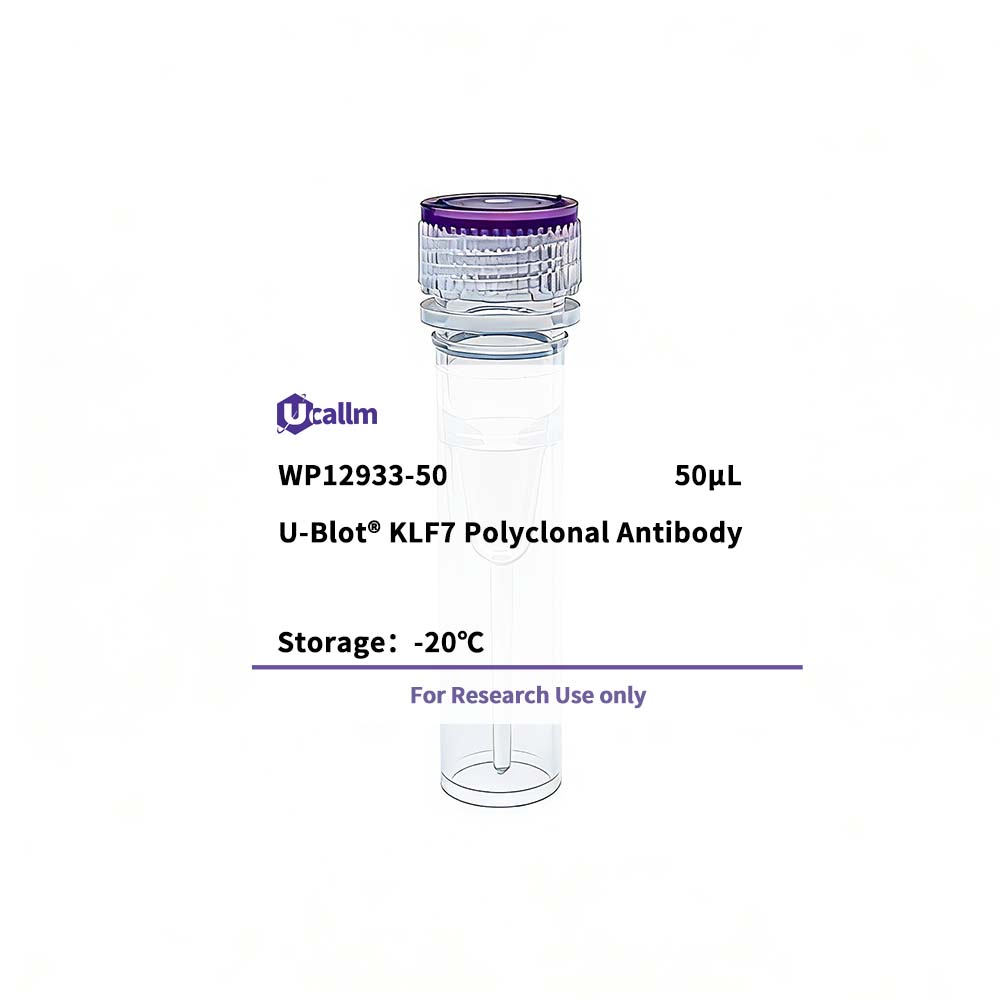
SKU: WP12933 Categories: ,

KLF7 Polyclonal Antibody

Price range: $268.00 through $328.00

SKU: WP12933-100
Enter the quantity you would like, or drag the panel to find the quantity and price that best for you
Bulk QuoteAuthorize OEM & ODM

Product details

Background:

The protein encoded by this gene is a member of the Kruppel-like transcriptional regulator family. Members in this family regulate cell proliferation, differentiation and survival and contain three C2H2 zinc fingers at the C-terminus that mediate binding to GC-rich sites. This protein may contribute to the progression of type 2 diabetes by inhibiting insulin expression and secretion in pancreatic beta-cells and by deregulating adipocytokine secretion in adipocytes. A pseudogene of this gene is located on the long arm of chromosome 3. Alternative splicing results in multiple transcript variants. [provided by RefSeq, Aug 2012],

Specifications

Size50μL/100μL
TargetKLF7
ReactivityHuman, Mouse
ApplicationsWB, IHC
MW(Calculated)
MW(Observed)41kD
Host SpeciesRabbit
IsotypeIgG
Conjugate/ModificationUnmodified
Recommended Dilution RatioWB 1:500-2000; IHC 1:50-300 / Note: For IHC, we suggest antigen retrieval with TE buffer pH 9.0 (Cat#WT1004)
FormulationLiquid in PBS containing 50% glycerol, 0.5% BSA and 0.02% sodium azide.
PurificationThe antibody was affinity-purified from rabbit antiserum by affinity-chromatography using epitope-specific immunogen.
Storage-15°C to -25°C/1 year(Do not lower than -25°C)
Concentration1 mg/ml
ClonalityPolyclonal
Clone Number
ImmunogenThe antiserum was produced against synthesized peptide derived from human KLF7. AA range:171-220
SpecificityKLF7 Polyclonal Antibody detects endogenous levels of KLF7 protein.
Gene NameKLF7
Protein NameKrueppel-like factor 7
Other NameKLF7; / UKLF; / Krueppel-like factor 7; / Ubiquitous krueppel-like factor
SpeciesHuman
Gene ID8609
UniprotO75840,
Species.1Mouse
Gene ID.193691
Uniprot.1Q99JB0
Species.2
Gene ID.2
Uniprot.2
Cellular LocalizationNucleus .
Tissue ExpressionWidely expressed.
Signaling_pathway
Research Areas
FunctionDomain:The acidic N-terminal part may favor interaction with the basic domain of transcription factors.,Function:Transcriptional activator. Binds in vitro to the CACCC motif of the beta-globin promoter and to the SP1 recognition sequence.,similarity:Belongs to the krueppel C2H2-type zinc-finger protein family.,similarity:Contains 3 C2H2-type zinc fingers.,tissue specificity:Ubiquitous and highly expressed in brain and spinal cord in the adult, and in kidney and brain in the embryo.,
Please login to post questions
Back to Top
Product has been added to your cart
