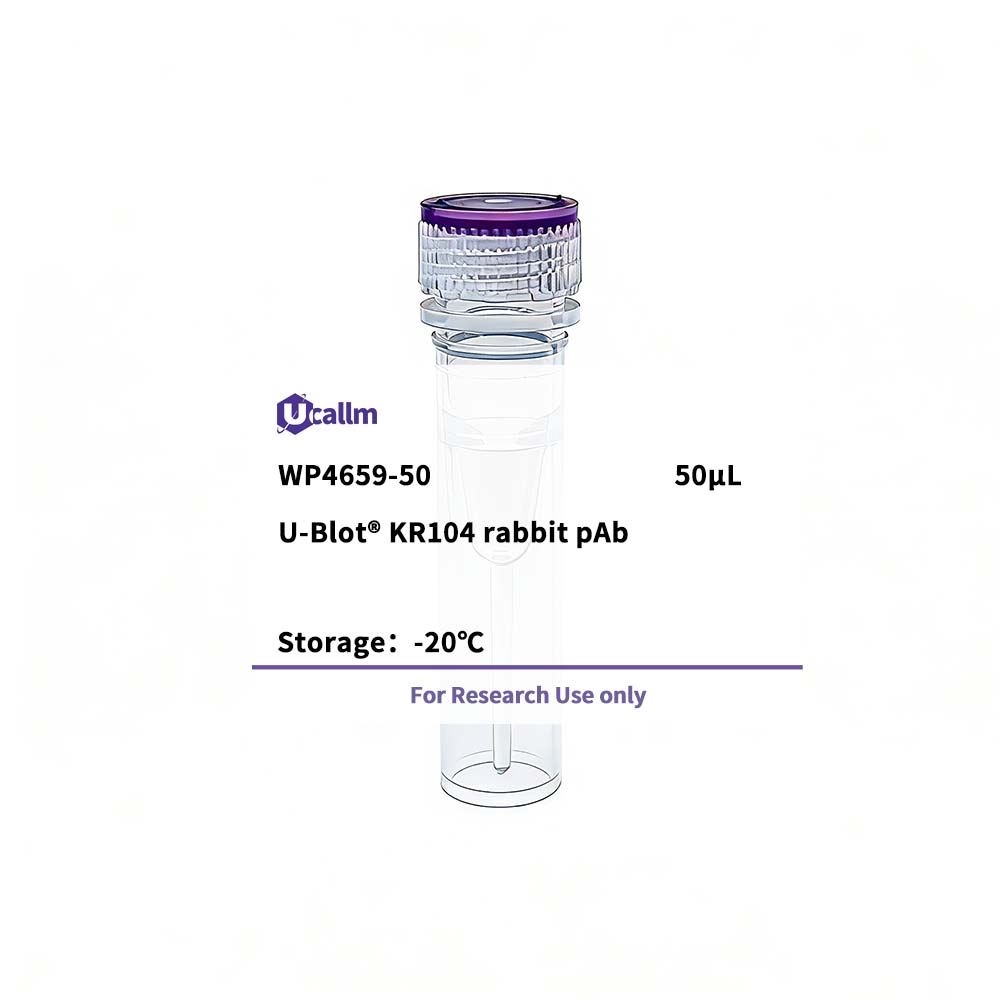
SKU: WP4659 Categories: ,

KR104 rabbit pAb

Price range: $268.00 through $328.00

SKU: WP4659-100
Enter the quantity you would like, or drag the panel to find the quantity and price that best for you
Bulk QuoteAuthorize OEM & ODM

Product details

Background:

This is an intronless gene located in a cluster of related genes on the q arm of chromosome 21. The proteins encoded by these genes form disulfide bonds with cysteine residues in hair keratins, thereby contributing to the structure and stability of hair fibers. [provided by RefSeq, Apr 2014],

Specifications

Size50μL/100μL
TargetKR104
ReactivityHuman
ApplicationsWB
MW(Calculated)44kD
MW(Observed)
Host SpeciesRabbit
IsotypeIgG
Conjugate/ModificationUnmodified
Recommended Dilution RatioWB 1:500-2000
FormulationLiquid in PBS containing 50% glycerol, 0.5% BSA and 0.02% sodium azide.
PurificationThe antibody was affinity-purified from rabbit antiserum by affinity-chromatography using epitope-specific immunogen.
Storage-15°C to -25°C/1 year(Do not lower than -25°C)
Concentration1 mg/ml
ClonalityPolyclonal
Clone Number
ImmunogenSynthesized peptide derived from human KR104 AA range: 349-399
SpecificityThis antibody detects endogenous levels of KR104 at Human
Gene NameKRTAP10-4 KAP10.4 KAP18-4 KRTAP10.4 KRTAP18-4 KRTAP18.4
Protein NameKR104
Other Name
SpeciesHuman
Gene ID386672
UniprotP60372
Species.1
Gene ID.1
Uniprot.1
Species.2
Gene ID.2
Uniprot.2
Cellular Localizationkeratin filament,
Tissue ExpressionRestricted to hair root, not detected in any other tissues.
Signaling_pathway
Research Areas
FunctionFunction:In the hair cortex, hair keratin intermediate filaments are embedded in an interfilamentous matrix, consisting of hair keratin-associated proteins (KRTAP), which are essential for the formation of a rigid and resistant hair shaft through their extensive disulfide bond cross-linking with abundant cysteine residues of hair keratins. The matrix proteins include the high-sulfur and high-glycine-tyrosine keratins.,similarity:Belongs to the KRTAP type 10 family.,subunit:Interacts with hair keratins.,tissue specificity:Restricted to hair root, not detected in any other tissues.,
Please login to post questions
Back to Top
Product has been added to your cart

