


LIGHT Polyclonal Antibody
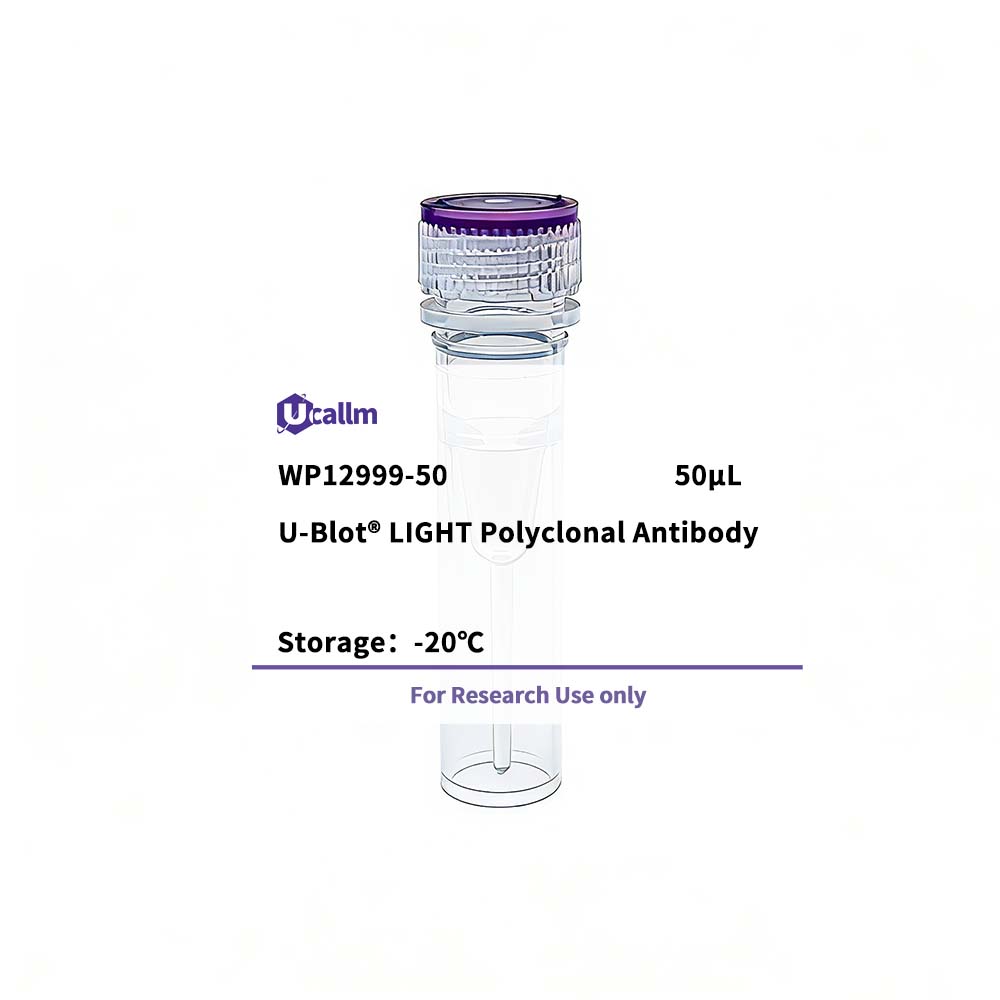
Ucallm_WP12999-50
Price range: $268.00 through $328.00
Product details
Background:
The protein encoded by this gene is a member of the tumor necrosis factor (TNF) ligand family. This protein is a ligand for TNFRSF14, which is a member of the tumor necrosis factor receptor superfamily, and which is also known as a herpesvirus entry mediator (HVEM). This protein may function as a costimulatory factor for the activation of lymphoid cells and as a deterrent to infection by herpesvirus. This protein has been shown to stimulate the proliferation of T cells, and trigger apoptosis of various tumor cells. This protein is also reported to prevent tumor necrosis factor alpha mediated apoptosis in primary hepatocyte. Two alternatively spliced transcript variant encoding distinct isoforms have been reported. [provided by RefSeq, Jul 2008],
Specifications
| Size | 50μL/100μL |
| Target | LIGHT |
| Reactivity | Human, Mouse |
| Applications | WB, IHC, IF |
| MW(Calculated) | 26kD |
| MW(Observed) | |
| Host Species | Rabbit |
| Isotype | IgG |
| Conjugate/Modification | Unmodified |
| Recommended Dilution Ratio | WB 1:500-2000; IHC 1:50-300; IF 1:200-1:1000; / Note: For IHC, we suggest antigen retrieval with TE buffer pH 9.0 (Cat#WT1004) |
| Formulation | Liquid in PBS containing 50% glycerol, 0.5% BSA and 0.02% sodium azide. |
| Purification | The antibody was affinity-purified from rabbit antiserum by affinity-chromatography using epitope-specific immunogen. |
| Storage | -15°C to -25°C/1 year(Do not lower than -25°C) |
| Concentration | 1 mg/ml |
| Clonality | Polyclonal |
| Clone Number | |
| Immunogen | The antiserum was produced against synthesized peptide derived from human TNF14. AA range:51-100 |
| Specificity | LIGHT Polyclonal Antibody detects endogenous levels of LIGHT protein. |
| Gene Name | TNFSF14 |
| Protein Name | Tumor necrosis factor ligand superfamily member 14 |
| Other Name | TNFSF14; / HVEML; / LIGHT; / Tumor necrosis factor ligand superfamily member 14; / Herpes virus entry mediator ligand; / HVEM-L; / Herpesvirus entry mediator ligand; / CD antigen CD258 |
| Species | Human |
| Gene ID | 8740 |
| Uniprot | O43557, |
| Species.1 | Mouse |
| Gene ID.1 | 50930 |
| Uniprot.1 | Q9QYH9 |
| Species.2 | |
| Gene ID.2 | |
| Uniprot.2 | |
| Cellular Localization | [Tumor necrosis factor ligand superfamily member 14, membrane form]: Cell membrane; Single-pass type II membrane protein.; [Tumor necrosis factor ligand superfamily member 14, soluble form]: Secreted.; [Isoform 2]: Cytoplasm. |
| Tissue Expression | Predominantly expressed in the spleen but also found in the brain. Weakly expressed in peripheral lymphoid tissues and in heart, placenta, liver, lung, appendix, and kidney, and no expression seen in fetal tissues, endocrine glands, or nonhematopoietic tumor lines. |
| Signaling_pathway | Environmental Information Processing >> Signal transduction >> NF-kappa B signaling pathway;Environmental Information Processing >> Signaling molecules and interaction >> Cytokine-cytokine receptor interaction;Environmental Information Processing >> Signaling molecules and interaction >> Viral protein interaction with cytokine and cytokine receptor |
| Research Areas | >>Cytokine-cytokine receptor interaction; / >>Viral protein interaction with cytokine and cytokine receptor; / >>NF-kappa B signaling pathway; / >>Herpes simplex virus 1 infection |
| Function | Function:Cytokine that binds to TNFRSF3/LTBR. Binding to the decoy receptor TNFRSF6B modulates its effects. Activates NFKB, stimulates the proliferation of T-cells, and inhibits growth of the adenocarcinoma HT-29. Acts as a receptor for Herpes simplex virus.,induction:Up-regulated after T-cell activation.,PTM:N-glycosylated.,PTM:The soluble form of isoform 1 derives from the membrane form by proteolytic processing.,similarity:Belongs to the tumor necrosis factor family.,subunit:Homotrimer.,tissue specificity:Predominantly expressed in the spleen but also found in the brain. Weakly expressed in peripheral lymphoid tissues and in heart, placenta, liver, lung, appendix, and kidney, and no expression seen in fetal tissues, endocrine glands, or nonhematopoietic tumor lines., |
Please login to post questions
Related products





