

LIGO1 Polyclonal Antibody
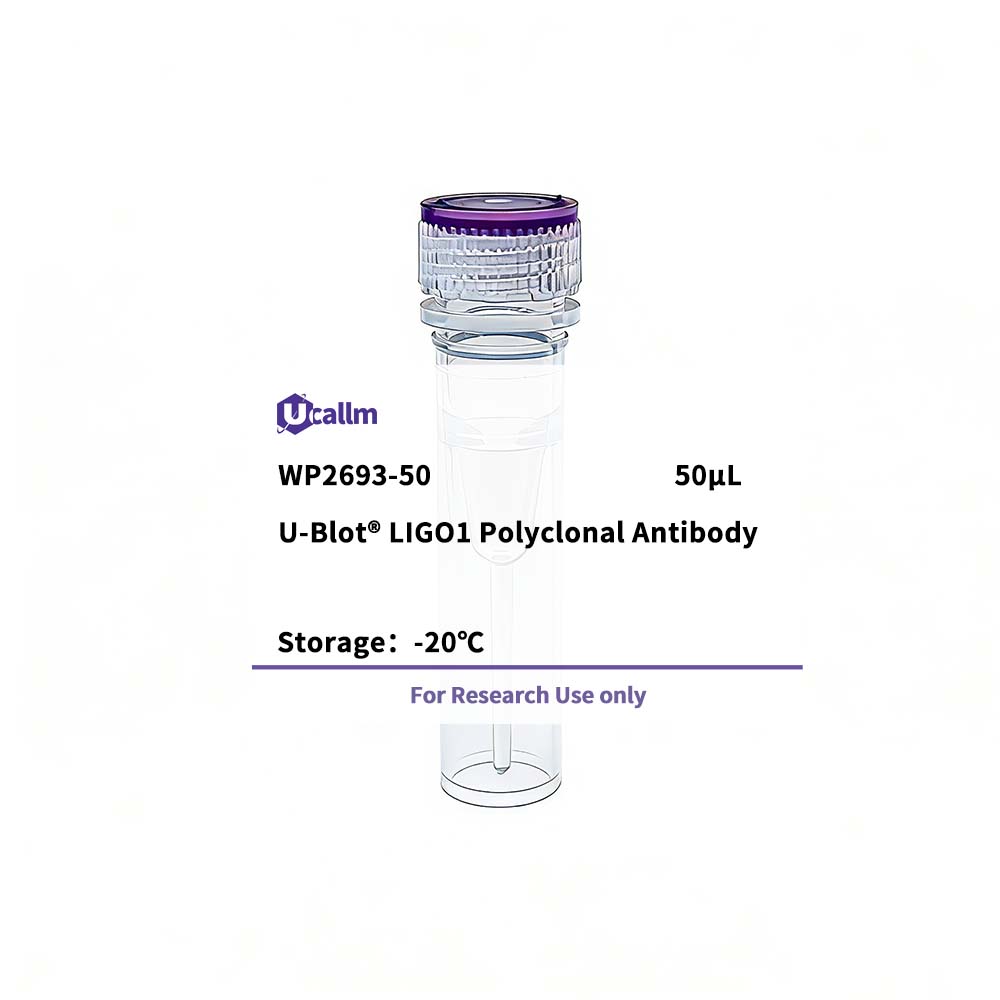
Ucallm_WP2693-50
Price range: $268.00 through $328.00
Product details
Background:
function:Functional component of the Nogo receptor signaling complex (RTN4R/NGFR) in RhoA activation responsible for some inhibition of axonal regeneration by myelin-associated factors. Is also an important negative regulator of oligodentrocyte differentiation and axonal myelination., PTM:N-glycosylated. Contains predominantly high-mannose glycans., similarity:Contains 1 Ig-like C2-type (immunoglobulin-like) domain., similarity:Contains 13 LRR (leucine-rich) repeats., subunit:Homotetramer. Forms ternary complex with RTN4R/NGFR and RTN4R/TNFRSF19., tissue specificity:Expressed exclusively in the central nervous system. Highest level in the in amygdala, hippocampus, thalamus and cerebral cortex. In the rest of the brain a basal expression seems to be always present. Up-regulated in substantia nigra neurons from Parkinson disease patients.,
Specifications
| Size | 50μL/100μL |
| Target | LIGO1 |
| Reactivity | Human, Mouse |
| Applications | WB, ELISA |
| MW(Calculated) | |
| MW(Observed) | 68kD |
| Host Species | Rabbit |
| Isotype | IgG |
| Conjugate/Modification | Unmodified |
| Recommended Dilution Ratio | WB 1:500-2000; ELISA 1:5000-20000 |
| Formulation | Liquid in PBS containing 50% glycerol,0.5% BSA and 0.02% sodium azide. |
| Purification | The antibody was affinity-purified from rabbit antiserum by affinity-chromatography using epitope-specific immunogen. |
| Storage | -15°C to -25°C/1 year(Do not lower than -25°C) |
| Concentration | 1 mg/ml |
| Clonality | Polyclonal |
| Clone Number | |
| Immunogen | Synthesized peptide derived from human protein . at AA range: 370-450 |
| Specificity | LIGO1 Polyclonal Antibody detects endogenous levels of protein. |
| Gene Name | LINGO1 LERN1 LRRN6A UNQ201/PRO227 |
| Protein Name | Leucine-rich repeat and immunoglobulin-like domain-containing nogo receptor-interacting protein 1 (Leucine-rich repeat and immunoglobilin domain-containing protein 1) (Leucine-rich repeat neuronal protein 1) (Leucine-rich repeat neuronal protein 6A) |
| Other Name | |
| Species | Human |
| Gene ID | 84894 |
| Uniprot | Q96FE5, |
| Species.1 | Mouse |
| Gene ID.1 | |
| Uniprot.1 | Q9D1T0 |
| Species.2 | |
| Gene ID.2 | |
| Uniprot.2 | |
| Cellular Localization | Cell membrane; Single-pass type I membrane protein . |
| Tissue Expression | Expressed exclusively in the central nervous system. Highest level in the in amygdala, hippocampus, thalamus and cerebral cortex. In the rest of the brain a basal expression seems to be always present. Up-regulated in substantia nigra neurons from Parkinson disease patients. |
| Signaling_pathway | |
| Research Areas | |
| Function | Function:Functional component of the Nogo receptor signaling complex (RTN4R/NGFR) in RhoA activation responsible for some inhibition of axonal regeneration by myelin-associated factors. Is also an important negative regulator of oligodentrocyte differentiation and axonal myelination.,PTM:N-glycosylated. Contains predominantly high-mannose glycans.,similarity:Contains 1 Ig-like C2-type (immunoglobulin-like) domain.,similarity:Contains 13 LRR (leucine-rich) repeats.,subunit:Homotetramer. Forms ternary complex with RTN4R/NGFR and RTN4R/TNFRSF19.,tissue specificity:Expressed exclusively in the central nervous system. Highest level in the in amygdala, hippocampus, thalamus and cerebral cortex. In the rest of the brain a basal expression seems to be always present. Up-regulated in substantia nigra neurons from Parkinson disease patients., |
Please login to post questions
Related products





