SKU: WM0299 Categories: ,

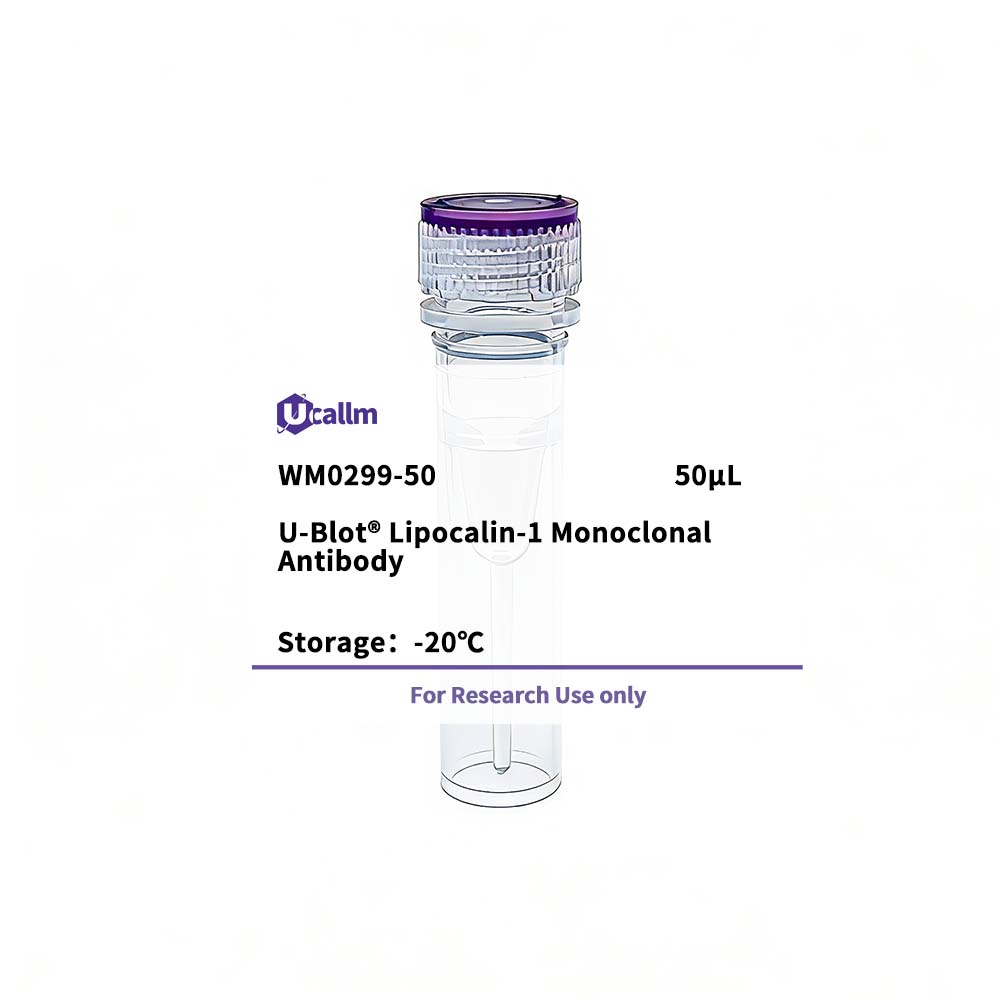
Lipocalin-1 Monoclonal Antibody

Price range: $268.00 through $328.00

SKU: WM0299-50
Enter the quantity you would like, or drag the panel to find the quantity and price that best for you
Bulk QuoteAuthorize OEM & ODM

Product details

Background:
This gene encodes a member of the lipocalin family of small secretory proteins. Lipocalins are extracellular transport proteins that bind to a variety of hydrophobic ligands. The encoded protein is the primary lipid binding protein in tears and is overproduced in response to multiple stimuli including infection and stress. The encoded protein may be a marker for chromosome aneuploidy as well as an autoantigen in Sjogren's syndrome. Alternatively spliced transcript variants encoding multiple isoforms have been observed for this gene, and two pseudogenes of this gene are also located on the long arm of chromosome 9. [provided by RefSeq, Nov 2011],

Specifications

Size50μL/100μL
TargetLipocalin-1
ReactivityHuman
ApplicationsWB, IHC, IF, ELISA
MW(Calculated)19kD
MW(Observed)
Host SpeciesMouse
Isotype
Conjugate/ModificationUnmodified
Recommended Dilution RatioWB 1:500-1:2000; IHC 1:200-1:1000; IF 1:200-1:1000; ELISA 1:10000; Not yet tested in other applications. / Note: For IHC, we suggest antigen retrieval with TE buffer pH 9.0 (Cat#WT1004)
FormulationLiquid in PBS containing 50% glycerol, 0.5% BSA and 0.02% sodium azide.
PurificationAffinity purification
Storage-15°C to -25°C/1 year(Do not lower than -25°C)
Concentration
ClonalityMonoclonal
Clone Number3E6
ImmunogenPurified recombinant fragment of Lipocalin-1 expressed in E. Coli.
SpecificityLipocalin-1 Monoclonal Antibody detects endogenous levels of Lipocalin-1 protein.
Gene NameLCN1
Protein NameLipocalin-1
Other NameLCN1; / VEGP; / Lipocalin-1; / Tear lipocalin; / Tlc; / Tear prealbumin; / TP; / Von Ebner gland protein; / VEG protein
SpeciesHuman
Gene ID3933
UniprotP31025
Species.1
Gene ID.1
Uniprot.1
Species.2
Gene ID.2
Uniprot.2
Cellular LocalizationSecreted.
Tissue ExpressionMainly expressed in lachrymal and salivary glands. Also expressed in the prostate.
Signaling_pathway
Research Areas
FunctionCaution:Could be the product of a pseudogene.,Function:Could play a role in taste reception. Could be necessary for the concentration and delivery of sapid molecules in the gustatory system. Can bind various ligands, with chemical structures ranging from lipids and retinoids to the macrocyclic antibiotic rifampicin and even to microbial siderophores. Exhibits an extremely wide ligand pocket.,Function:May bind a variety of ligands including lipids.,similarity:Belongs to the calycin superfamily. Lipocalin family.,subunit:Homodimer (By similarity). Binds to LMBR1L which may mediate its endocytosis.,tissue specificity:Mainly expressed in lachrymal and salivary glands. Also expressed in the prostate.,
Please login to post questions
Back to Top
Product has been added to your cart

