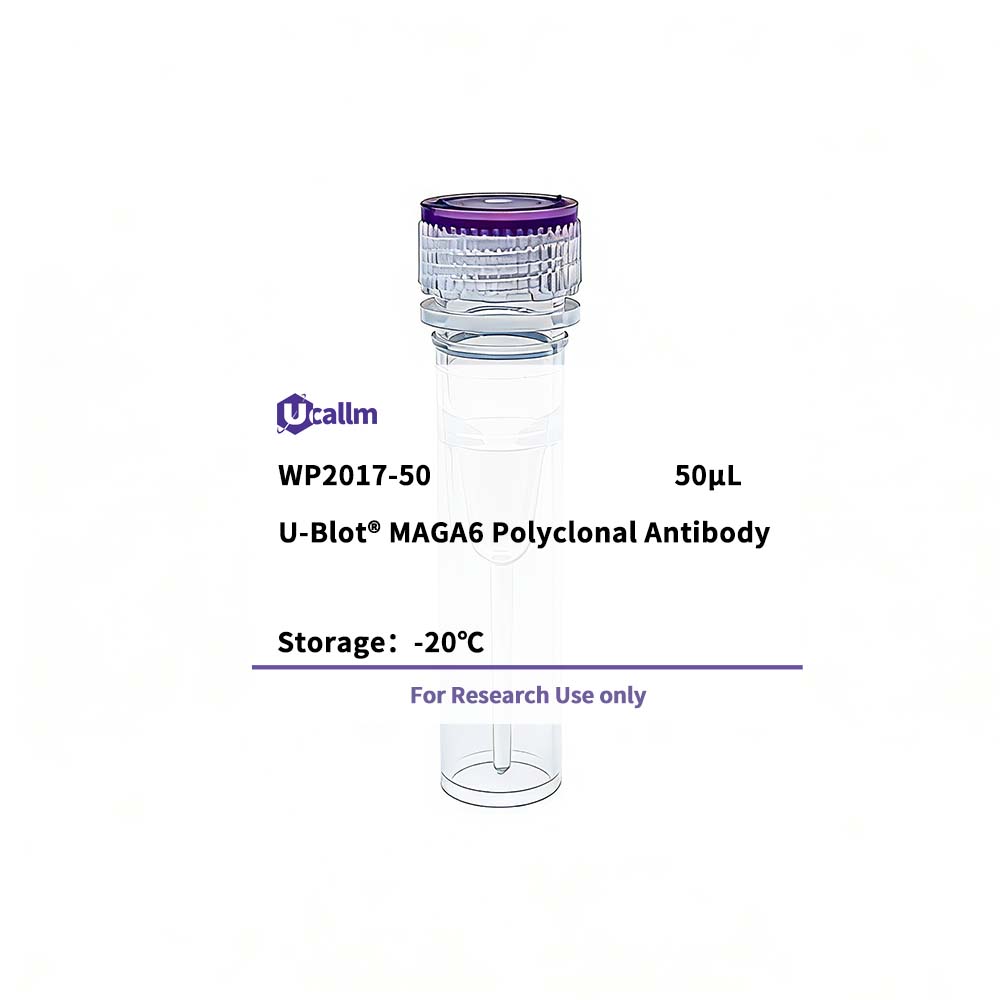
SKU: WP2017 Categories: ,

MAGA6 Polyclonal Antibody

Price range: $268.00 through $328.00

SKU: WP2017-100
Enter the quantity you would like, or drag the panel to find the quantity and price that best for you
Bulk QuoteAuthorize OEM & ODM

Product details

Background:

This gene is a member of the MAGEA gene family. The members of this family encode proteins with 50 to 80% sequence identity to each other. The promoters and first exons of the MAGEA genes show considerable variability, suggesting that the existence of this gene family enables the same function to be expressed under different transcriptional controls. The MAGEA genes are clustered at chromosomal location Xq28. They have been implicated in some hereditary disorders, such as dyskeratosis congenita. Alternative splicing results in multiple transcript variants. [provided by RefSeq, Aug 2013],

Specifications

Size50μL/100μL
TargetMAGA6
ReactivityHuman
ApplicationsWB, ELISA
MW(Calculated)
MW(Observed)34kD
Host SpeciesRabbit
IsotypeIgG
Conjugate/ModificationUnmodified
Recommended Dilution RatioWB 1:500-2000; ELISA 1:5000-20000
FormulationLiquid in PBS containing 50% glycerol,0.5% BSA and 0.02% sodium azide.
PurificationThe antibody was affinity-purified from rabbit antiserum by affinity-chromatography using epitope-specific immunogen.
Storage-15°C to -25°C/1 year(Do not lower than -25°C)
Concentration1 mg/ml
ClonalityPolyclonal
Clone Number
ImmunogenSynthesized peptide derived from human protein . at AA range: 10-90
SpecificityMAGA6 Polyclonal Antibody detects endogenous levels of protein.
Gene NameMAGEA6 MAGE6
Protein NameMelanoma-associated antigen 6 (Cancer/testis antigen 1.6) (CT1.6) (MAGE-6 antigen) (MAGE3B antigen)
Other Name
SpeciesHuman
Gene ID4105
UniprotP43360
Species.1
Gene ID.1
Uniprot.1
Species.2
Gene ID.2
Uniprot.2
Cellular Localization
Tissue ExpressionExpressed in many tumors of several types, such as melanoma, head and neck squamous cell carcinoma, lung carcinoma and breast carcinoma, but not in normal tissues except for testes.
Signaling_pathway
Research Areas
FunctionFunction:Not known, though may play a role in tumor or aspects of tumor progression.,similarity:Contains 1 MAGE domain.,tissue specificity:Expressed in many tumors of several types, such as melanoma, head and neck squamous cell carcinoma, lung carcinoma and breast carcinoma, but not in normal tissues except for testes.,
Please login to post questions
Back to Top
Product has been added to your cart
