SKU: WM1459 Categories: ,

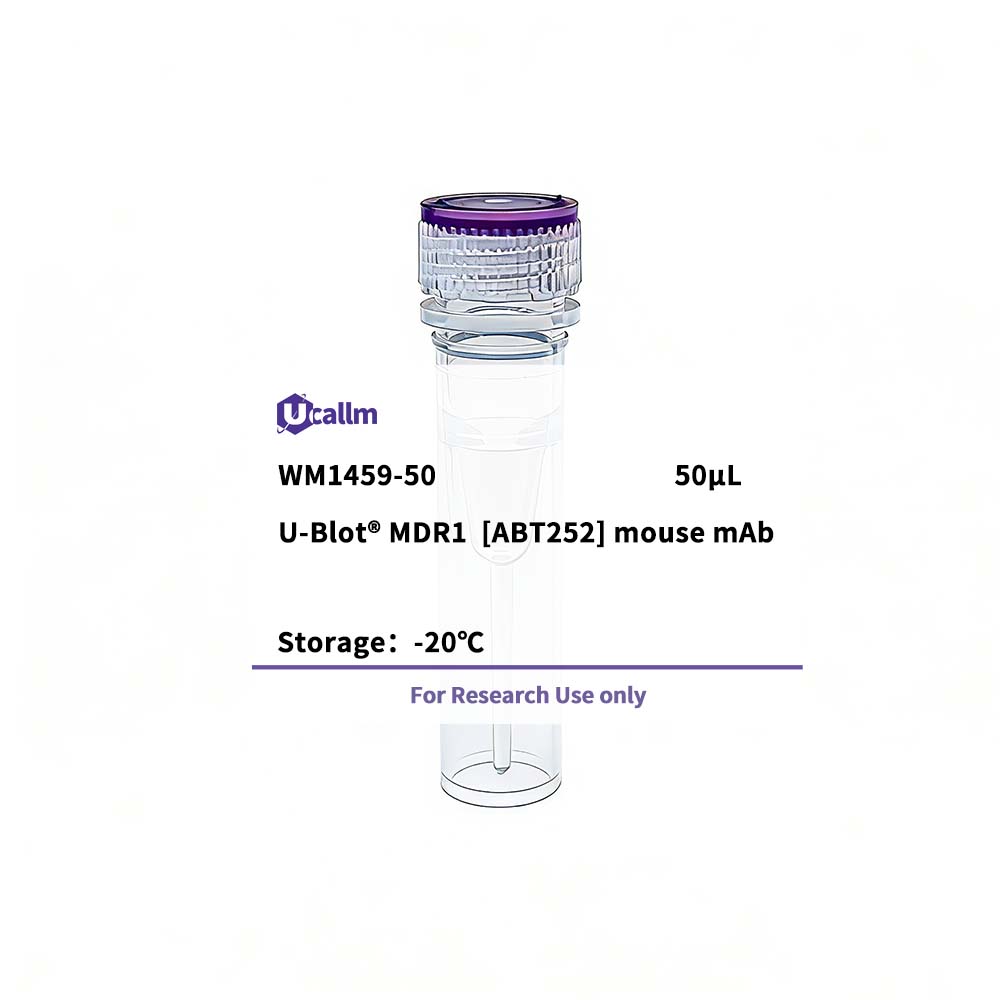
MDR1 [ABT252] mouse mAb

Price range: $268.00 through $328.00

SKU: WM1459-50
Enter the quantity you would like, or drag the panel to find the quantity and price that best for you
Bulk QuoteAuthorize OEM & ODM

Product details

Background:
MDR-1, also known as P-170, is a membrane glycoprotein encoded by MDR gene. Its main function is to quickly pump cytotoxic drugs out of cells by ATP. Its expression level is related to the permeability of cell membrane, intracellular drug concentration and the degree of drug resistance. It is mainly used in the study of tumor drug resistance.


Specifications

Size50μL/100μL
TargetMDR1
ReactivityHuman, Mouse
ApplicationsIHC, WB, IF, ELISA
MW(Calculated)141kD
MW(Observed)120kD
Host SpeciesMouse
IsotypeIgG1,Kappa
Conjugate/ModificationUnmodified
Recommended Dilution RatioIHC 1:200-1000; WB 1:500-2000; IF 1:100-500; ELISA 1:1000-5000 / Note: For IHC, we suggest antigen retrieval with TE buffer pH 9.0 (Cat#WT1004)
FormulationPBS, 50% glycerol, 0.05% Proclin 300, 0.05%BSA
PurificationRecombinant Antibody expressed in animal component-free (ACF) media, purified via Protein G affinity chromatography.
Storage-15°C to -25°C/1 year(Do not lower than -25°C)
Concentration
ClonalityMonoclonal
Clone NumberRMM252
ImmunogenSynthesized peptide derived from human MDR1 AA range: 600-700
SpecificityThe antibody can specifically recognize human MDR1 protein.
Gene NameABCB1 MDR1 PGY1
Protein NameABC20; ABCB1; ATP binding cassette, sub family B (MDR/TAP), member 1; ATP-binding cassette sub-family B member 1; CD243; CLCS; Colchicin sensitivity; Doxorubicin resistance; GP170; MDR1; MDR1_HUMAN; Multidrug resistance 1; Multidrug resistance protein 1; P glycoprotein 1; P gp; P-glycoprotein 1; PGY1
Other NameABC20; / ABCB1; / ATP binding cassette, sub family B; / MDR/TAP; / member 1; / ATP-binding cassette sub-family B member 1; / CD243; / CLCS; / Colchicin sensitivity; / Doxorubicin resistance; / GP170; / MDR1; / MDR1_HUMAN; / Multidrug resistance 1; / Multidrug resistance protein 1; / P glycoprotein 1; / P gp; / P-glycoprotein 1; / PGY1; / P Glycoprotein
SpeciesHuman
Gene ID5243
UniprotP08183,
Species.1
Gene ID.1
Uniprot.1
Species.2Rat
Gene ID.2
Uniprot.2P43245
Cellular LocalizationMembranous
Tissue ExpressionKindey
Signaling_pathwayHuman Diseases >> Cancer: overview >> MicroRNAs in cancer;Human Diseases >> Cancer: specific types >> Gastric cancer
Research Areas>>ABC transporters; / >>Bile secretion; / >>MicroRNAs in cancer; / >>Gastric cancer
FunctionCatalytic activity:ATP + H(2)O + xenobiotic(In) = ADP + phosphate + xenobiotic(Out).,Disease:Genetic variations in ABCB1 are associated with susceptibility to inflammatory bowel disease type 13 (IBD13) [MIM:612244]. Inflammatory bowel disease is characterized by a chronic relapsing intestinal inflammation. It is subdivided into Crohn disease and ulcerative colitis phenotypes. Crohn disease may involve any part of the gastrointestinal tract, but most frequently the terminal ileum and colon. Bowel inflammation is transmural and discontinuous; it may contain granulomas or be associated with intestinal or perianal fistulas. In contrast, in ulcerative colitis, the inflammation is continuous and limited to rectal and colonic mucosal layers; fistulas and granulomas are not observed. Both diseases include extraintestinal inflammation of the skin, eyes, or joints. Crohn disease and ulcerative colitis are commonly classified as autoimmune diseases.,Function:Energy-dependent efflux pump responsible for decreased drug accumulation in multidrug-resistant cells.,online information:P-glycoprotein entry,online information:The Singapore human mutation and polymorphism database,polymorphism:Genetic variation in ABCB1 may play a role in patients who do not respond to drug treatment.,similarity:Belongs to the ABC transporter family.,similarity:Belongs to the ABC transporter family. Multidrug resistance exporter (TC 3.A.1.201) subfamily.,similarity:Contains 2 ABC transmembrane type-1 domains.,similarity:Contains 2 ABC transporter domains.,tissue specificity:Expressed in liver, kidney, small intestine and brain.,
Please login to post questions
Back to Top
Product has been added to your cart


