SKU: WP0535 Categories: ,

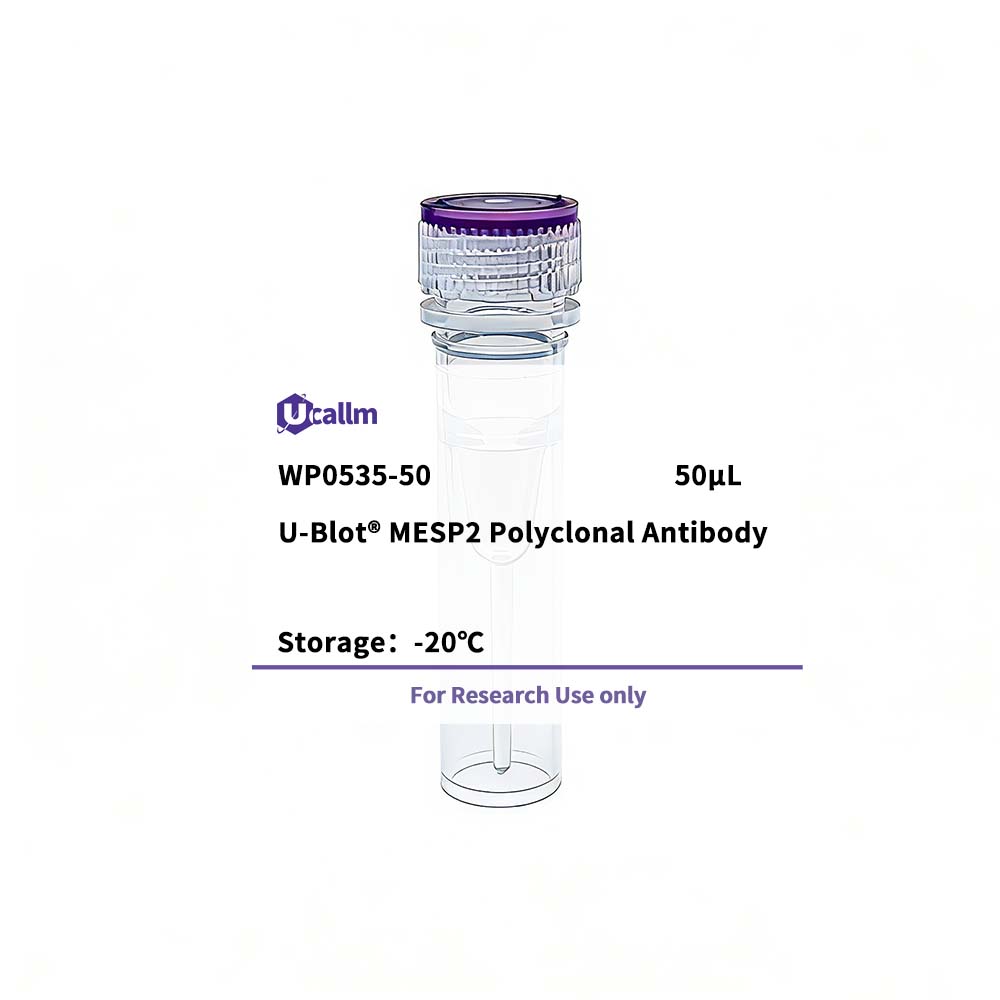
MESP2 Polyclonal Antibody

Price range: $268.00 through $328.00

SKU: WP0535-100
Enter the quantity you would like, or drag the panel to find the quantity and price that best for you
Bulk QuoteAuthorize OEM & ODM

Product details

Background:

This gene encodes a member of the bHLH family of transcription factors and plays a key role in defining the rostrocaudal patterning of somites via interactions with multiple Notch signaling pathways. This gene is expressed in the anterior presomitic mesoderm and is downregulated immediately after the formation of segmented somites. This gene also plays a role in the formation of epithelial somitic mesoderm and cardiac mesoderm. Mutations in the MESP2 gene cause autosomal recessive spondylocostal dystosis 2 (SCD02). [provided by RefSeq, Oct 2008],

Specifications

Size50μL/100μL
TargetMESP2
ReactivityHuman, Mouse
ApplicationsWB, ELISA
MW(Calculated)
MW(Observed)43kD
Host SpeciesRabbit
IsotypeIgG
Conjugate/ModificationUnmodified
Recommended Dilution RatioWB 1:500-2000; ELISA 1:5000-20000
FormulationLiquid in PBS containing 50% glycerol,0.5% BSA and 0.02% sodium azide.
PurificationThe antibody was affinity-purified from rabbit antiserum by affinity-chromatography using epitope-specific immunogen.
Storage-15°C to -25°C/1 year(Do not lower than -25°C)
Concentration1 mg/ml
ClonalityPolyclonal
Clone Number
ImmunogenSynthesized peptide derived from human protein . at AA range: 220-300
SpecificityMESP2 Polyclonal Antibody detects endogenous levels of protein.
Gene NameMESP2 BHLHC6 SCDO2
Protein NameMesoderm posterior protein 2 (Class C basic helix-loop-helix protein 6) (bHLHc6)
Other Name
SpeciesHuman
Gene ID145873
UniprotQ0VG99,
Species.1Mouse
Gene ID.1
Uniprot.1O08574
Species.2
Gene ID.2
Uniprot.2
Cellular LocalizationNucleus .
Tissue Expression
Signaling_pathway
Research Areas
FunctionDisease:Defects in MESP2 are the cause of spondylocostal dysostosis autosomal recessive type 2 (SCDO2) [MIM:608681]. Autosomal recessive spondylocostal dysostosis is a rare condition of variable severity associated with vertebral and rib segmentation defects. The main skeletal malformations include fusion of vertebrae, hemivertebrae, fusion of certain ribs, and other rib malformations. Deformity of the chest and spine (severe scoliosis, kyphoscoliosis and lordosis) is a natural consequence of the malformation and leads to a dwarf-like appearance. As the thorax is small, infants frequently have respiratory insufficiency and repeated respiratory infections resulting in life-threatening complications in the first year of life.,Disease:Defects in MESP2 may be a cause of spondylothoracic dysostosis (STD).,Function:Transcription factor with important role in somitogenesis. Defines the rostrocaudal patterning of the somite by participating in distinct Notch pathways. Regulates also the FGF signaling pathway. Specifies the rostral half of the somites. Generates rostro-caudal polarity of somites by down-regulating in the presumptive rostral domain DLL1, a Notch ligand. Participates in the segment border formation by activating in the anterior presomitic mesoderm LFNG, a negative regulator of DLL1-Notch signaling. Acts as a strong suppressor of Notch activity. Together with MESP1 is involved in the epithelialization of somitic mesoderm and in the development of cardiac mesoderm.,polymorphism:The number of GQ repeats at position 179 is polymorphic.,PTM:Degraded by the proteasome.,PTM:Phosphorylated.,similarity:Contains 1 basic helix-loop-helix (bHLH) domain.,
Please login to post questions
Back to Top
Product has been added to your cart
