SKU: WP15888 Categories: ,

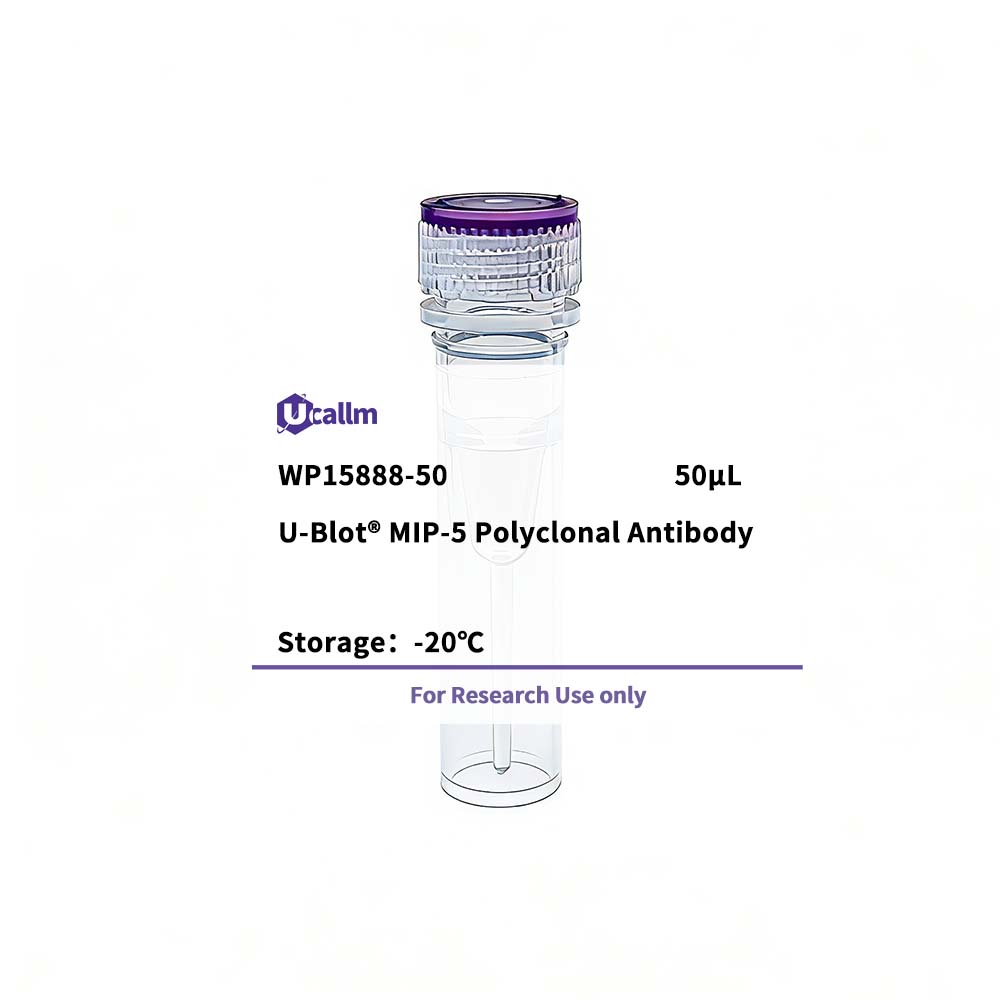
MIP-5 Polyclonal Antibody

Price range: $268.00 through $328.00

SKU: WP15888-100
Enter the quantity you would like, or drag the panel to find the quantity and price that best for you
Bulk QuoteAuthorize OEM & ODM

Product details

Background:

This gene is located in a cluster of similar genes in the same region of chromosome 17. These genes encode CC cytokines, which are secreted proteins characterized by two adjacent cysteines. The product of this gene is chemotactic for T cells and monocytes, and acts through C-C chemokine receptor type 1 (CCR1). The proprotein is further processed into numerous smaller functional peptides. Naturally-occurring readthrough transcripts occur from this gene into the downstream gene, CCL14 (chemokine (C-C motif) ligand 14). [provided by RefSeq, Jan 2013],


Specifications

Size50μL/100μL
TargetMIP-5
ReactivityHuman
ApplicationsIHC, IF, ELISA
MW(Calculated)
MW(Observed)
Host SpeciesRabbit
IsotypeIgG
Conjugate/ModificationUnmodified
Recommended Dilution RatioIHC 1:50-200; ELISA 1:10000-20000; IF 1:50-200 / Note: For IHC, we suggest antigen retrieval with TE buffer pH 9.0 (Cat#WT1004)
FormulationLiquid in PBS containing 50% glycerol, 0.5% BSA and 0.02% sodium azide.
PurificationThe antibody was affinity-purified from rabbit antiserum by affinity-chromatography using epitope-specific immunogen.
Storage-15°C to -25°C/1 year(Do not lower than -25°C)
Concentration1 mg/ml
ClonalityPolyclonal
Clone Number
ImmunogenSynthetic peptide from human protein at AA range: 51-100
SpecificityThe antibody detects endogenous MIP-5
Gene NameCCL15 MIP5 NCC3 SCYA15
Protein NameC-C motif chemokine 15
Other NameMIP-1 delta; / CCL15; / MIP5; / NCC3; / SCYA15; / C-C motif chemokine 15; / Chemokine CC-2; / HCC-2; / Leukotactin-1; / LKN-1; / Macrophage inflammatory protein 5; / MIP-5; / Mrp-2b; / NCC-3; / Small-inducible cytokine A15; / [Cleaved into: CCL15; / 22-92; / CCL15; / 25-92; / CCL15; / 29-92; / ]
SpeciesHuman
Gene ID6359
UniprotQ16663
Species.1
Gene ID.1
Uniprot.1
Species.2
Gene ID.2
Uniprot.2
Cellular LocalizationSecreted.
Tissue ExpressionMost abundant in heart, skeletal muscle and adrenal gland. Lower levels in placenta, liver, pancreas and bone marrow. CCL15(22-92), CCL15(25-92) and CCL15(29-92) are found in high levels in synovial fluids from rheumatoid patients.
Signaling_pathwayOrganismal Systems >> Immune system >> Chemokine signaling pathway;Environmental Information Processing >> Signaling molecules and interaction >> Cytokine-cytokine receptor interaction;Environmental Information Processing >> Signaling molecules and interaction >> Viral protein interaction with cytokine and cytokine receptor
Research Areas>>Cytokine-cytokine receptor interaction; / >>Viral protein interaction with cytokine and cytokine receptor; / >>Chemokine signaling pathway
FunctionFunction:Chemotactic factor that attracts T-cells and monocytes, but not neutrophils, eosinophils, or B-cells. Acts mainly via CC chemokine receptor CCR1. Also binds to CCR3. CCL15(22-92), CCL15(25-92) and CCL15(29-92) are more potent chemoattractants than the small-inducible cytokine A15.,Function:Has weak activities on human monocytes and acts via receptors that also recognize MIP-1 alpha. It induced intracellular Ca(2+) changes and enzyme release, but no chemotaxis, at concentrations of 100-1,000 nM, and was inactive on T-lymphocytes, neutrophils, and eosinophil leukocytes. Enhances the proliferation of CD34 myeloid progenitor cells. The processed form HCC-1(9-74) is a chemotactic factor that attracts monocytes eosinophils, and T-cells and is a ligand for CCR1, CCR3 and CCR5.,online information:CCL14 entry,online information:CCL15 entry,PTM:HCC-1(1-74), but not HCC-1(3-74) and HCC-1(4-74), is partially O-glycosylated; the O-linked glycan consists of one Gal-GalNAc disaccharide, further modified by two N-acetylneuraminic acids.,PTM:The N-terminal processed forms HCC-1(3-74), HCC-1(4-74) and HCC-1(9-74) are produced in small amounts by proteolytic cleavage after secretion in blood.,similarity:Belongs to the intercrine beta (chemokine CC) family.,subunit:Monomer.,tissue specificity:Expressed constitutively in several normal tissues: spleen, liver, skeletal and heart muscle, gut, and bone marrow, present at high concentrations (1-80 nM) in plasma.,tissue specificity:Most abundant in heart, skeletal muscle and adrenal gland. Lower levels in placenta, liver, pancreas and bone marrow. CCL15(22-92), CCL15(25-92) and CCL15(29-92) are found in high levels in synovial fluids from rheumatoid patients.,
Please login to post questions
Back to Top
Product has been added to your cart