SKU: WR4833 Categories: ,

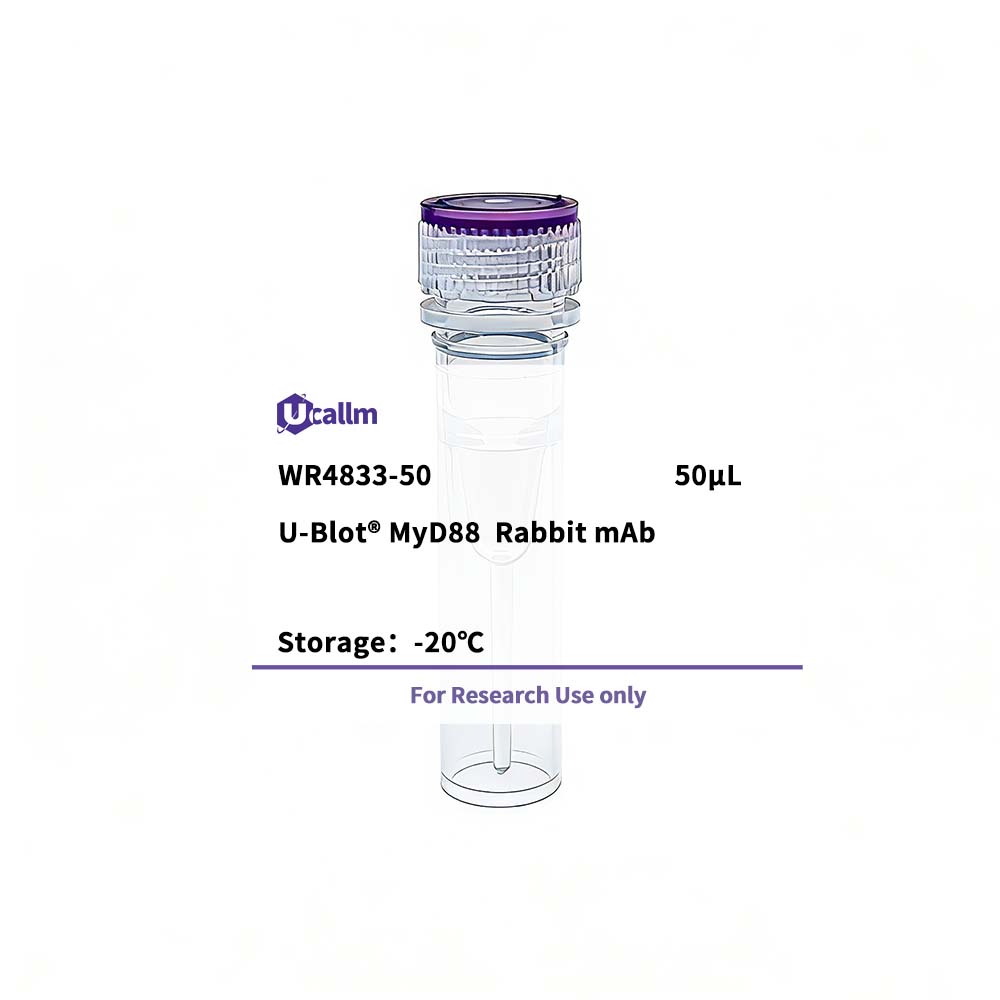
U-Blot® MyD88 Rabbit mAb

Price range: $268.00 through $328.00

SKU: WR4833-50
Enter the quantity you would like, or drag the panel to find the quantity and price that best for you
Bulk QuoteAuthorize OEM & ODM

Product details

Background:This gene encodes a cytosolic adapter protein that plays a central role in the innate and adaptive immune response. This protein functions as an essential signal transducer in the interleukin-1 and Toll-like receptor signaling pathways. These pathways regulate that activation of numerous proinflammatory genes. The encoded protein consists of an N-terminal death domain and a C-terminal Toll-interleukin1 receptor domain. Patients with defects in this gene have an increased susceptibility to pyogenic bacterial infections. Alternate splicing results in multiple transcript variants. [provided by RefSeq, Feb 2010],

Specifications

Size50μL/100μL
TargetMyD88
ReactivityHuman, Mouse, Rat
ApplicationsWB, IF, IP, ELISA
MW(Calculated)33kD
MW(Observed)33kD
Host SpeciesRabbit
IsotypeIgG,Kappa
Conjugate/ModificationUnmodified
Recommended Dilution RatioWB 1:2000-1:10000; IF 1:200-1:1000; ELISA 1:5000-1:20000; IP 1:50-1:200;
FormulationPBS, 50% glycerol, 0.05% Proclin 300, 0.05%BSA
PurificationRecombinant Antibody expressed in animal component-free (ACF) media, purified via Protein A affinity chromatography.
Storage-15°C to -25°C/1 year(Do not lower than -25°C)
Concentration
ClonalityMonoclonal
Clone NumberRM0980R
ImmunogenThe specific immunogen used to produce this antibody is proprietary information.
SpecificityEndogenous
Gene NameMyD88
Protein NameMyeloid differentiation primary response protein MyD88
Other NameMYD88; / Myeloid differentiation primary response protein MyD88
SpeciesHuman
Gene ID4615
UniprotQ99836,
Species.1Mouse
Gene ID.117874
Uniprot.1P22366,
Species.2Rat
Gene ID.2301059
Uniprot.2Q6Y1S1
Cellular LocalizationCytoplasm . Nucleus .
Tissue ExpressionUbiquitous.
Signaling_pathwayOrganismal Systems >> Immune system >> Toll-like receptor signaling pathway;Organismal Systems >> Immune system >> NOD-like receptor signaling pathway;Human Diseases >> Cancer: overview >> PD-L1 expression and PD-1 checkpoint pathway in cancer;Environmental Information Processing >> Signal transduction >> MAPK signaling pathway;Environmental Information Processing >> Signal transduction >> NF-kappa B signaling pathway
Research Areas>>MAPK signaling pathway; / >>NF-kappa B signaling pathway; / >>Toll-like receptor signaling pathway; / >>NOD-like receptor signaling pathway; / >>Alcoholic liver disease; / >>Pathogenic Escherichia coli infection; / >>Shigellosis; / >>Salmonella infection; / >>Pertussis; / >>Legionellosis; / >>Yersinia infection; / >>Leishmaniasis; / >>Chagas disease; / >>African trypanosomiasis; / >>Malaria; / >>Toxoplasmosis; / >>Tuberculosis; / >>Hepatitis B; / >>Measles; / >>Influenza A; / >>Herpes simplex virus 1 infection; / >>Epstein-Barr virus infection; / >>Human immunodeficiency virus 1 infection; / >>Coronavirus disease - COVID-19; / >>PD-L1 expression and PD-1 checkpoint pathway in cancer; / >>Lipid and atherosclerosis
FunctionDisease:Defects in MYD88 are the cause of MYD88 deficiency (MYD88D) [MIM:612260]; also called recurrent pyogenic bacterial infections due to MYD88 deficiency. Patients suffer from autosomal recessive, life-threatening, often recurrent pyogenic bacterial infections, including invasive pneumococcal disease, and die between 1 and 11 months of age. Surviving patients are otherwise healthy, with normal resistance to other microbes, and their clinical status improved with age.,Function:Adapter protein involved in the Toll-like receptor and IL-1 receptor signaling pathway in the innate immune response. Acts via IRAK1, IRAK2 and TRAF6, leading to NF-kappa-B activation, cytokine secretion and the inflammatory response. Increases IL-8 transcription. May be involved in myeloid differentiation.,similarity:Contains 1 death domain.,similarity:Contains 1 TIR domain.,subunit:Homodimer. Also forms heterodimers with TIRAP. Binds to TLR2, TLR4, IRAK1 and IRAK2 via their respective TIR domains. Interacts with IL1RL1.,tissue specificity:Ubiquitous.,
Please login to post questions
Back to Top
Product has been added to your cart
