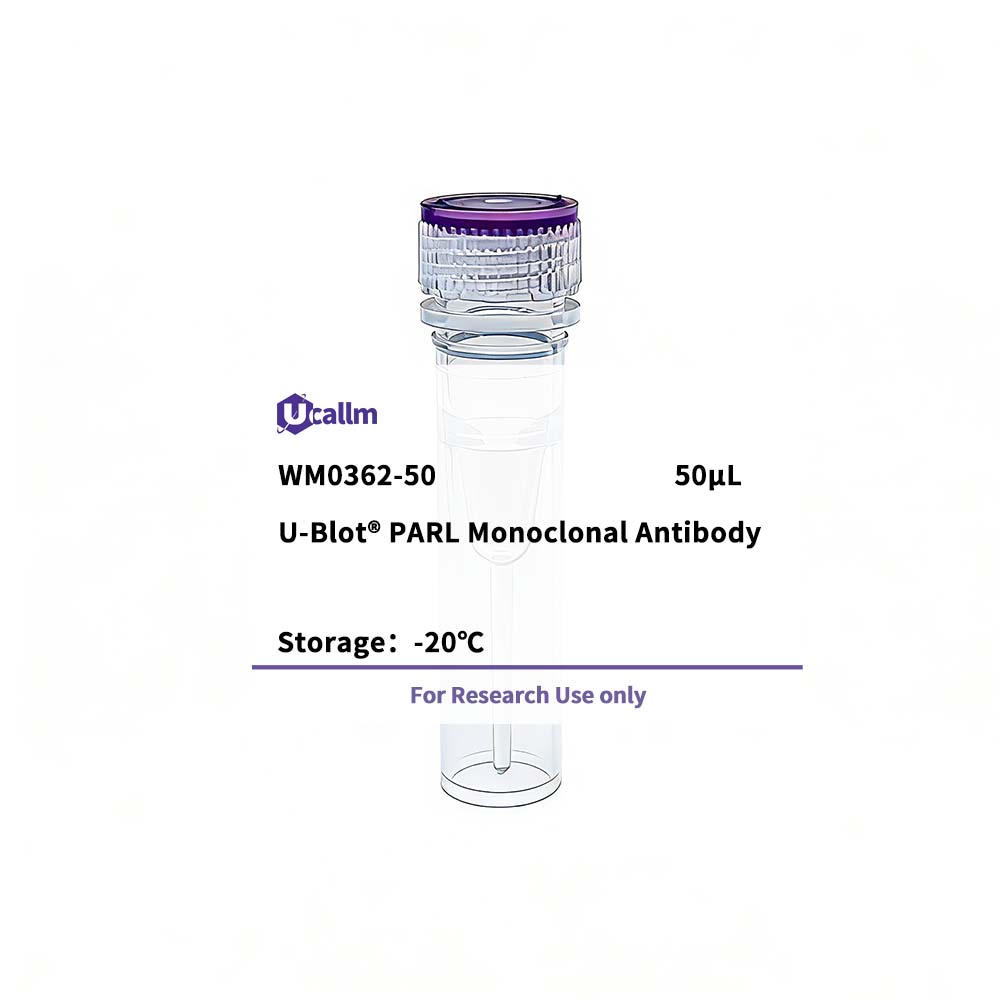
SKU: WM0362 Categories: ,

PARL Monoclonal Antibody

Price range: $268.00 through $328.00

SKU: WM0362-50
Enter the quantity you would like, or drag the panel to find the quantity and price that best for you
Bulk QuoteAuthorize OEM & ODM

Product details

Background:
This gene encodes a member of the rhomboid family of intramembrane serine proteases that is localized to the inner mitochondrial membrane. The encoded protein regulates mitochondrial remodeling and apoptosis through regulated substrate proteolysis. Proteolytic processing of the encoded protein results in the release of a small peptide, P-beta, which may transit to the nucleus. Mutations in this gene may be associated with Parkinson's disease. [provided by RefSeq, May 2016],

Specifications

Size50μL/100μL
TargetPARL
ReactivityHuman
ApplicationsWB, ELISA
MW(Calculated)42kD
MW(Observed)
Host SpeciesMouse
Isotype
Conjugate/ModificationUnmodified
Recommended Dilution RatioWB 1:500-1:2000; ELISA 1:10000; Not yet tested in other applications.
FormulationLiquid in PBS containing 50% glycerol, 0.5% BSA and 0.02% sodium azide.
PurificationAffinity purification
Storage-15°C to -25°C/1 year(Do not lower than -25°C)
Concentration
ClonalityMonoclonal
Clone Number11A2
ImmunogenPurified recombinant fragment of PARL (aa112-167) expressed in E. Coli.
SpecificityPARL Monoclonal Antibody detects endogenous levels of PARL protein.
Gene NamePARL
Protein NamePresenilins-associated rhomboid-like protein mitochondrial
Other NamePARL; / PSARL; / Presenilins-associated rhomboid-like protein; / mitochondrial; / Mitochondrial intramembrane cleaving protease PARL
SpeciesHuman
Gene ID55486
UniprotQ9H300,
Species.1Mouse
Gene ID.1
Uniprot.1Q5XJY4
Species.2
Gene ID.2
Uniprot.2
Cellular LocalizationMitochondrion inner membrane; Multi-pass membrane protein .; [P-beta]: Nucleus . Translocated into the nucleus by an unknown mechanism (PubMed:17116872). .
Tissue ExpressionFetal liver,Lung,
Signaling_pathway
Research Areas
FunctionCatalytic activity:Cleaves type-1 transmembrane domains using a catalytic dyad composed of serine and histidine that are contributed by different transmembrane domains.,Function:Required for the control of apoptosis during postnatal growth. Essential for proteolytic processing of an antiapoptotic form of OPA1 which prevents the release of mitochondrial cytochrome c in response to intrinsic apoptoptic signals (By similarity). Promotes changes in mitochondria morphology regulated by phosphorylation of P-beta domain.,PTM:P-beta is proteolytically processed (beta-cleavage) in a PARL-dependent manner. The cleavage is inhibited when residues Ser-65, Thr-69 and Ser-70 are all phosphorylated.,similarity:Belongs to the peptidase S54 family.,subcellular location:Translocated into the nucleus by an unknown mechanism.,subunit:Interacts with PSEN1 and PSEN2. Binds OPA1.,
Please login to post questions
Back to Top
Product has been added to your cart


