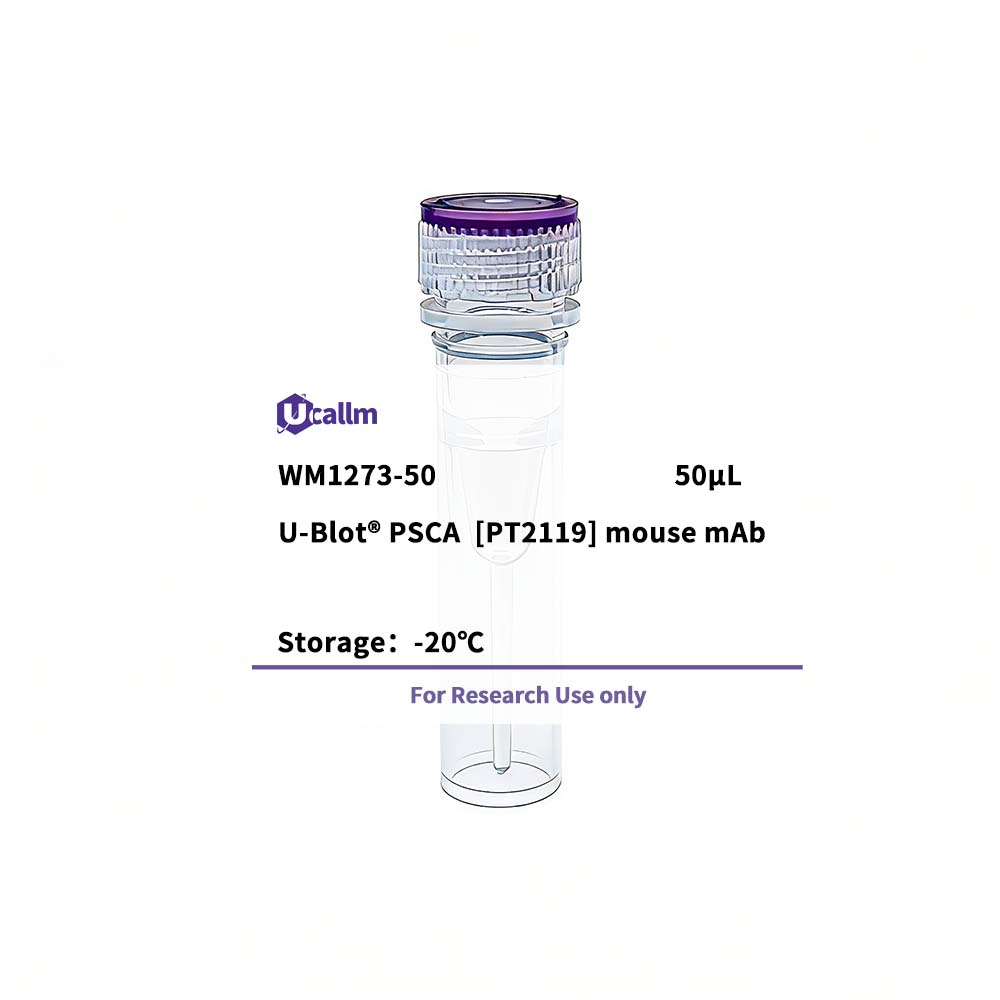
SKU: WM1273 Categories: ,

PSCA [PT2119] mouse mAb

Price range: $268.00 through $328.00

SKU: WM1273-50
Enter the quantity you would like, or drag the panel to find the quantity and price that best for you
Bulk QuoteAuthorize OEM & ODM

Product details

Background:
prostate stem cell antigen(PSCA) Homo sapiens This gene encodes a glycosylphosphatidylinositol-anchored cell membrane glycoprotein. In addition to being highly expressed in the prostate it is also expressed in the bladder, placenta, colon, kidney, and stomach. This gene is up-regulated in a large proportion of prostate cancers and is also detected in cancers of the bladder and pancreas. This gene includes a polymorphism that results in an upstream start codon in some individuals; this polymorphism is thought to be associated with a risk for certain gastric and bladder cancers. Alternative splicing results in multiple transcript variants. [provided by RefSeq, Feb 2010],


Specifications

Size50μL/100μL
TargetPSCA
ReactivityHuman
ApplicationsWB, IF, ELISA
MW(Calculated)13kD
MW(Observed)18kD
Host SpeciesMouse
IsotypeIgG2b,Kappa
Conjugate/ModificationUnmodified
Recommended Dilution RatioWB 1:500-2000; IF 1:100-500; ELISA 1:1000-5000
FormulationPBS, 50% glycerol, 0.05% Proclin 300, 0.05%BSA
PurificationRecombinant Antibody expressed in animal component-free (ACF) media, purified via Protein G affinity chromatography.
Storage-15°C to -25°C/1 year(Do not lower than -25°C)
Concentration1 mg/ml
ClonalityMonoclonal
Clone NumberRMM2119
ImmunogenSynthesized peptide derived from human PSCA AA range: 1-100
SpecificityThis antibody detects endogenous levels of PSCA protein.
Gene NamePSCA UNQ206/PRO232
Protein NameProstate stem cell antigen
Other Name
SpeciesHuman
Gene ID8000
UniprotO43653,
Species.1Mouse
Gene ID.1
Uniprot.1P57096
Species.2
Gene ID.2
Uniprot.2
Cellular LocalizationCytoplasmic
Tissue ExpressionHighly expressed in prostate (basal, secretory and neuroendocrine epithelium cells). Also found in bladder (transitional epithelium), placenta (trophoblasts), stomach (neuroendocrine cells), colon (neuroendocrine cells) and kidney (collecting ducts). Overexpressed in prostate cancers and expression is correlated with tumor stage, grade and androgen-independence. Highly expressed in prostate cancer bone metastases. Expressed in gastric epithelial cells, mainly in the isthmus (at protein level). Not detected in normal intestinal epithelium (at protein level). Expressed in brain cortex; expression is significantly increased in the front cortex of Alzheimer disease patients.
Signaling_pathway
Research Areas
FunctionMay be involved in the regulation of cell proliferation. Has a cell-proliferation inhibition activity in vitro.; May act as a modulator of nicotinic acetylcholine receptors (nAChRs) activity. In vitro inhibits nicotine-induced signaling probably implicating alpha-3:beta-2- or alpha-7-containing nAChRs.
Please login to post questions
Back to Top
Product has been added to your cart

