SKU: WR4169 Categories: ,

U-Blot® Pyruvate Dehydrogenase E1 α Rabbit mAb

Price range: $268.00 through $328.00

SKU: WR4169-50
Enter the quantity you would like, or drag the panel to find the quantity and price that best for you
Bulk QuoteAuthorize OEM & ODM

Product details

Background:The pyruvate dehydrogenase (PDH) complex is a nuclear-encoded mitochondrial multienzyme complex that catalyzes the overall conversion of pyruvate to acetyl-CoA and CO(2), and provides the primary link between glycolysis and the tricarboxylic acid (TCA) cycle. The PDH complex is composed of multiple copies of three enzymatic components: pyruvate dehydrogenase (E1), dihydrolipoamide acetyltransferase (E2) and lipoamide dehydrogenase (E3). The E1 enzyme is a heterotetramer of two alpha and two beta subunits. This gene encodes the E1 alpha 1 subunit containing the E1 active site, and plays a key role in the function of the PDH complex. Mutations in this gene are associated with pyruvate dehydrogenase E1-alpha deficiency and X-linked Leigh syndrome. Alternatively spliced transcript variants encoding different isoforms have been found for this gene.[provided by RefSeq, Mar 2010],

Specifications

Size50μL/100μL
TargetPDHA1
ReactivityHuman, Mouse, Rat
ApplicationsWB, IHC, IF, IP, ELISA
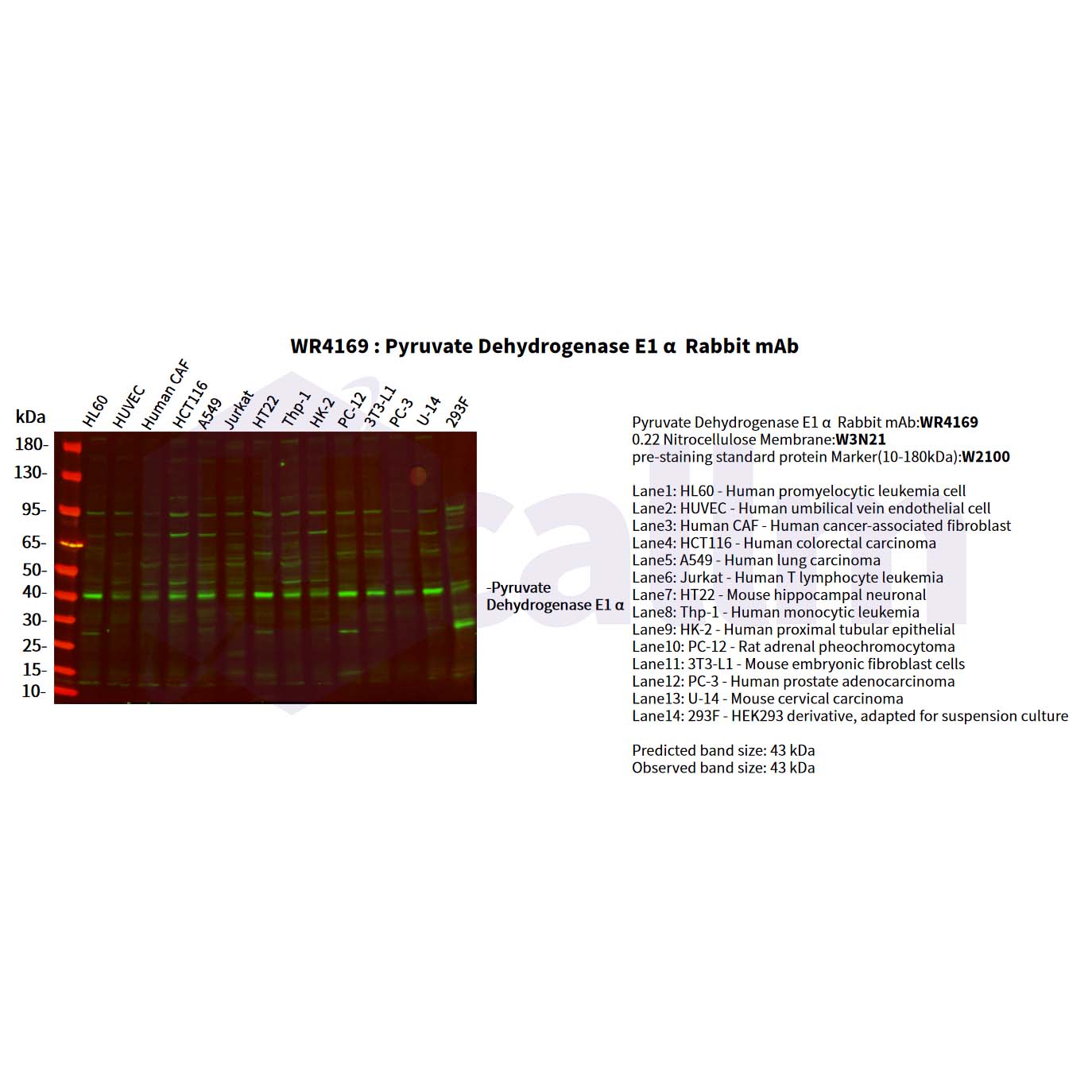
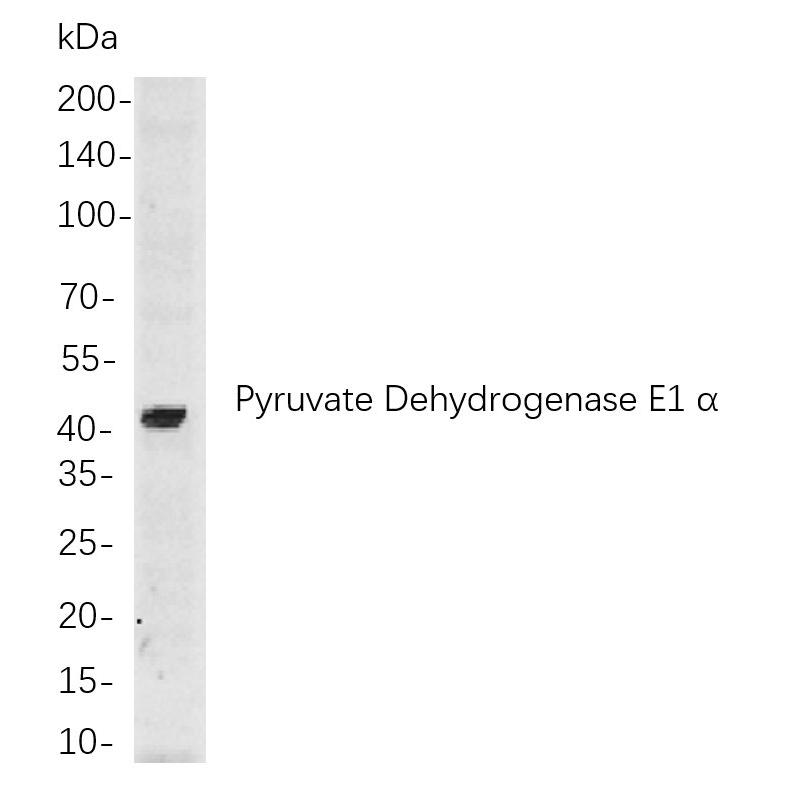
MW(Calculated)43kD
MW(Observed)43kD
Host SpeciesRabbit
IsotypeIgG,Kappa
Conjugate/ModificationUnmodified
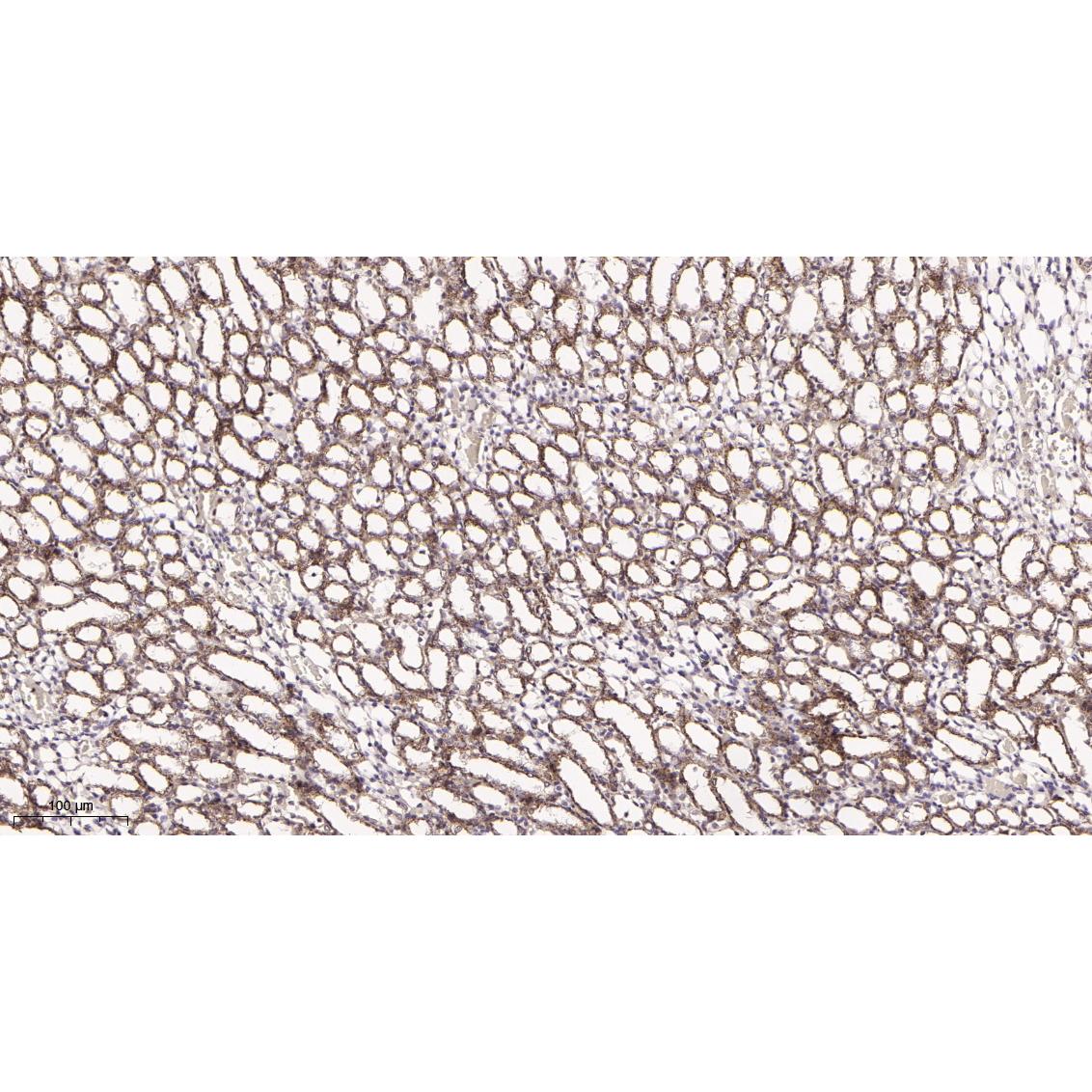
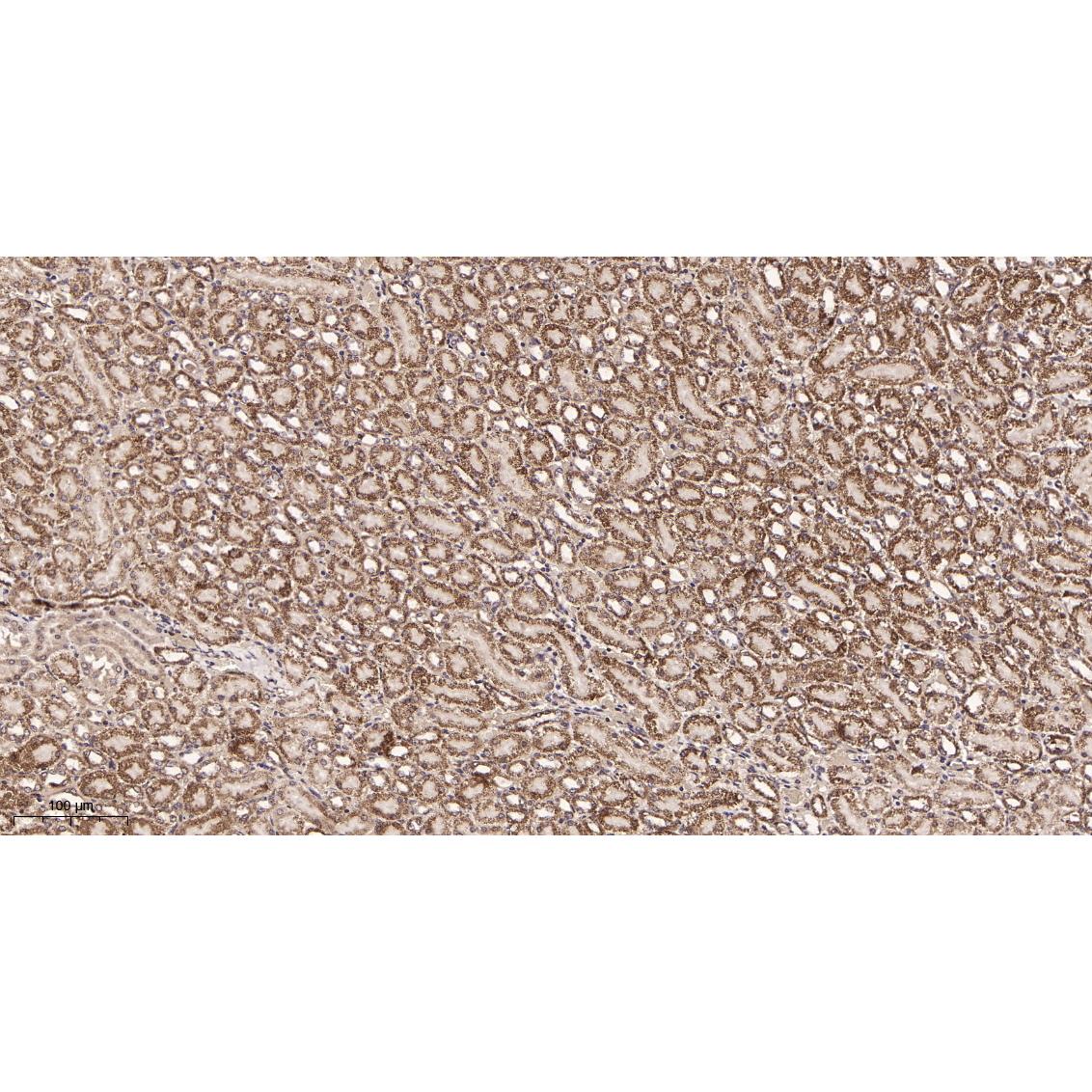
Recommended Dilution RatioIHC 1:200-1:1000; WB 1:1000-1:5000; IF 1:200-1:1000; ELISA 1:5000-1:20000; IP 1:50-1:200, / Note: For IHC, we suggest antigen retrieval with TE buffer pH 9.0 (Cat#WT1004)
FormulationPBS, 50% glycerol, 0.05% Proclin 300, 0.05%BSA
PurificationRecombinant Antibody expressed in animal component-free (ACF) media, purified via Protein A affinity chromatography.
Storage-15°C to -25°C/1 year(Do not lower than -25°C)
Concentration
ClonalityMonoclonal
Clone NumberRM0322R
ImmunogenThe specific immunogen used to produce this antibody is proprietary information.
SpecificityEndogenous
Gene NamePDHA1 PHE1A
Protein NamePDHA1 ODPA
Other NamePDHA1; / PHE1A; / Pyruvate dehydrogenase E1 component subunit alpha; / somatic form, mitochondrial; / PDHE1-A type I
SpeciesHuman
Gene ID5160
UniprotP08559,
Species.1Mouse
Gene ID.118597
Uniprot.1P35486,
Species.2Rat
Gene ID.2
Uniprot.2P26284
Cellular LocalizationMitochondrion matrix
Tissue ExpressionUbiquitous.
Signaling_pathwayOrganismal Systems >> Endocrine system >> Glucagon signaling pathway;Human Diseases >> Cancer: overview >> Central carbon metabolism in cancer;Environmental Information Processing >> Signal transduction >> HIF-1 signaling pathway
Research Areas
FunctionCatalytic activity:Pyruvate + [dihydrolipoyllysine-residue acetyltransferase] lipoyllysine = [dihydrolipoyllysine-residue acetyltransferase] S-acetyldihydrolipoyllysine + CO(2).,cofactor:Thiamine pyrophosphate.,Disease:Defects in PDHA1 are a cause of pyruvate decarboxylase E1 component deficiency (PDHE1 deficiency) [MIM:312170]. PDHE1 deficiency is the most common enzyme defect in patients with primary lactic acidosis. It is associated with variable clinical phenotypes ranging from neonatal death to prolonged survival complicated by developmental delay, seizures, ataxia, apnea, and in some cases to an X-linked form of Leigh syndrome (LS) (Leigh encephalomyelopathy).,Disease:Defects in PDHA1 are the cause of X-linked Leigh syndrome (LS) [MIM:308930]. LS is an early-onset progressive neurodegenerative disorder with a characteristic neuropathology consisting of focal, bilateral lesions in one or more areas of the central nervous system, including the brainstem, thalamus, basal ganglia, cerebellum, and spinal cord. The lesions are areas of demyelination, gliosis, necrosis, spongiosis, or capillary proliferation. Clinical symptoms depend on which areas of the central nervous system are involved. The most common underlying cause is a defect in oxidative phosphorylation. LS may be a feature of a deficiency of any of the mitochondrial respiratory chain complexes.,enzyme regulation:E1 activity is regulated by phosphorylation (inactivation) and dephosphorylation (activation) of the alpha subunit.,Function:The pyruvate dehydrogenase complex catalyzes the overall conversion of pyruvate to acetyl-CoA and CO(2). It contains multiple copies of three enzymatic components: pyruvate dehydrogenase (E1), dihydrolipoamide acetyltransferase (E2) and lipoamide dehydrogenase (E3).,subunit:Tetramer of 2 alpha and 2 beta subunits.,tissue specificity:Ubiquitous.,
Please login to post questions

Back to Top
Product has been added to your cart

