

Recombinant CD68 Fc-Fused Nanobody (VF0104)
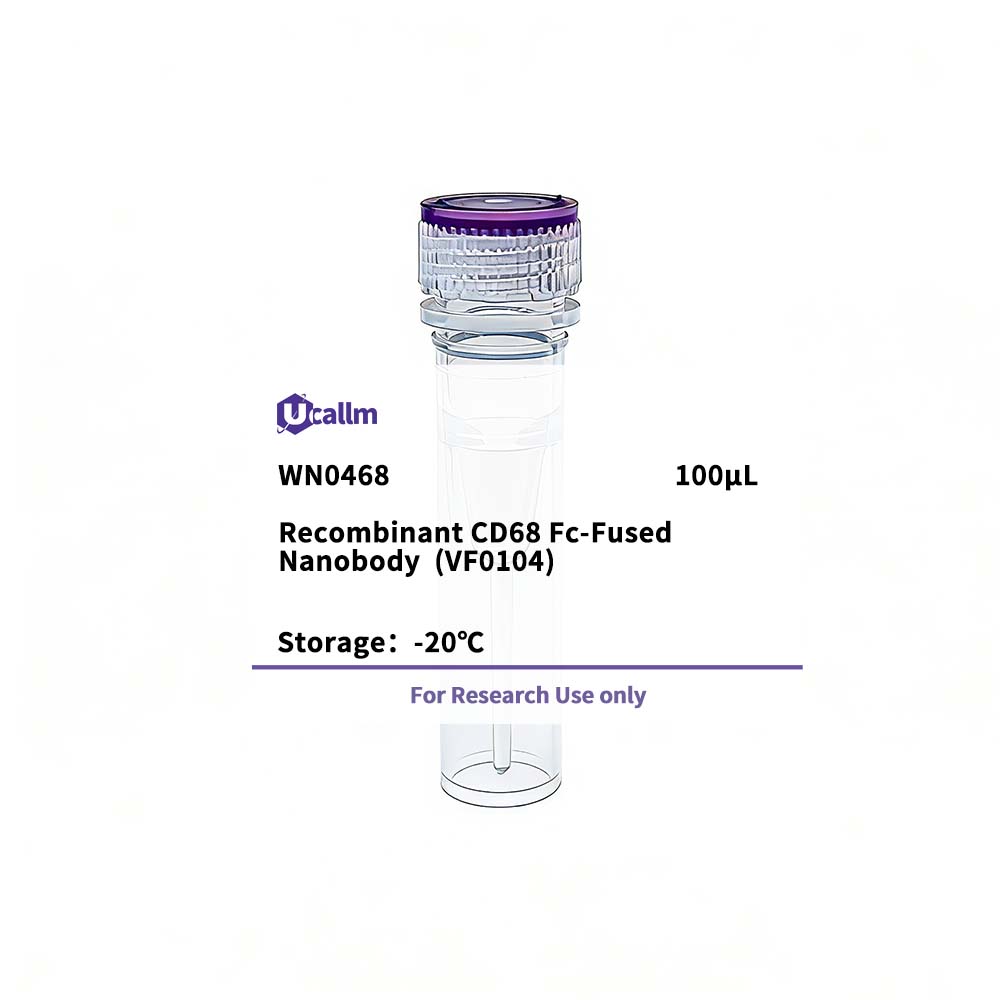
Ucallm_WN0468
$365.00
Product details
Background:This gene encodes a 110-kD transmembrane glycoprotein that is highly expressed by human monocytes and tissue macrophages. It is a member of the lysosomal/endosomal-associated membrane glycoprotein (LAMP) family. The protein primarily localizes to lysosomes and endosomes with a smaller fraction circulating to the cell surface. It is a type I integral membrane protein with a heavily glycosylated extracellular domain and binds to tissue- and organ-specific lectins or selectins. The protein is also a member of the scavenger receptor family. Scavenger receptors typically function to clear cellular debris, promote phagocytosis, and mediate the recruitment and activation of macrophages. Alternative splicing results in multiple transcripts encoding different isoforms. [provided by RefSeq, Jul 2008]
Specifications
| Size | 100μL |
| Target | CD68 |
| Reactivity | Human |
| Applications | ELISA |
| MW(Calculated) | |
| MW(Observed) | |
| Host Species | |
| Isotype | IgG2a,Kappa |
| Conjugate/Modification | Unmodified |
| Recommended Dilution Ratio | ELISA 1:5000-100000 |
| Formulation | Phosphate-buffered solution |
| Purification | Recombinant Expression and Affinity purified |
| Storage | -15°C to -25°C/1 year(Avoid freeze / thaw cycles) |
| Concentration | Please check the information on the tube |
| Clonality | |
| Clone Number | VF0161 |
| Immunogen | Purified recombinant Human CD68 |
| Specificity | This recombinant monoclonal antibody can detects endogenous levels of CD68 protein. |
| Gene Name | CD68 |
| Protein Name | Macrosialin (Gp110) (CD antigen CD68) |
| Other Name | CD68; / Macrosialin; / Gp110; / CD68; / CD68 nanobody |
| Species | Human |
| Gene ID | 968 |
| Uniprot | P34810 |
| Species.1 | |
| Gene ID.1 | |
| Uniprot.1 | |
| Species.2 | |
| Gene ID.2 | |
| Uniprot.2 | |
| Cellular Localization | [Isoform Short]: Cell membrane; Single-pass type I membrane protein.; [Isoform Long]: Endosome membrane; Single-pass type I membrane protein. Lysosome membrane; Single-pass type I membrane protein. |
| Tissue Expression | Expressed in a variety of tumor tissues including primary breast tumors and tumors from small bowel, esophagus, kidney and mouth. |
| Signaling_pathway | Cellular Processes >> Transport and catabolism >> Lysosome |
| Research Areas | >>EGFR tyrosine kinase inhibitor resistance; / >>Endocrine resistance; / >>Platinum drug resistance; / >>MAPK signaling pathway; / >>ErbB signaling pathway; / >>Calcium signaling pathway; / >>HIF-1 signaling pathway; / >>PI3K-Akt signaling pathway; / >>Focal adhesion; / >>Adherens junction; / >>Tight junction; / >>Pathways in cancer; / >>Proteoglycans in cancer; / >>MicroRNAs in cancer; / >>Pancreatic cancer; / >>Endometrial cancer; / >>Prostate cancer; / >>Bladder cancer; / >>Non-small cell lung cancer; / >>Breast cancer; / >>Gastric cancer; / >>Central carbon metabolism in cancer |
| Function | Could play a role in phagocytic activities of tissue macrophages, both in intracellular lysosomal metabolism and extracellular cell-cell and cell-pathogen interactions. Bind to tissue- and organ-specific lectins or selectins, allowing homing of macrophage subsets to particular sites. Rapid recirculation of CD68 from endosomes, lysosomes to the plasma membrane may allow macrophages to crawl over selectin bearing substrates or other cells.,PTM:N- and O-glycosylated.,similarity:Belongs to the LAMP family.,tissue specificity:Highly expressed by blood monocytes and tissue macrophages. Also expressed in many tumor cell lines which could allow them to attach to selectins on vascular endothelium, facilitating their dissemination to secondary sites., |
Please login to post questions
Related products



