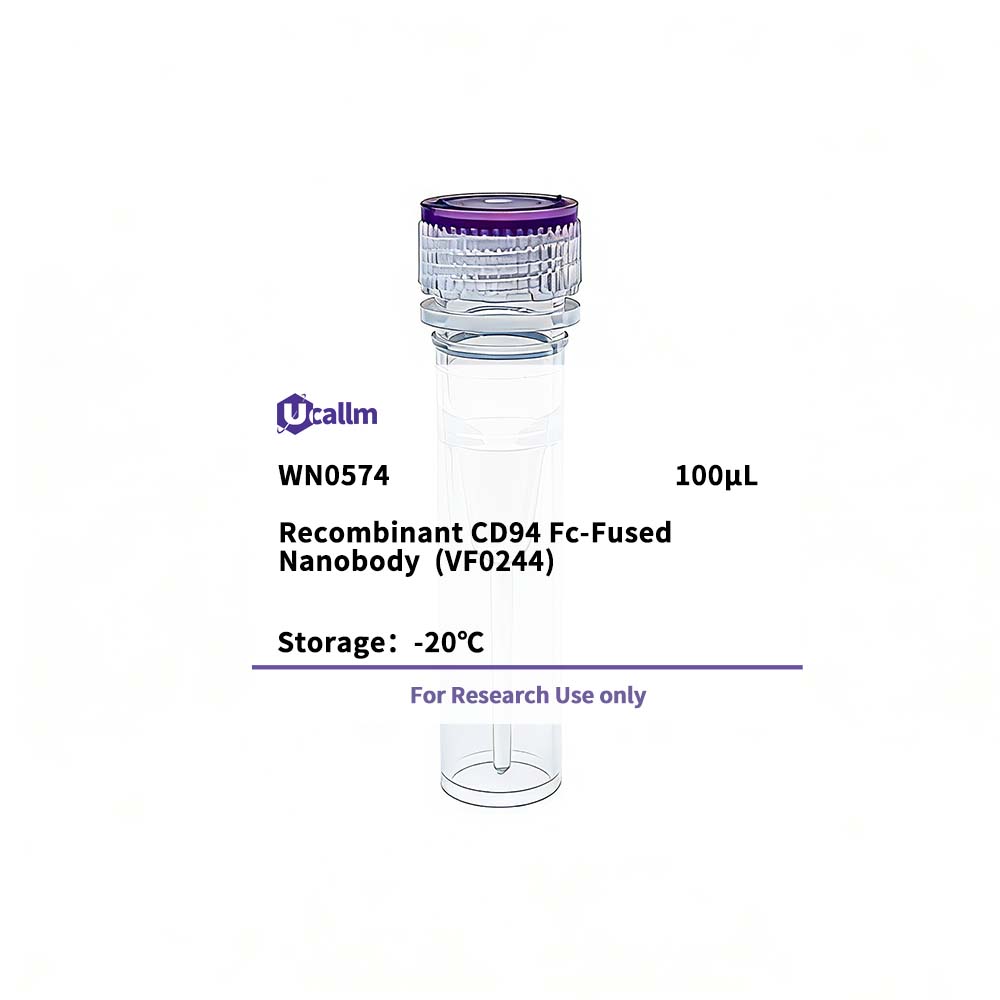
SKU: WN0574 Categories: ,

Recombinant CD94 Fc-Fused Nanobody (VF0244)

$365.00

SKU: WN0574
Enter the quantity you would like, or drag the panel to find the quantity and price that best for you
Bulk QuoteAuthorize OEM & ODM

Product details

Background:Natural killer (NK) cells are a distinct lineage of lymphocytes that mediate cytotoxic activity and secrete cytokines upon immune stimulation. Several genes of the C-type lectin superfamily, including members of the NKG2 family, are expressed by NK cells and may be involved in the regulation of NK cell function. KLRD1 (CD94) is an antigen preferentially expressed on NK cells and is classified as a type II membrane protein because it has an external C terminus. Three transcript variants encoding two different isoforms have been found forThis gene. [provided by RefSeq, Jul 2008]


Specifications

Size100μL
TargetCD94
ReactivityHuman
ApplicationsELISA
MW(Calculated)
MW(Observed)
Host Species
IsotypeIgG2a,Kappa
Conjugate/ModificationUnmodified
Recommended Dilution RatioELISA 1:5000-100000
FormulationPhosphate-buffered solution
PurificationRecombinant Expression and Affinity purified
Storage-15°C to -25°C/1 year(Avoid freeze / thaw cycles)
ConcentrationPlease check the information on the tube
Clonality
Clone NumberVF0573
ImmunogenPurified recombinant Human CD94
SpecificityThis recombinant monoclonal antibody can detects endogenous levels of CD94 protein.
Gene NameKLRD1 CD94
Protein NameNatural killer cells antigen CD94 (KP43) (Killer cell lectin-like receptor subfamily D member 1) (NK cell receptor) (CD antigen CD94)
Other NameKLRD1; / CD94; / Natural killer cells antigen CD94; / KP43; / Killer cell lectin-like receptor subfamily D member 1; / NK cell receptor; / CD antigen CD94; / CD94 nanobody
SpeciesHuman
Gene ID3824
UniprotQ13241
Species.1
Gene ID.1
Uniprot.1
Species.2
Gene ID.2
Uniprot.2
Cellular LocalizationCell membrane; Single-pass type II membrane protein .
Tissue Expression
Signaling_pathwayOrganismal Systems >> Immune system >> Natural killer cell mediated cytotoxicity;Organismal Systems >> Immune system >> Antigen processing and presentation;Human Diseases >> Immune disease >> Graft-versus-host disease
Research Areas
FunctionPlays a role as a receptor for the recognition of MHC class I HLA-E molecules by NK cells and some cytotoxic T-cells.,online information:CD94,similarity:Contains 1 C-type lectin domain.,subunit:Can form disulfide-bonded heterodimer with NKG2 family members.,tissue specificity:Natural killer cells.,
Please login to post questions
Back to Top
Product has been added to your cart
