SKU: WN0586 Categories: ,

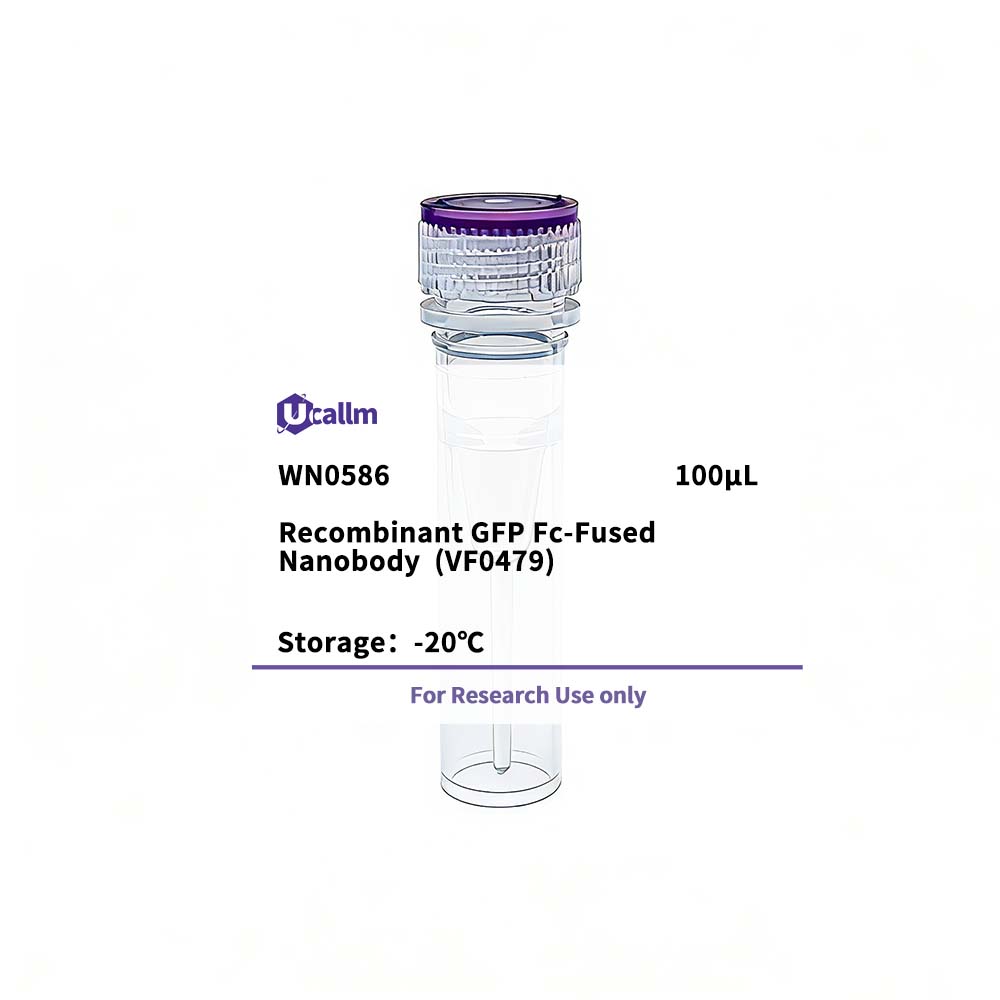
Recombinant GFP Fc-Fused Nanobody (VF0479)

$365.00

SKU: WN0586
Enter the quantity you would like, or drag the panel to find the quantity and price that best for you
Bulk QuoteAuthorize OEM & ODM

Product details

Background:Green Fluorescent Protein (GFP) has quickly become a powerful research tool for assessing gene expression and subcellular protein distribution in fixed or living cells. GFP is excited by and brightly fluoresces when exposed to UV or blue light. This feature makes it ideal as a marker for use in fluorescence microscopy, cytometry, tagging fusion proteins, and assaying transcriptional regulation from gene promoters in vivo. Numerous GFP variants with enhanced and shifted emission spectra (blue, green, and yellow) have been developed through amino acid substitutions at specific residues.

Specifications

Size100μL
TargetGFP
ReactivityHuman
ApplicationsELISA
MW(Calculated)
MW(Observed)
Host Species
IsotypeIgG2a,Kappa
Conjugate/ModificationUnmodified
Recommended Dilution RatioELISA 1:5000-100000
FormulationPhosphate-buffered solution
PurificationRecombinant Expression and Affinity purified
Storage-15°C to -25°C/1 year(Avoid freeze / thaw cycles)
ConcentrationPlease check the information on the tube
Clonality
Clone NumberVF0373
ImmunogenPurified recombinant GFP
SpecificityThis recombinant monoclonal antibody can detects endogenous levels of GFP protein.
Gene NameCEACAM8 CGM6
Protein NameCarcinoembryonic antigen-related cell adhesion molecule 8 (CD67 antigen) (Carcinoembryonic antigen CGM6) (Non-specific cross-reacting antigen NCA-95) (CD antigen CD66b)
Other NameGFP nanobody
SpeciesHuman
Gene ID
Uniprot
Species.1
Gene ID.1
Uniprot.1
Species.2
Gene ID.2
Uniprot.2
Cellular LocalizationCell membrane; Lipid-anchor, GPI-anchor . Cell surface .
Tissue ExpressionExpressed in leukocytes of chronic myeloid Leukemia patients and bone marrow.
Signaling_pathway
Research Areas
Functionsimilarity:Belongs to the immunoglobulin superfamily. CEA family.,similarity:Contains 1 Ig-like V-type (immunoglobulin-like) domain.,similarity:Contains 2 Ig-like C2-type (immunoglobulin-like) domains.,tissue specificity:Expressed in leukocytes of chronic myeloid Leukemia patients and bone marrow.,
Please login to post questions
Back to Top
Product has been added to your cart
