

SPB10 Polyclonal Antibody
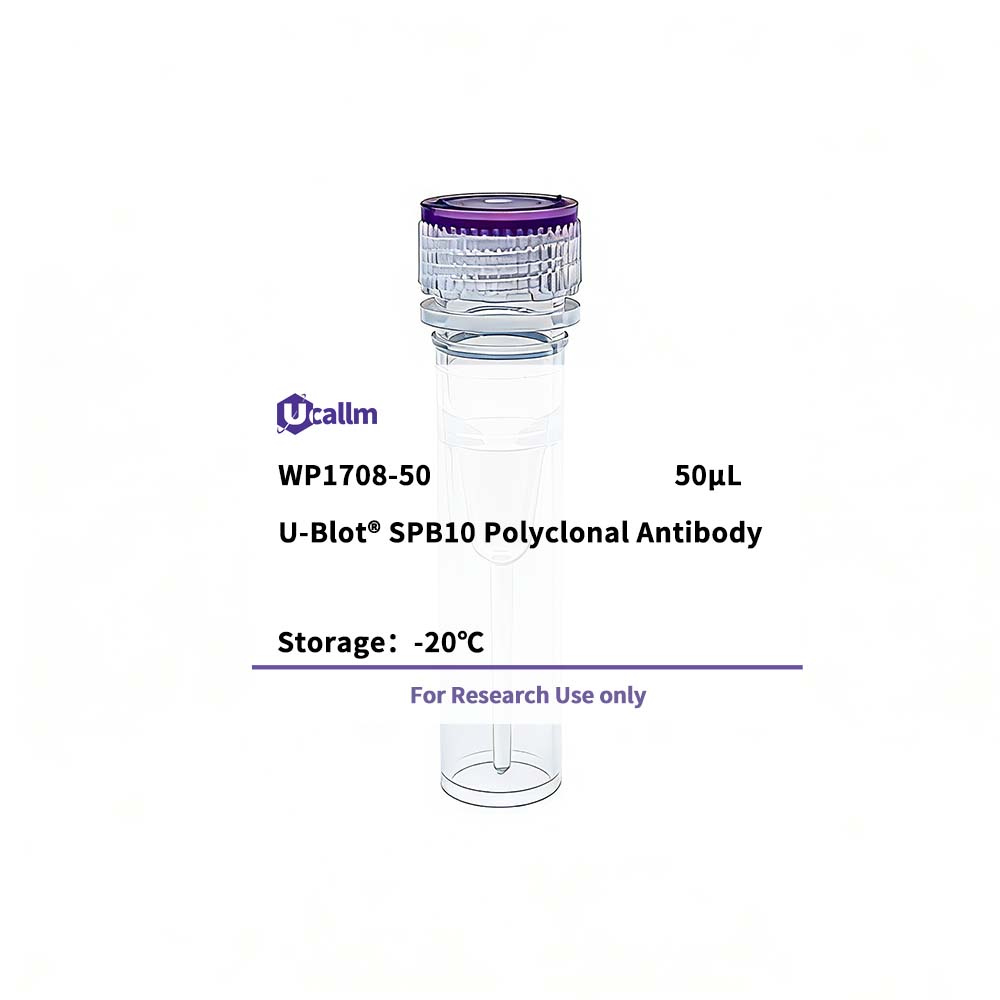
Ucallm_WP1708-50
Price range: $268.00 through $328.00
Product details
Background:
This gene is a member of the serpin peptidase inhibitor, clade B family and is found in a cluster of other similar genes on chromosome 18. The protein encoded by this gene appears to help control the regulation of protease functions during hematopoiesis. Variations in this gene may increase the risk of prostate cancer. [provided by RefSeq, Dec 2015],
Specifications
| Size | 50μL/100μL |
| Target | SPB10 |
| Reactivity | Human, Mouse, Rat |
| Applications | WB, ELISA |
| MW(Calculated) | |
| MW(Observed) | 43kD |
| Host Species | Rabbit |
| Isotype | IgG |
| Conjugate/Modification | Unmodified |
| Recommended Dilution Ratio | WB 1:500-2000; ELISA 1:5000-20000 |
| Formulation | Liquid in PBS containing 50% glycerol,0.5% BSA and 0.02% sodium azide. |
| Purification | The antibody was affinity-purified from rabbit antiserum by affinity-chromatography using epitope-specific immunogen. |
| Storage | -15°C to -25°C/1 year(Do not lower than -25°C) |
| Concentration | 1 mg/ml |
| Clonality | Polyclonal |
| Clone Number | |
| Immunogen | Synthesized peptide derived from part region of human protein |
| Specificity | SPB10 Polyclonal Antibody detects endogenous levels of protein. |
| Gene Name | SERPINB10 PI10 |
| Protein Name | Serpin B10 (Bomapin) (Peptidase inhibitor 10) (PI-10) |
| Other Name | |
| Species | Human |
| Gene ID | 5273 |
| Uniprot | P48595, |
| Species.1 | Mouse |
| Gene ID.1 | |
| Uniprot.1 | Q8K1K6, |
| Species.2 | Rat |
| Gene ID.2 | |
| Uniprot.2 | Q8K3K4 |
| Cellular Localization | Nucleus. Cytoplasm. Mostly found in the nucleus. |
| Tissue Expression | Expressed specifically in myeloid cells and the bone marrow. |
| Signaling_pathway | |
| Research Areas | >>Amoebiasis |
| Function | Function:Protease inhibitor that may play a role in the regulation of protease activities during hematopoiesis and apoptosis induced by TNF. May regulate protease activities in the cytoplasm and in the nucleus.,similarity:Belongs to the serpin family.,similarity:Belongs to the serpin family. Ov-serpin subfamily.,tissue specificity:Expressed specifically in the bone marrow., |
Please login to post questions
Related products





