SKU: WP0479 Categories: ,

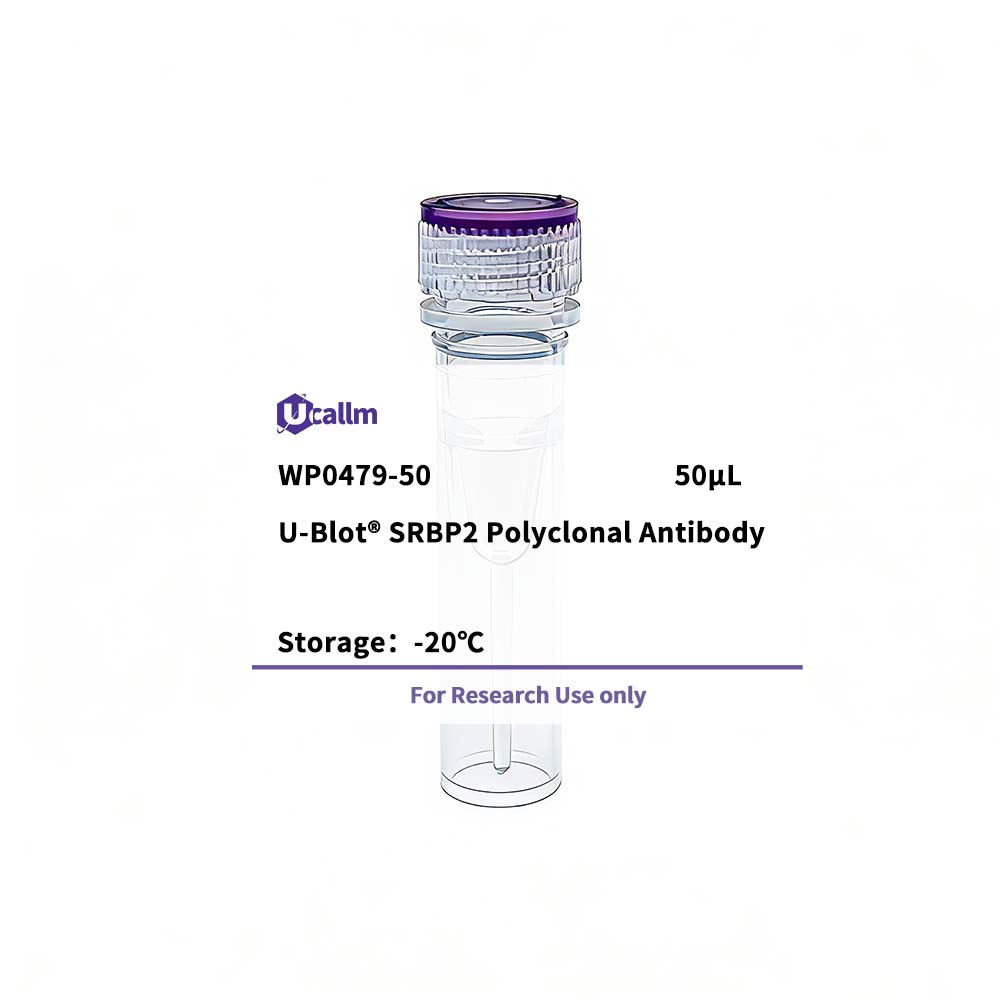
SRBP2 Polyclonal Antibody

Price range: $268.00 through $328.00

SKU: WP0479-100
Enter the quantity you would like, or drag the panel to find the quantity and price that best for you
Bulk QuoteAuthorize OEM & ODM

Product details

Background:

This gene encodes a member of the a ubiquitously expressed transcription factor that controls cholesterol homeostasis by regulating transcription of sterol-regulated genes. The encoded protein contains a basic helix-loop-helix-leucine zipper (bHLH-Zip) domain and binds the sterol regulatory element 1 motif. Alternate splicing results in multiple transcript variants. [provided by RefSeq, Jul 2013],

Specifications

Size50μL/100μL
TargetSREBP-2
ReactivityHuman, Mouse, Rat
ApplicationsWB, ELISA
MW(Calculated)
MW(Observed)125kD
Host SpeciesRabbit
IsotypeIgG
Conjugate/ModificationUnmodified
Recommended Dilution RatioWB 1:500-2000; ELISA 1:5000-20000
FormulationLiquid in PBS containing 50% glycerol,0.5% BSA and 0.02% sodium azide.
PurificationThe antibody was affinity-purified from rabbit antiserum by affinity-chromatography using epitope-specific immunogen.
Storage-15°C to -25°C/1 year(Do not lower than -25°C)
Concentration1 mg/ml
ClonalityPolyclonal
Clone Number
ImmunogenSynthesized peptide derived from human protein . at AA range: 390-470
SpecificitySRBP2 Polyclonal Antibody detects endogenous levels of protein.
Gene NameSREBF2 BHLHD2 SREBP2
Protein NameSterol regulatory element-binding protein 2 (SREBP-2) (Class D basic helix-loop-helix protein 2) (bHLHd2) (Sterol regulatory element-binding transcription factor 2) [Cleaved into: Processed sterol regulatory element-binding protein 2]
Other NameSRBP2; / Sterol regulatory element-binding protein 2; / SREBP-2; / Class D basic helix-loop-helix protein 2; / bHLHd2; / Sterol regulatory element-binding transcription factor 2; / [Cleaved into: Processed sterol regulatory element-binding protein 2]
SpeciesHuman
Gene ID6721
UniprotQ12772,
Species.1Mouse
Gene ID.120788
Uniprot.1Q3U1N2,
Species.2Rat
Gene ID.2300095
Uniprot.2Q3T1I5
Cellular Localization[Sterol regulatory element-binding protein 2]: Endoplasmic reticulum membrane; Multi-pass membrane protein . Golgi apparatus membrane; Multi-pass membrane protein . Cytoplasmic vesicle, COPII-coated vesicle membrane; Multi-pass membrane protein . At high sterol concentrations, the SCAP-SREBP is retained in the endoplasmic reticulum (PubMed:32322062). Low sterol concentrations promote recruitment into COPII-coated vesicles and transport of the SCAP-SREBP to the Golgi, where it is processed (PubMed:32322062). .; [Processed sterol regulatory element-binding protein 2]: Nucleus . Transported into the nucleus with the help of importin-beta. Dimerization of the bHLH domain is a prerequisite for importin beta-dependent nuclear import. .
Tissue ExpressionUbiquitously expressed in adult and fetal tissues.
Signaling_pathway
Research Areas
FunctionFunction:Transcriptional activator required for lipid homeostasis. Regulates transcription of the LDL receptor gene as well as the cholesterol and to a lesser degree the fatty acid synthesis pathway (By similarity). Binds the sterol regulatory element 1 (SRE-1) (5'-ATCACCCCAC-3') found in the flanking region of the LDRL and HMG-CoA synthase genes.,PTM:At low cholesterol the SCAP/SREBP complex is recruited into COPII vesicles for export from the ER. In the Golgi complex SREBPs are cleaved sequentially by site-1 and site-2 protease. The first cleavage by site-1 protease occurs within the luminal loop, the second cleavage by site-2 protease occurs within the first transmembrane domain and releases the transcription factor from the Golgi membrane. Apoptosis triggers cleavage by the cysteine proteases caspase-3 and caspase-7.,similarity:Belongs to the SREBP family.,similarity:Contains 1 basic helix-loop-helix (bHLH) domain.,subcellular location:Moves from the endoplasmic reticulum to the Golgi in the absence of sterols.,subunit:Forms a tight complex with SCAP in the ER membrane. Efficient DNA binding of the soluble transcription factor fragment requires dimerization with another bHLH protein. Interacts with LMNA.,tissue specificity:Ubiquitously expressed in adult and fetal tissues.,
Please login to post questions
Back to Top
Product has been added to your cart
