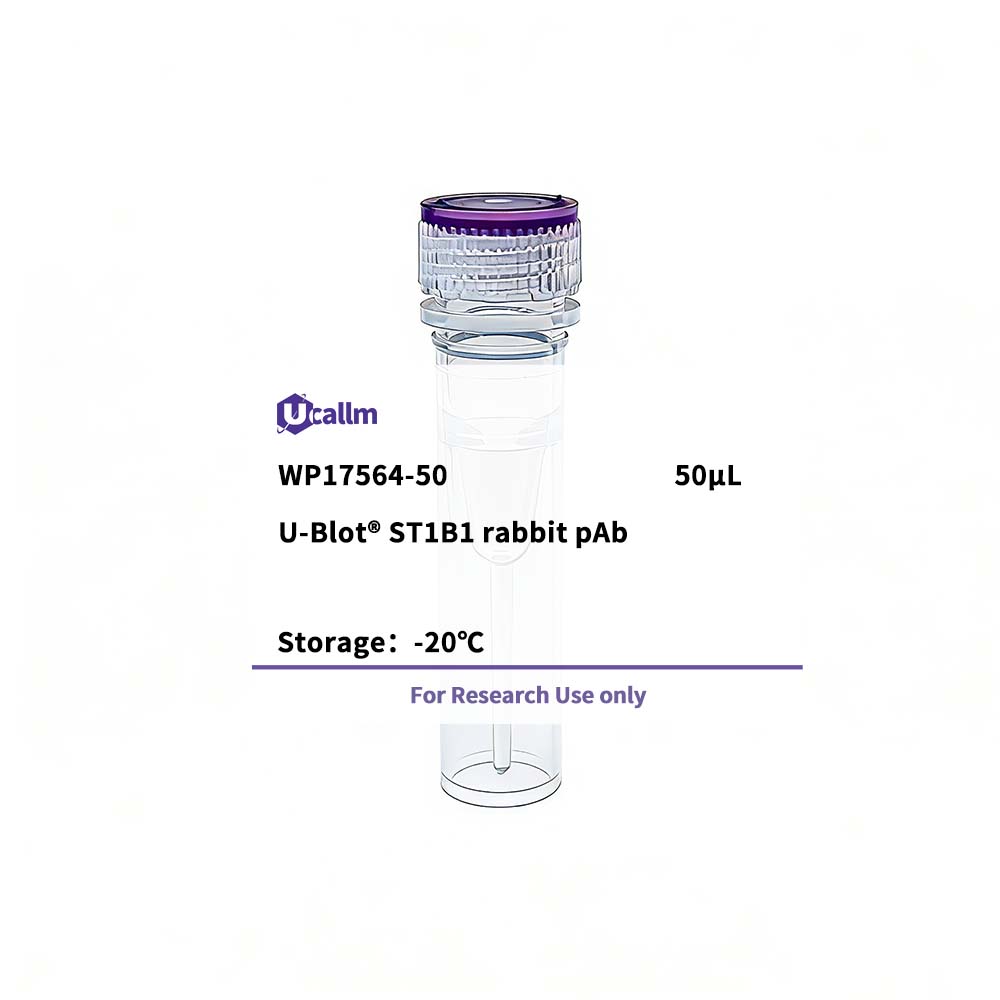
SKU: WP17564 Categories: ,

ST1B1 rabbit pAb

Price range: $268.00 through $328.00

SKU: WP17564-100
Enter the quantity you would like, or drag the panel to find the quantity and price that best for you
Bulk QuoteAuthorize OEM & ODM

Product details

Background:

Sulfotransferase enzymes catalyze the sulfate conjugation of many hormones, neurotransmitters, drugs, and xenobiotic compounds. These cytosolic enzymes are different in their tissue distributions and substrate specificities. The gene structure (number and length of exons) is similar among family members. However, the total genomic length of this gene is greater than that of other SULT1 genes. [provided by RefSeq, Jul 2008],

Specifications

Size50μL/100μL
TargetST1B1
ReactivityHuman, Mouse, Rat
ApplicationsWB
MW(Calculated)33kD
MW(Observed)
Host SpeciesRabbit
IsotypeIgG
Conjugate/ModificationUnmodified
Recommended Dilution RatioWB 1:500-2000
FormulationLiquid in PBS containing 50% glycerol, 0.5% BSA and 0.02% sodium azide.
PurificationThe antibody was affinity-purified from rabbit antiserum by affinity-chromatography using epitope-specific immunogen.
Storage-15°C to -25°C/1 year(Do not lower than -25°C)
Concentration1 mg/ml
ClonalityPolyclonal
Clone Number
ImmunogenSynthesized peptide derived from human ST1B1 AA range: 223-273
SpecificityThis antibody detects endogenous levels of ST1B1 at Human/Mouse/Rat
Gene NameSULT1B1 ST1B2 SULT1B2
Protein NameST1B1
Other Name
SpeciesHuman
Gene ID27284
UniprotO43704,
Species.1Mouse
Gene ID.156362
Uniprot.1Q9QWG7,
Species.2Rat
Gene ID.264305
Uniprot.2P52847
Cellular LocalizationCytoplasm .
Tissue ExpressionHighly expressed in the liver, peripheral blood leukocytes, colon (mucosal lining), small intestine (jejunum) and spleen. A lesser expression was observed in the lung, placenta and thymus.
Signaling_pathway
Research Areas
FunctionFunction:Catalyzes the sulfate conjugation of many hormones, neurotransmitters, drugs and xenobiotic compounds. Sulfonation increases the water solubility of most compounds, and therefore their renal excretion, but it can also result in bioactivation to form active metabolites. Sulfates dopamine, small phenols such as 1-naphthol and p-nitrophenol and thyroid hormones, including 3,3'-diiodothyronine, triidothyronine, reverse triiodothyronine and thyroxine.,similarity:Belongs to the sulfotransferase 1 family.,subunit:Monomer.,tissue specificity:Highly expressed in the liver, peripheral blood leukocytes, colon (mucosal lining), small intestine (jejunum) and spleen. A lesser expression was observed in the lung, placenta and thymus.,
Please login to post questions
Back to Top
Product has been added to your cart


