

Product details
Background:
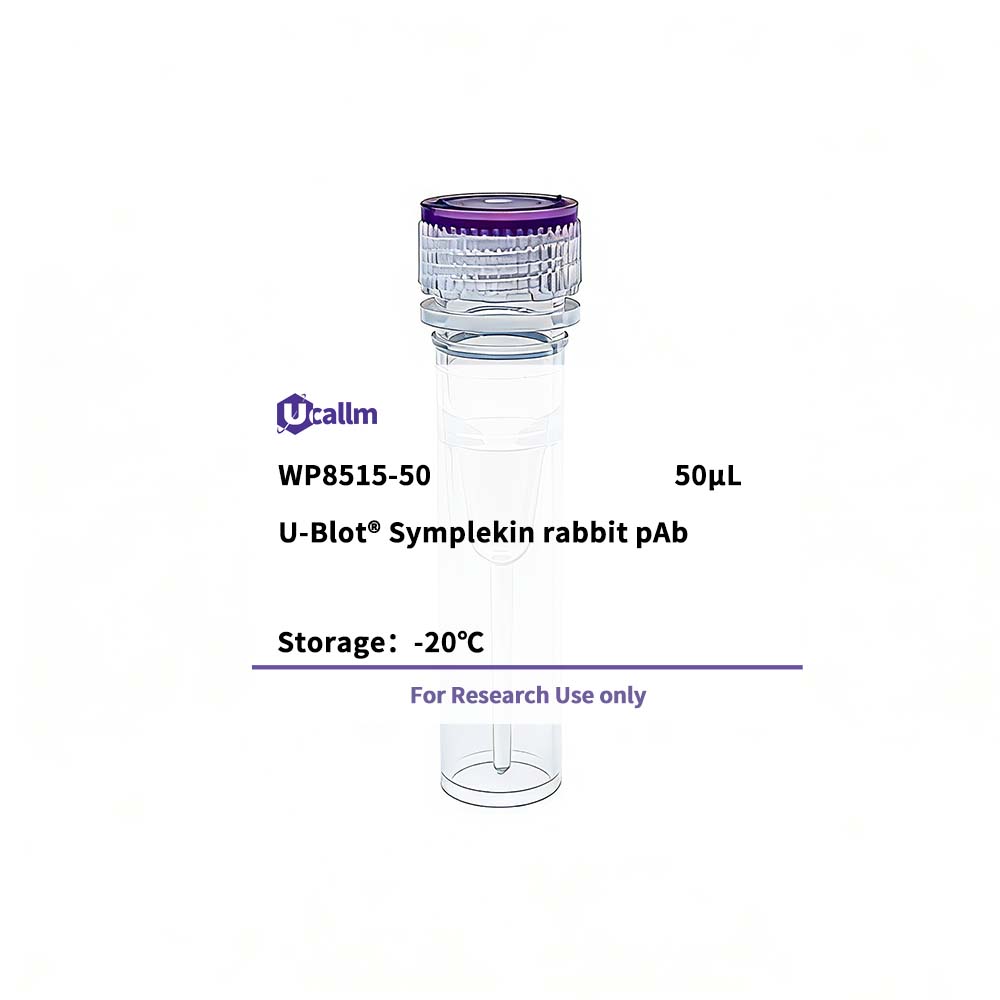
Price range: $268.00 through $328.00
Background:
| Size | 50μL/100μL |
| Target | SYMPK |
| Reactivity | Human |
| Applications | WB |
| MW(Calculated) | 140kD |
| MW(Observed) | |
| Host Species | Rabbit |
| Isotype | IgG |
| Conjugate/Modification | Unmodified |
| Recommended Dilution Ratio | WB 1:500-2000 |
| Formulation | Liquid in PBS containing 50% glycerol, 0.5% BSA and 0.02% sodium azide. |
| Purification | The antibody was affinity-purified from rabbit antiserum by affinity-chromatography using epitope-specific immunogen. |
| Storage | -15°C to -25°C/1 year(Do not lower than -25°C) |
| Concentration | 1 mg/ml |
| Clonality | Polyclonal |
| Clone Number | |
| Immunogen | Synthesized peptide derived from human Symplekin |
| Specificity | This antibody detects endogenous levels of Symplekin at Human |
| Gene Name | SYMPK SPK |
| Protein Name | Symplekin |
| Other Name | |
| Species | Human |
| Gene ID | 8189 |
| Uniprot | Q92797, |
| Species.1 | Mouse |
| Gene ID.1 | |
| Uniprot.1 | Q80X82 |
| Species.2 | |
| Gene ID.2 | |
| Uniprot.2 | |
| Cellular Localization | Cytoplasm, cytoskeleton. Cell junction, tight junction. Cell membrane; Peripheral membrane protein; Cytoplasmic side. Cell junction. Nucleus, nucleoplasm. Cytoplasmic face of adhesion plaques (major) and nucleoplasm (minor) (in cells with TJ). Nucleoplasm (in cells without TJ). Nuclear bodies of heat-stressed cells. Colocalizes with HSF1 in nuclear stress bodies upon heat shock (PubMed:14707147). . |
| Tissue Expression | In testis, expressed in polar epithelia and Sertoli cells but not in vascular endothelia. The protein is detected in stomach, duodenum, pancreas, liver, fetal brain, carcinomas, lens-forming cells, fibroblasts, lymphocytes, lymphoma cells, erythroleukemia cells but not in endothelium of vessels, epidermis, intercalated disks, Purkinje fiber cells of the heart and lymph node. |
| Signaling_pathway | Cellular Processes >> Cellular community - eukaryotes >> Tight junction |
| Research Areas | |
| Function | Scaffold protein that functions as a component of a multimolecular complex involved in histone mRNA 3'-end processing. Specific component of the tight junction (TJ) plaque, but might not be an exclusively junctional component. May have a house-keeping rule. Is involved in pre-mRNA polyadenylation. Enhances SSU72 phosphatase activity. |





