SKU: WP14640 Categories: ,

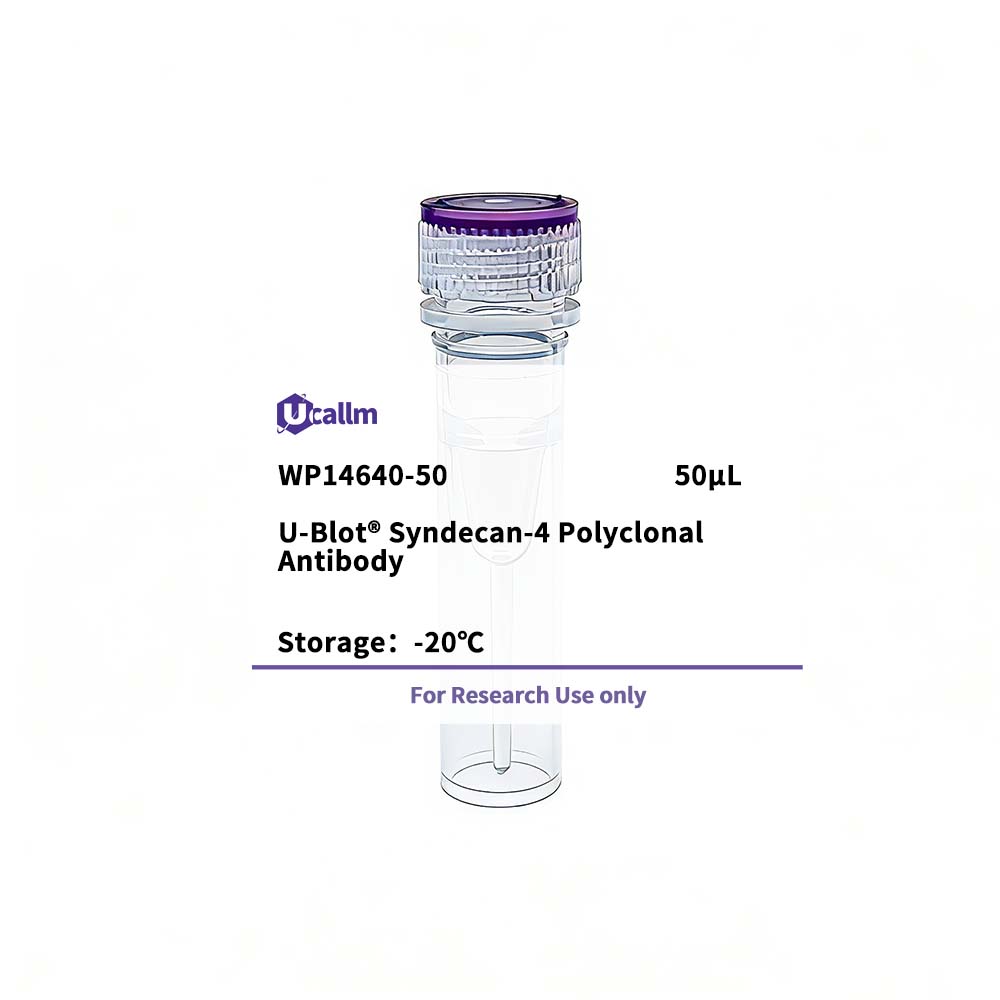
Syndecan-4 Polyclonal Antibody

Price range: $268.00 through $328.00

SKU: WP14640-100
Enter the quantity you would like, or drag the panel to find the quantity and price that best for you
Bulk QuoteAuthorize OEM & ODM

Product details

Background:

The protein encoded by this gene is a transmembrane (type I) heparan sulfate proteoglycan that functions as a receptor in intracellular signaling. The encoded protein is found as a homodimer and is a member of the syndecan proteoglycan family. This gene is found on chromosome 20, while a pseudogene has been found on chromosome 22. [provided by RefSeq, Jul 2008],

Specifications

Size50μL/100μL
TargetSyndecan-4
ReactivityHuman, Mouse, Rat
ApplicationsWB, IHC, IF, ELISA
MW(Calculated)
MW(Observed)22kD
Host SpeciesRabbit
IsotypeIgG
Conjugate/ModificationUnmodified
Recommended Dilution RatioWB 1:500-1:2000; IHC 1:100-1:300; IF 1:200-1:1000; ELISA 1:40000; Not yet tested in other applications. / Note: For IHC, we suggest antigen retrieval with TE buffer pH 9.0 (Cat#WT1004)
FormulationLiquid in PBS containing 50% glycerol, 0.5% BSA and 0.02% sodium azide.
PurificationThe antibody was affinity-purified from rabbit antiserum by affinity-chromatography using epitope-specific immunogen.
Storage-15°C to -25°C/1 year(Do not lower than -25°C)
Concentration1 mg/ml
ClonalityPolyclonal
Clone Number
ImmunogenThe antiserum was produced against synthesized peptide derived from human Syndecan4. AA range:145-194
SpecificitySyndecan-4 Polyclonal Antibody detects endogenous levels of Syndecan-4 protein.
Gene NameSDC4
Protein NameSyndecan-4
Other NameSDC4; / Syndecan-4; / SYND4; / Amphiglycan; / Ryudocan core protein
SpeciesHuman
Gene ID6385
UniprotP31431,
Species.1Mouse
Gene ID.120971
Uniprot.1O35988,
Species.2Rat
Gene ID.224771
Uniprot.2P34901
Cellular Localization[Isoform 1]: Membrane; Single-pass type I membrane protein . Secreted . Shedding of the ectodomain produces a soluble form. .; [Isoform 2]: Secreted.
Tissue ExpressionExpressed in epithelial and fibroblastic cells.
Signaling_pathwayEnvironmental Information Processing >> Signaling molecules and interaction >> ECM-receptor interaction;Environmental Information Processing >> Signaling molecules and interaction >> Cell adhesion molecules
Research Areas>>ECM-receptor interaction; / >>Cell adhesion molecules; / >>Proteoglycans in cancer; / >>Fluid shear stress and atherosclerosis
FunctionFunction:Cell surface proteoglycan that bears heparan sulfate.,Function:Cell surface proteoglycan.,similarity:Belongs to the syndecan proteoglycan family.,subunit:Homodimer. Interacts with CDCP1, with GIPC PDZ domain and with NUDT16L1/SDOS (By similarity). Interacts with SDCBP.,tissue specificity:Expressed in epithelial and fibroblastic cells.,
Please login to post questions
Back to Top
Product has been added to your cart



