

U-Blot® CUL-1 Rabbit mAb
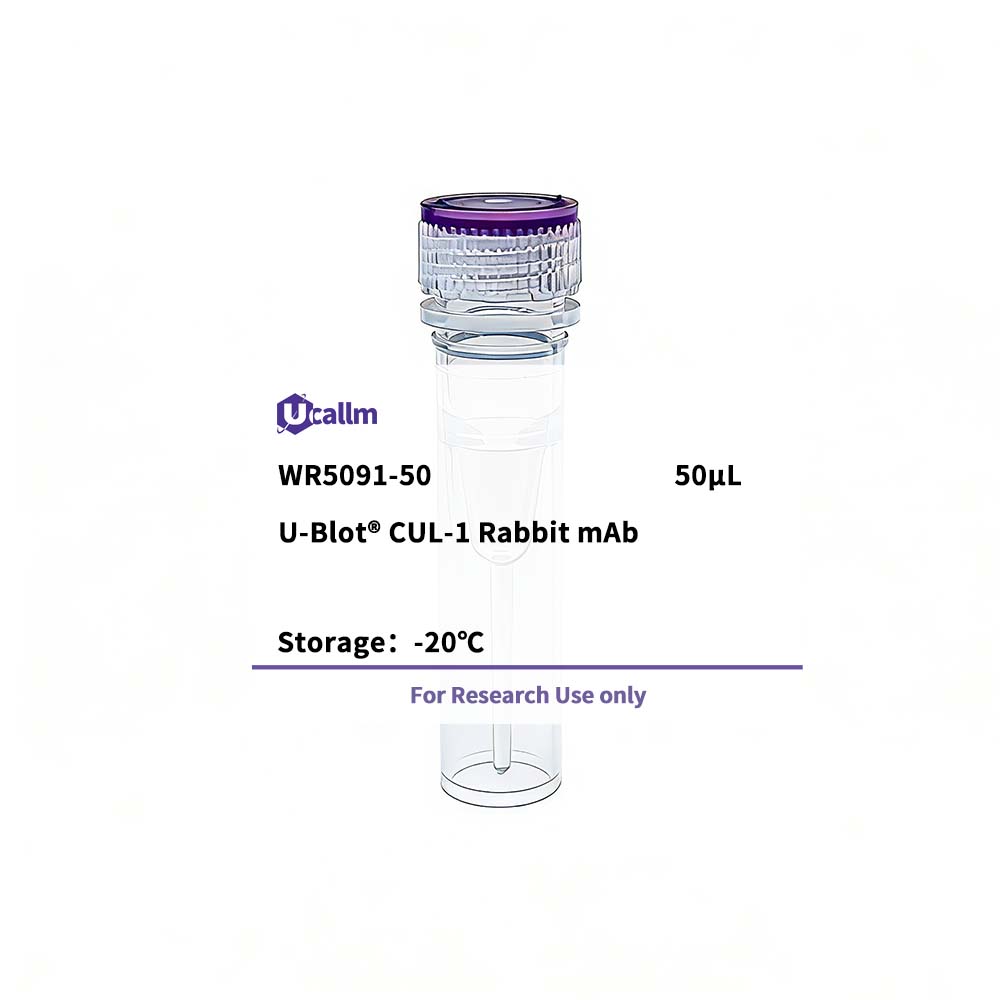
Ucallm_WR5091-50
Price range: $268.00 through $328.00
Product details
Background:function:Core component of multiple cullin-RING-based SCF (SKP1-CUL1-F-box protein) E3 ubiquitin-protein ligase complexes, which mediate the ubiquitination of proteins involved in cell cycle progression, signal transduction and transcription. In the SCF complex, serves as a rigid scaffold that organizes the SKP1-F-box protein and RBX1 subunits. May contribute to catalysis through positioning of the substrate and the ubiquitin-conjugating enzyme. The E3 ubiquitin-protein ligase activity of the complex is dependent on the neddylation of the cullin subunit and is inhibited by the association of the deneddylated cullin subunit with TIP120A/CAND1. The functional specificity of the SCF complex depends on the F-box protein as substrate recognition component. SCF(BTRC) and SCF(FBXW11) direct ubiquitination of CTNNB1 and participates in Wnt signaling. SCF(BTRC) and SCF(FBXW11) direct ubiquitination of phosphorylated NFKBIA. SCF(BTRC) directs ubiquitination of NFKBIB, NFKBIE, ATF4, SMAD3, SMAD4, CDC25A, FBXO5 and probably NFKB2. SCF(SKP2) directs ubiquination of phosphorylated CDKN1B/p27kip and is involved in regulation of G1/S transition. SCF(SKP2) directs ubiquination of ORC1L, CDT1, RBL2, ELF4, CDKN1A, RAG2, FOXO1A, and probably MYC and TAL1. SCF(FBXW7) directs ubiquitination of cyclin E, NOTCH1 released notch intracellular domain (NICD), and probably PSEN1. SCF(FBXW2) directs ubiquitination of GCM1. SCF(FBXO32) directs ubiquitination of MYOD1. SCF(FBXO7) directs ubiquitination of BIRC2 and DLGAP5. SCF(FBXO33) directs ubiquitination of YBX1 (By similarity). SCF(FBXO11) does not seem to direct ubiquitination of TP53. Interacts with FBXW8. Interacts with CUL7; the interaction seems to be mediated by FBXW8.,pathway:Protein modification; protein ubiquitination.,PTM:Neddylated; which enhances the ubiquitination activity of SCF. Deneddylated via its interaction with the COP9 signalosome (CSN) complex.,similarity:Belongs to the cullin family.,subunit:Component of multiple SCF (SKP1-CUL1-F-box) E3 ubiquitin-protein ligase complexes formed of CUL1, SKP1A, RBX1 and a variable F-box domain-containing protein as substrate-specific subunit. Component of the SCF(BTRC) complex containing BTRC. Component of the SCF(FBXW11) complex containing FBXW11. Component of the SCF(SKP2) complex containing SKP2, in which it interacts directly with SKP1, SKP2 and RBX1. Component of the SCF(FBXW2) complex containing FBXw2. Component of the SCF(FBXO32) complex containing FBXO32. Component of the probable SCF(FBXO7) complex containing FBXO7. Component of the SCF(FBXO11) complex containing FBXO11. Component of the SCF(FBXO25) complex containing FBXO25. Component of the SCF(FBXO33) complex containing FBXO33. Component of the probable SCF(FBXO4) complex containing FBXO4. Interacts with RNF7. Part of a complex with TIP120A/CAND1 and RBX1. The unneddylated form interacts with TIP120A/CAND1 and the interaction negatively regulates the association with SKP1 in the SCF complex. Interacts with COPS2. Can self-associate.,tissue specificity:Expressed in lung fibroblasts.,
Specifications
| Size | 50μL/100μL |
| Target | CUL-1 |
| Reactivity | Human, Mouse, Rat |
| Applications | WB, IHC, IF, ELISA |
| MW(Calculated) | 90kD |
| MW(Observed) | 90kD |
| Host Species | Rabbit |
| Isotype | IgG,Kappa |
| Conjugate/Modification | Unmodified |
| Recommended Dilution Ratio | IHC 1:200-1:1000; WB 1:2000-1:10000; IF 1:200-1:1000; ELISA 1:5000-1:20000; / Note: For IHC, we suggest antigen retrieval with TE buffer pH 9.0 (Cat#WT1004) |
| Formulation | PBS, 50% glycerol, 0.05% Proclin 300, 0.05%BSA |
| Purification | Recombinant Antibody expressed in animal component-free (ACF) media, purified via Protein A affinity chromatography. |
| Storage | -15°C to -25°C/1 year(Do not lower than -25°C) |
| Concentration | |
| Clonality | Monoclonal |
| Clone Number | RM1344R |
| Immunogen | The specific immunogen used to produce this antibody is proprietary information. |
| Specificity | Endogenous |
| Gene Name | CUL1 |
| Protein Name | Cullin-1 |
| Other Name | CUL1; / Cullin-1; / CUL-1 |
| Species | Human |
| Gene ID | 8454 |
| Uniprot | Q13616, |
| Species.1 | Mouse |
| Gene ID.1 | 26965 |
| Uniprot.1 | Q9WTX6 |
| Species.2 | |
| Gene ID.2 | |
| Uniprot.2 | |
| Cellular Localization | nucleoplasm,cytosol,SCF ubiquitin ligase complex,cullin-RING ubiquitin ligase complex,Parkin-FBXW7-Cul1 ubiquitin ligase complex, |
| Tissue Expression | Expressed in lung fibroblasts. |
| Signaling_pathway | Cellular Processes >> Cell growth and death >> Cell cycle;Organismal Systems >> Environmental adaptation >> Circadian rhythm;Human Diseases >> Cancer: overview >> Pathways in cancer;Environmental Information Processing >> Signal transduction >> Wnt signaling pathway;Environmental Information Processing >> Signal transduction >> Hedgehog signaling pathway;Environmental Information Processing >> Signal transduction >> TGF-beta signaling pathway;Genetic Information Processing >> Folding, sorting and degradation >> Ubiquitin mediated proteolysis |
| Research Areas | >>Cell cycle; / >>Oocyte meiosis; / >>Ubiquitin mediated proteolysis; / >>Protein processing in endoplasmic reticulum; / >>Wnt signaling pathway; / >>Hedgehog signaling pathway; / >>TGF-beta signaling pathway; / >>Circadian rhythm; / >>Shigellosis; / >>Human immunodeficiency virus 1 infection; / >>Pathways in cancer |
| Function | Function:Core component of multiple cullin-RING-based SCF (SKP1-CUL1-F-box protein) E3 ubiquitin-protein ligase complexes, which mediate the ubiquitination of proteins involved in cell cycle progression, signal transduction and transcription. In the SCF complex, serves as a rigid scaffold that organizes the SKP1-F-box protein and RBX1 subunits. May contribute to catalysis through positioning of the substrate and the ubiquitin-conjugating enzyme. The E3 ubiquitin-protein ligase activity of the complex is dependent on the neddylation of the cullin subunit and is inhibited by the association of the deneddylated cullin subunit with TIP120A/CAND1. The functional specificity of the SCF complex depends on the F-box protein as substrate recognition component. SCF(BTRC) and SCF(FBXW11) direct ubiquitination of CTNNB1 and participates in Wnt signaling. SCF(BTRC) and SCF(FBXW11) direct ubiquitination of phosphorylated NFKBIA. SCF(BTRC) directs ubiquitination of NFKBIB, NFKBIE, ATF4, SMAD3, SMAD4, CDC25A, FBXO5 and probably NFKB2. SCF(SKP2) directs ubiquination of phosphorylated CDKN1B/p27kip and is involved in regulation of G1/S transition. SCF(SKP2) directs ubiquination of ORC1L, CDT1, RBL2, ELF4, CDKN1A, RAG2, FOXO1A, and probably MYC and TAL1. SCF(FBXW7) directs ubiquitination of cyclin E, NOTCH1 released notch intracellular domain (NICD), and probably PSEN1. SCF(FBXW2) directs ubiquitination of GCM1. SCF(FBXO32) directs ubiquitination of MYOD1. SCF(FBXO7) directs ubiquitination of BIRC2 and DLGAP5. SCF(FBXO33) directs ubiquitination of YBX1 (By similarity). SCF(FBXO11) does not seem to direct ubiquitination of TP53. Interacts with FBXW8. Interacts with CUL7; the interaction seems to be mediated by FBXW8.,pathway:Protein modification; protein ubiquitination.,PTM:Neddylated; which enhances the ubiquitination activity of SCF. Deneddylated via its interaction with the COP9 signalosome (CSN) complex.,similarity:Belongs to the cullin family.,subunit:Component of multiple SCF (SKP1-CUL1-F-box) E3 ubiquitin-protein ligase complexes formed of CUL1, SKP1A, RBX1 and a variable F-box domain-containing protein as substrate-specific subunit. Component of the SCF(BTRC) complex containing BTRC. Component of the SCF(FBXW11) complex containing FBXW11. Component of the SCF(SKP2) complex containing SKP2, in which it interacts directly with SKP1, SKP2 and RBX1. Component of the SCF(FBXW2) complex containing FBXw2. Component of the SCF(FBXO32) complex containing FBXO32. Component of the probable SCF(FBXO7) complex containing FBXO7. Component of the SCF(FBXO11) complex containing FBXO11. Component of the SCF(FBXO25) complex containing FBXO25. Component of the SCF(FBXO33) complex containing FBXO33. Component of the probable SCF(FBXO4) complex containing FBXO4. Interacts with RNF7. Part of a complex with TIP120A/CAND1 and RBX1. The unneddylated form interacts with TIP120A/CAND1 and the interaction negatively regulates the association with SKP1 in the SCF complex. Interacts with COPS2. Can self-associate.,tissue specificity:Expressed in lung fibroblasts., |
Please login to post questions
Related products



