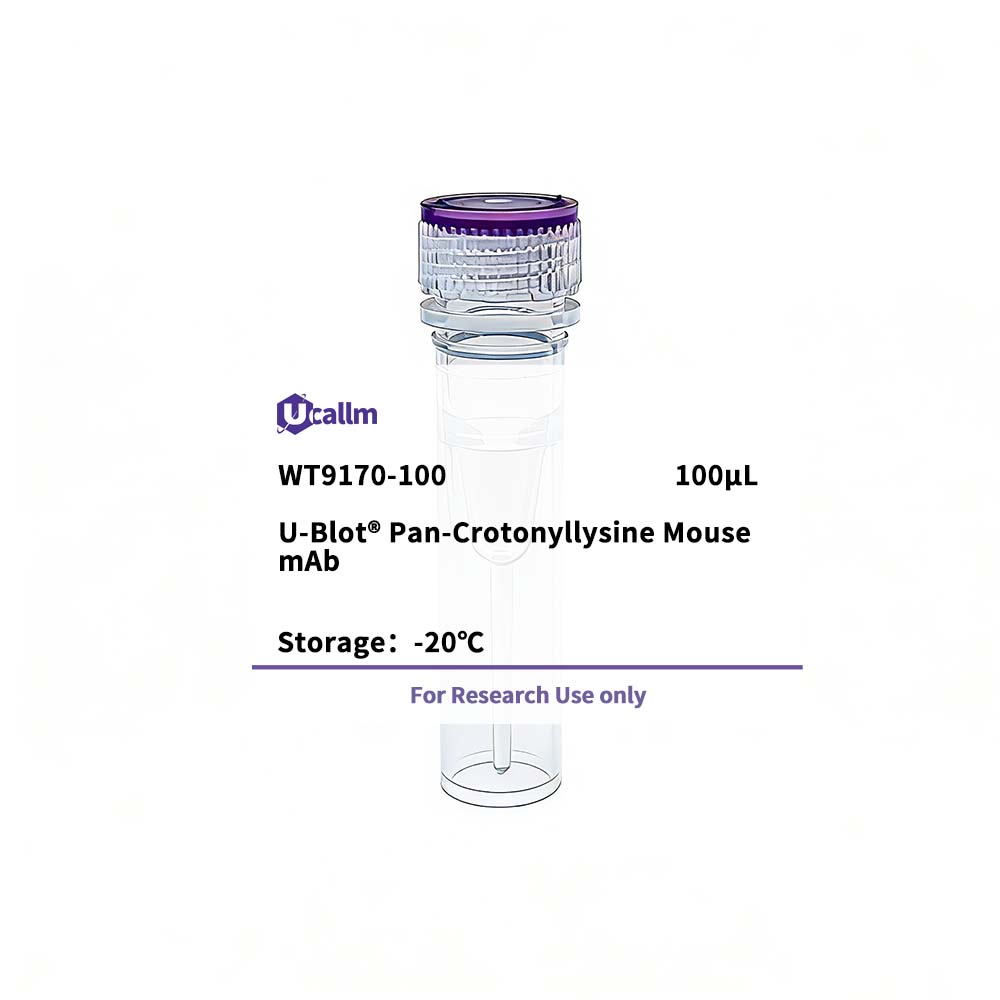
U-Blot® Pan-Crotonyllysine Mouse mAb

$999.00

SKU: WT9170-300
Enter the quantity you would like, or drag the panel to find the quantity and price that best for you
Bulk QuoteAuthorize OEM & ODM

Product details

Background:
Lysine crotonylation is a newly-identified histone post-translational modification that has come to light through integrated proteomic approaches and elaborate biochemistry analyses. Lysine crotonylation has been found to be evolutionarily conserved across multiple species, spanning both prokaryotes and eukaryotes, and occurs in a wide range of proteins, incuding histones and non-histone substrates. The unique structure and genomic localization of lysine crotonylation suggest that it is mechanistically and functionally different from lysine acetylation. Given the revealed roles of lysine crotonylation in spermatogenesis, the novel modification may play important roles in multiple cellular pathophysiological processes by exerting its effects on chromatin structure and epigenetic pathways.
Specifications

TargetCrotonyllysine
ReactivityHuman, Mouse, Rat
ApplicationWB
MW(Calculated)Multiple
MW(Observed)Multiple
Host SpeciesMouse
IsotypeIgG
ConjugateUnconjugated
ModificationLysine crotonylation
Modified site
Recommended dilution ratioWB 1:500 - 1:1000
CompositionPBS, Glycerol, BSA
Purification processProtein G and immunogen affinity purified
Purity
StorageStore at -20°C. Avoid freeze/thaw cycles.
StabilityStable for 12 months from date of receipt/reconstitution
ClonalMonoclonal
Clone NumberW-T85
ImmunogenCrotonylated lysine peptides
Sequence
Specificity
Gene name
Protein Name
Alternative nameKcr
Organism-1
GeneID-1
SwissProt-1
Organism-2
GeneID-2
SwissProt-2
Organism-3
GeneID-3
SwissProt-3
Organism-4
GeneID-4
SwissProt-4
BackgroundLysine crotonylation is a newly-identified histone post-translational modification that has come to light through integrated proteomic approaches and elaborate biochemistry analyses. Lysine crotonylation has been found to be evolutionarily conserved across multiple species, spanning both prokaryotes and eukaryotes, and occurs in a wide range of proteins, incuding histones and non-histone substrates. The unique structure and genomic localization of lysine crotonylation suggest that it is mechanistically and functionally different from lysine acetylation. Given the revealed roles of lysine crotonylation in spermatogenesis, the novel modification may play important roles in multiple cellular pathophysiological processes by exerting its effects on chromatin structure and epigenetic pathways.
Cellular Localization
Please login to post questions

Data Sheet

Download
Back to Top
Product has been added to your cart