SKU: WR5439 Categories: ,

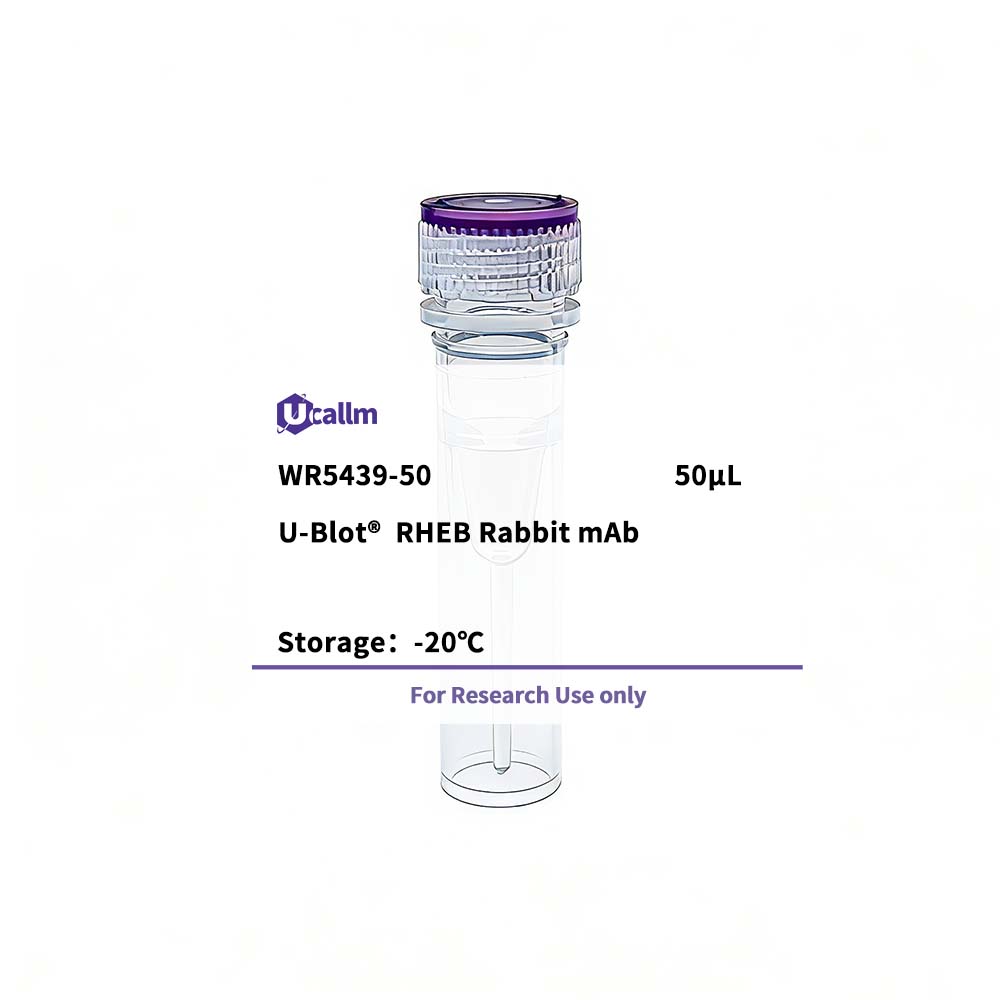
U-Blot® RHEB Rabbit mAb

Price range: $268.00 through $328.00

SKU: WR5439-50
Enter the quantity you would like, or drag the panel to find the quantity and price that best for you
Bulk QuoteAuthorize OEM & ODM

Product details

Background:This gene is a member of the small GTPase superfamily and encodes a lipid-anchored, cell membrane protein with five repeats of the RAS-related GTP-binding region. This protein is vital in regulation of growth and cell cycle progression due to its role in the insulin/TOR/S6K signaling pathway. The protein has GTPase activity and shuttles between a GDP-bound form and a GTP-bound form, and farnesylation of the protein is required for this activity. Three pseudogenes have been mapped, two on chromosome 10 and one on chromosome 22. [provided by RefSeq, Jul 2008],


Specifications

Size50μL/100μL
TargetRHEB
ReactivityHuman, Mouse, Rat
ApplicationsWB, IHC, IF, ELISA
MW(Calculated)21kD
MW(Observed)21kD
Host SpeciesRabbit
IsotypeIgG,Kappa
Conjugate/ModificationUnmodified
Recommended Dilution RatioIHC 1:200-1:1000; WB 1:2000-1:10000; IF 1:200-1:1000; ELISA 1:5000-1:20000; / Note: For IHC, we suggest antigen retrieval with TE buffer pH 9.0 (Cat#WT1004)
FormulationPBS, 50% glycerol, 0.05% Proclin 300, 0.05%BSA
PurificationRecombinant Antibody expressed in animal component-free (ACF) media, purified via Protein A affinity chromatography.
Storage-15°C to -25°C/1 year(Do not lower than -25°C)
Concentration
ClonalityMonoclonal
Clone NumberRM1285R
ImmunogenThe specific immunogen used to produce this antibody is proprietary information.
SpecificityEndogenous
Gene NameRHEB RHEB2
Protein NameRHEB
Other NameRas homolog enriched in brain
SpeciesHuman
Gene ID6009
UniprotQ15382,
Species.1Mouse
Gene ID.119744
Uniprot.1Q921J2,
Species.2Rat
Gene ID.2
Uniprot.2Q62639
Cellular LocalizationEndomembrane system; Lipid-anchor; Cytoplasmic side . Golgi apparatus membrane; Lipid-anchor; Cytoplasmic side . Cytoplasm, cytosol . Endoplasmic reticulum membrane; Lipid-anchor; Cytoplasmic side .
Tissue ExpressionUbiquitous. Highest levels observed in skeletal and cardiac muscle.
Signaling_pathwayCellular Processes >> Transport and catabolism >> Autophagy - animal;Cellular Processes >> Cell growth and death >> Cellular senescence;Organismal Systems >> Endocrine system >> Insulin signaling pathway;Organismal Systems >> Endocrine system >> Thyroid hormone signaling pathway;Organismal Systems >> Aging >> Longevity regulating pathway;Environmental Information Processing >> Signal transduction >> Phospholipase D signaling pathway;Environmental Information Processing >> Signal transduction >> PI3K-Akt signaling pathway;Environmental Information Processing >> Signal transduction >> AMPK signaling pathway;Environmental Information Processing >> Signal transduction >> mTOR signaling pathway
Research Areas>>Phospholipase D signaling pathway; / >>Autophagy - animal; / >>mTOR signaling pathway; / >>PI3K-Akt signaling pathway; / >>AMPK signaling pathway; / >>Longevity regulating pathway; / >>Cellular senescence; / >>Thermogenesis; / >>Insulin signaling pathway; / >>Thyroid hormone signaling pathway; / >>Human cytomegalovirus infection; / >>Human papillomavirus infection; / >>Herpes simplex virus 1 infection; / >>Choline metabolism in cancer
FunctionFunction:Not known; binds GTP and exhibits intrinsic GTPase activity.,similarity:Belongs to the small GTPase superfamily. Rheb family.,tissue specificity:Ubiquitous. Highest levels observed in skeletal and cardiac muscle.,
Please login to post questions

Back to Top
Product has been added to your cart

