SKU: WR5216 Categories: ,

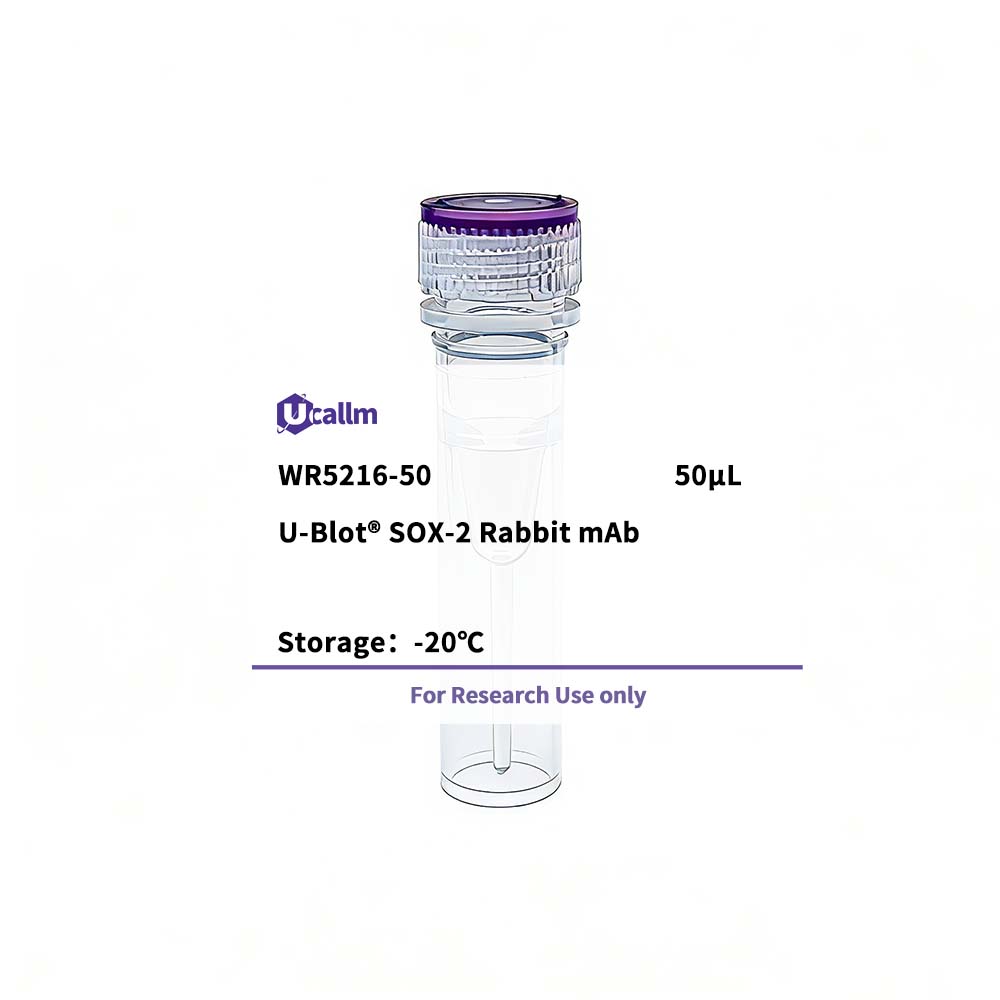
U-Blot® SOX-2 Rabbit mAb

Price range: $268.00 through $328.00

SKU: WR5216-100
Enter the quantity you would like, or drag the panel to find the quantity and price that best for you
Bulk QuoteAuthorize OEM & ODM

Product details

Background:SRY-box 2(SOX2) Homo sapiens This intronless gene encodes a member of the SRY-related HMG-box (SOX) family of transcription factors involved in the regulation of embryonic development and in the determination of cell fate. The product of this gene is required for stem-cell maintenance in the central nervous system, and also regulates gene expression in the stomach. Mutations in this gene have been associated with optic nerve hypoplasia and with syndromic microphthalmia, a severe form of structural eye malformation. This gene lies within an intron of another gene called SOX2 overlapping transcript (SOX2OT). [provided by RefSeq, Jul 2008],


Specifications

Size50μL/100μL
TargetSOX-2
ReactivityHuman, Mouse, Rat
ApplicationsWB, IHC, IF, ELISA
MW(Calculated)34kD
MW(Observed)34kD
Host SpeciesRabbit
IsotypeIgG,Kappa
Conjugate/ModificationUnmodified
Recommended Dilution RatioIHC 1:100-1:500; WB 1:2000-1:10000; IF 1:200-1:1000; ELISA 1:5000-1:20000; / Note: For IHC, we suggest antigen retrieval with TE buffer pH 9.0 (Cat#WT1004)
FormulationPBS, 50% glycerol, 0.05% Proclin 300, 0.05%BSA
PurificationRecombinant Antibody expressed in animal component-free (ACF) media, purified via Protein A affinity chromatography.
Storage-15°C to -25°C/1 year(Do not lower than -25°C)
Concentration
ClonalityMonoclonal
Clone NumberRM1450R
ImmunogenThe specific immunogen used to produce this antibody is proprietary information.
SpecificityEndogenous
Gene NameSOX2
Protein NameTranscription factor SOX-2
Other NameSOX2; / Transcription factor SOX-2
SpeciesHuman
Gene ID6657
UniprotP48431,
Species.1Mouse
Gene ID.120674
Uniprot.1P48432
Species.2
Gene ID.2
Uniprot.2
Cellular LocalizationNucleus speckle . Cytoplasm . Nucleus . Acetylation contributes to its nuclear localization and deacetylation by HDAC3 induces a cytoplasmic delocalization (By similarity). Colocalizes in the nucleus with ZNF208 isoform KRAB-O and tyrosine hydroxylase (TH) (By similarity). Colocalizes with SOX6 in speckles. Colocalizes with CAML in the nucleus (By similarity). Nuclear import is facilitated by XPO4, a protein that usually acts as a nuclear export signal receptor (By similarity). .
Tissue ExpressionFetal brain,Lung,Retina,
Signaling_pathwayCellular Processes >> Cellular community - eukaryotes >> Signaling pathways regulating pluripotency of stem cells;Environmental Information Processing >> Signal transduction >> Hippo signaling pathway
Research Areas>>Hippo signaling pathway; / >>Signaling pathways regulating pluripotency of stem cells
FunctionDisease:Defects in SOX2 are the cause of microphthalmia syndromic type 3 (MCOPS3) [MIM:206900]. Microphthalmia is a clinically heterogeneous disorder of eye formation, ranging from small size of a single eye to complete bilateral absence of ocular tissues (anophthalmia). In many cases, microphthalmia/anophthalmia occurs in association with syndromes that include non-ocular abnormalities. MCOPS3 is characterized by the rare association of malformations including uni- or bilateral anophthalmia or microphthalmia, and esophageal atresia with trachoesophageal fistula.,Function:Transcription factor that forms a trimeric complex with OCT4 on DNA and controls the expression of a number of genes involved in embryonic development such as YES1, FGF4, UTF1 and ZFP206. Critical for early embryogenesis and for embryonic stem cell pluripotency.,online information:Sox2 entry,PTM:Sumoylation inhibits binding on DNA and negatively regulates the FGF4 transactivation.,similarity:Contains 1 HMG box DNA-binding domain.,
Please login to post questions
Back to Top
Product has been added to your cart
