

Product details
Background:
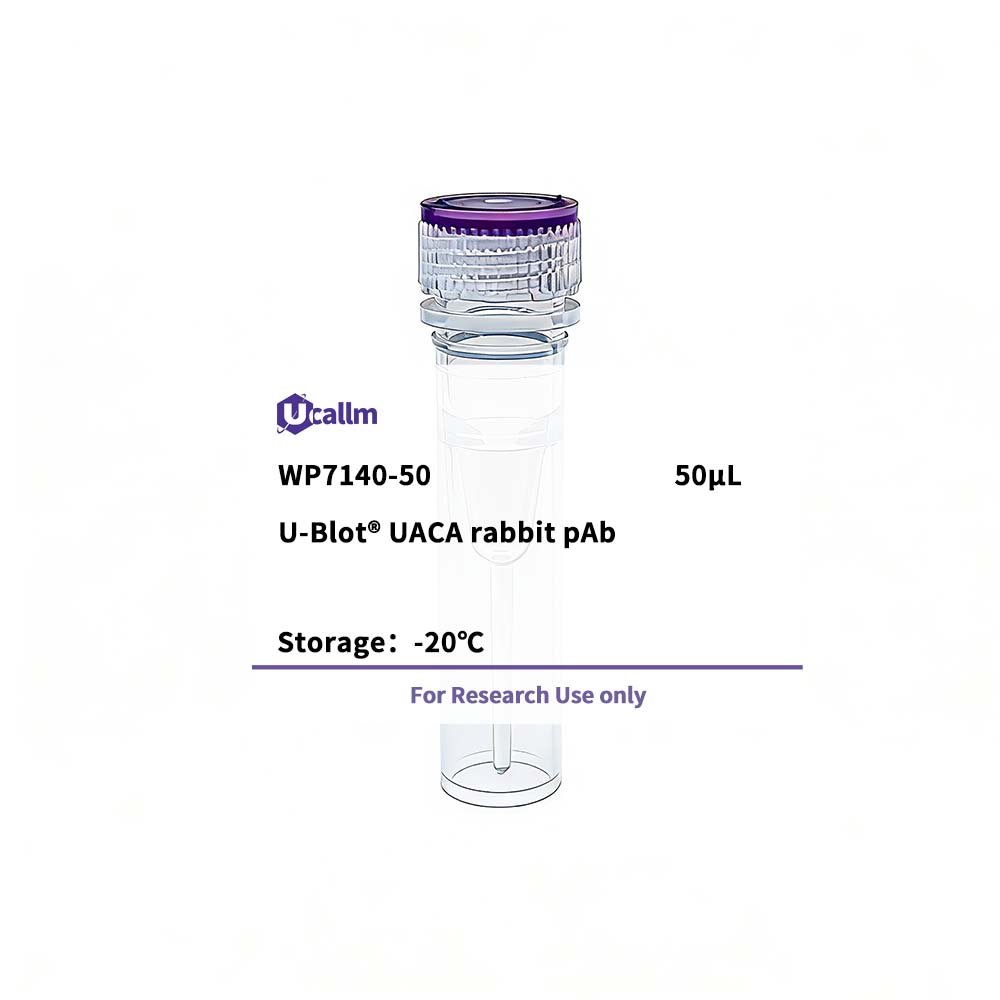
Price range: $268.00 through $328.00
Background:
| Size | 50μL/100μL |
| Target | UACA |
| Reactivity | Human, Mouse |
| Applications | WB |
| MW(Calculated) | 156kD |
| MW(Observed) | |
| Host Species | Rabbit |
| Isotype | IgG |
| Conjugate/Modification | Unmodified |
| Recommended Dilution Ratio | WB 1:500-2000 |
| Formulation | Liquid in PBS containing 50% glycerol, 0.5% BSA and 0.02% sodium azide. |
| Purification | The antibody was affinity-purified from rabbit antiserum by affinity-chromatography using epitope-specific immunogen. |
| Storage | -15°C to -25°C/1 year(Do not lower than -25°C) |
| Concentration | 1 mg/ml |
| Clonality | Polyclonal |
| Clone Number | |
| Immunogen | Synthesized peptide derived from human UACA |
| Specificity | This antibody detects endogenous levels of UACA at Human, Mouse |
| Gene Name | UACA KIAA1561 |
| Protein Name | Uveal autoantigen with coiled-coil domains and ankyrin repeats |
| Other Name | |
| Species | Human |
| Gene ID | 55075 |
| Uniprot | Q9BZF9, |
| Species.1 | Mouse |
| Gene ID.1 | 72565 |
| Uniprot.1 | Q8CGB3 |
| Species.2 | |
| Gene ID.2 | |
| Uniprot.2 | |
| Cellular Localization | Nucleus . Cytoplasm . Cytoplasm, cytoskeleton . Expressed diffusely in cytoplasm. |
| Tissue Expression | Highly expressed in skeletal muscle, heart, kidney and pancreas. Expressed in choroid, retina and epidermal melanocytes. Expressed in eye muscles and thyroid follicular cells. |
| Signaling_pathway | |
| Research Areas | |
| Function | Regulates APAF1 expression and plays an important role in the regulation of stress-induced apoptosis. Promotes apoptosis by regulating three pathways, apoptosome up-regulation, LGALS3/galectin-3 down-regulation and NF-kappa-B inactivation. Regulates the redistribution of APAF1 into the nucleus after proapoptotic stress. Down-regulates the expression of LGALS3 by inhibiting NFKB1 (By similarity).; Modulates isoactin dynamics to regulate the morphological alterations required for cell growth and motility. Interaction with ARF6 may modulate cell shape and motility after injury. May be involved in multiple neurite formation (By similarity). |




