

UTF1 Polyclonal Antibody
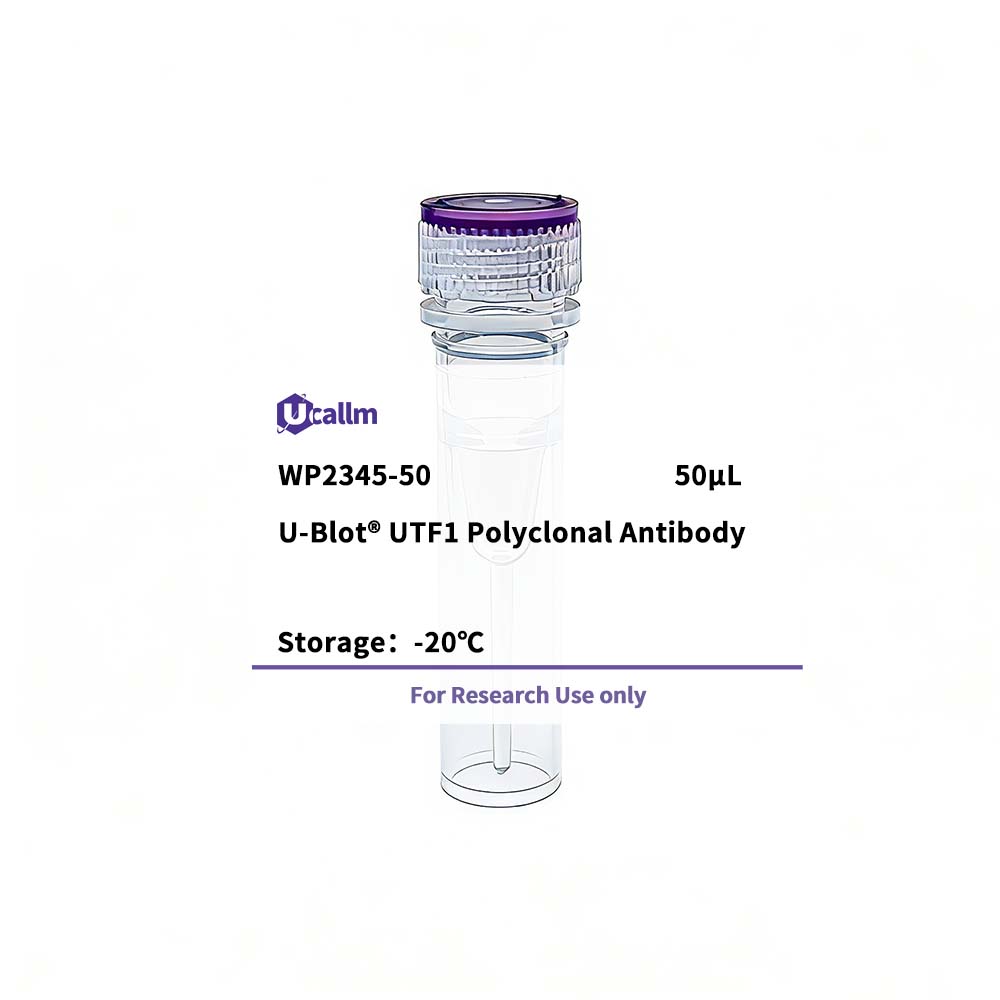
Ucallm_WP2345-50
Price range: $268.00 through $328.00
Product details
Background:
The protein encoded by this gene is a leucine zipper-containing transcriptional coactivator that may link the upstream activator ATF2 with the basal transcription complex. The encoded protein is closely associated with chromatin and is required for the proper differentiation of embryonic carcinoma and embryonic stem cells. Found nearly exclusively in pluripotent cells, this protein can also serve as a transcriptional repressor. [provided by RefSeq, Nov 2015],
Specifications
| Size | 50μL/100μL |
| Target | UTF1 |
| Reactivity | Human, Mouse |
| Applications | WB, ELISA |
| MW(Calculated) | |
| MW(Observed) | 37kD |
| Host Species | Rabbit |
| Isotype | IgG |
| Conjugate/Modification | Unmodified |
| Recommended Dilution Ratio | WB 1:500-2000; ELISA 1:5000-20000 |
| Formulation | Liquid in PBS containing 50% glycerol,0.5% BSA and 0.02% sodium azide. |
| Purification | The antibody was affinity-purified from rabbit antiserum by affinity-chromatography using epitope-specific immunogen. |
| Storage | -15°C to -25°C/1 year(Do not lower than -25°C) |
| Concentration | 1 mg/ml |
| Clonality | Polyclonal |
| Clone Number | |
| Immunogen | Synthesized peptide derived from part region of human protein |
| Specificity | UTF1 Polyclonal Antibody detects endogenous levels of protein. |
| Gene Name | UTF1 |
| Protein Name | Undifferentiated embryonic cell transcription factor 1 |
| Other Name | |
| Species | Human |
| Gene ID | 8433 |
| Uniprot | Q5T230, |
| Species.1 | Mouse |
| Gene ID.1 | |
| Uniprot.1 | Q6J1H4 |
| Species.2 | |
| Gene ID.2 | |
| Uniprot.2 | |
| Cellular Localization | Nucleus . |
| Tissue Expression | Teratocarcinoma, |
| Signaling_pathway | |
| Research Areas | |
| Function | Domain:The leucine-zipper domain is required for coactivation activity. When this domain is deleted, the protein is able to stimulate transcription from a number of gene promoters.,Function:Acts as a transcriptional coactivator of ATF2.,PTM:Phosphorylated.,subunit:Binds to the N-terminal region of ATF2. Associates with the TFIID complex through interaction with TBP., |
Please login to post questions
Related products





