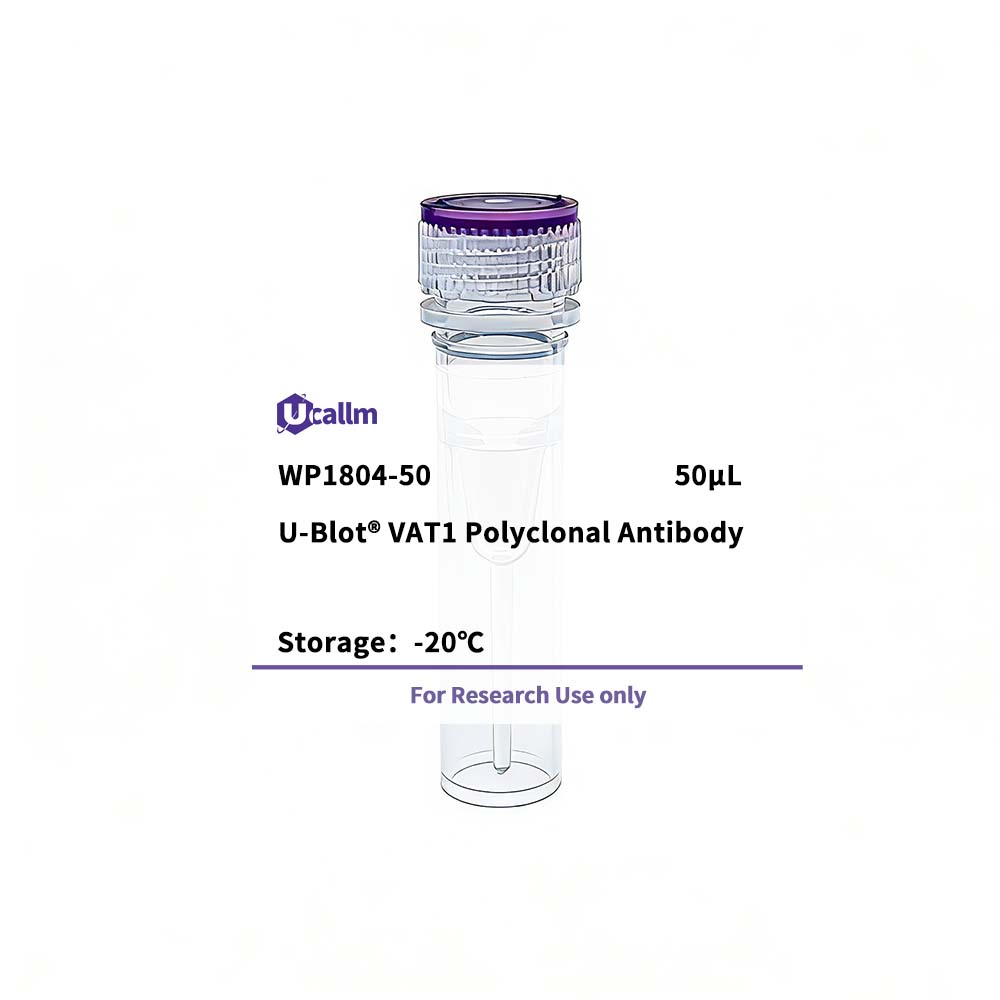
SKU: WP1804 Categories: ,

VAT1 Polyclonal Antibody

Price range: $268.00 through $328.00

SKU: WP1804-100
Enter the quantity you would like, or drag the panel to find the quantity and price that best for you
Bulk QuoteAuthorize OEM & ODM

Product details

Background:

vesicle amine transport 1(VAT1) Homo sapiens Synaptic vesicles are responsible for regulating the storage and release of neurotransmitters in the nerve terminal. The protein encoded by this gene is an abundant integral membrane protein of cholinergic synaptic vesicles and is thought to be involved in vesicular transport. It belongs to the quinone oxidoreductase subfamily of zinc-containing alcohol dehydrogenase proteins. [provided by RefSeq, Jul 2008],

Specifications

Size50μL/100μL
TargetVAT1
ReactivityHuman, Mouse, Rat
ApplicationsWB, ELISA
MW(Calculated)
MW(Observed)43kD
Host SpeciesRabbit
IsotypeIgG
Conjugate/ModificationUnmodified
Recommended Dilution RatioWB 1:500-2000; ELISA 1:5000-20000
FormulationLiquid in PBS containing 50% glycerol,0.5% BSA and 0.02% sodium azide.
PurificationThe antibody was affinity-purified from rabbit antiserum by affinity-chromatography using epitope-specific immunogen.
Storage-15°C to -25°C/1 year(Do not lower than -25°C)
Concentration1 mg/ml
ClonalityPolyclonal
Clone Number
ImmunogenSynthesized peptide derived from part region of human protein
SpecificityVAT1 Polyclonal Antibody detects endogenous levels of protein.
Gene NameVAT1
Protein NameSynaptic vesicle membrane protein VAT-1 homolog (EC 1.-.-.-)
Other Name
SpeciesHuman
Gene ID10493
UniprotQ99536,
Species.1Mouse
Gene ID.1
Uniprot.1Q62465,
Species.2Rat
Gene ID.2
Uniprot.2Q3MIE4
Cellular LocalizationCytoplasm. Mitochondrion outer membrane; Peripheral membrane protein. The majority is localized in the cytoplasm and a small amount is associated with mitochondria. .
Tissue ExpressionExpressed in brain. Also expressed in glioblastoma cells.
Signaling_pathway
Research Areas
Functionsimilarity:Belongs to the zinc-containing alcohol dehydrogenase family. Quinone oxidoreductase subfamily.,
Please login to post questions
Back to Top
Product has been added to your cart

