SKU: WP0716 Categories: ,

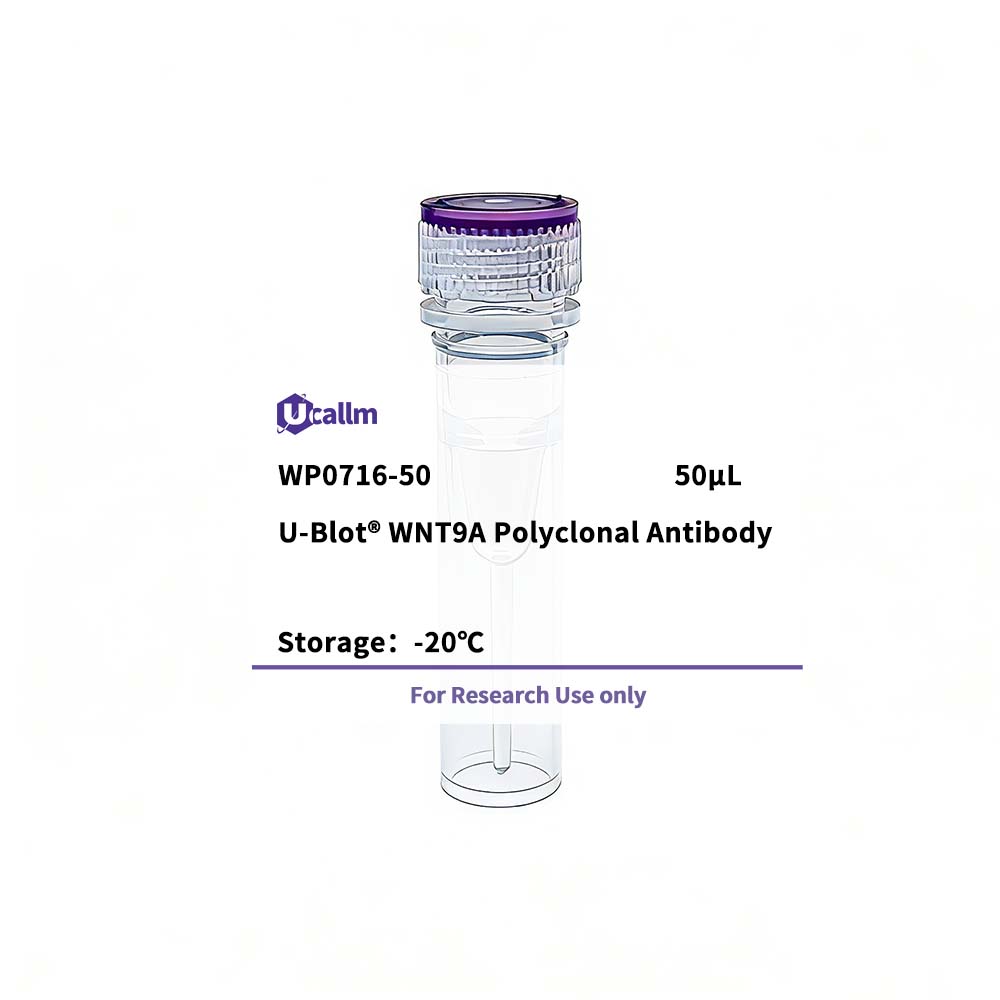
WNT9A Polyclonal Antibody

Price range: $268.00 through $328.00

SKU: WP0716-100
Enter the quantity you would like, or drag the panel to find the quantity and price that best for you
Bulk QuoteAuthorize OEM & ODM

Product details

Background:

The WNT gene family consists of structurally related genes that encode secreted signaling proteins. These proteins have been implicated in oncogenesis and in several developmental processes, including regulation of cell fate and patterning during embryogenesis. This gene is a member of the WNT gene family. It is expressed in gastric cancer cell lines. The protein encoded by this gene shows 75% amino acid identity to chicken Wnt14, which has been shown to play a central role in initiating synovial joint formation in the chick limb. This gene is clustered with another family member, WNT3A, in the chromosome 1q42 region. [provided by RefSeq, Jul 2008],


Specifications

Size50μL/100μL
TargetWNT9A
ReactivityHuman, Mouse
ApplicationsWB, ELISA
MW(Calculated)
MW(Observed)40kD
Host SpeciesRabbit
IsotypeIgG
Conjugate/ModificationUnmodified
Recommended Dilution RatioWB 1:500-2000; ELISA 1:5000-20000
FormulationLiquid in PBS containing 50% glycerol,0.5% BSA and 0.02% sodium azide.
PurificationThe antibody was affinity-purified from rabbit antiserum by affinity-chromatography using epitope-specific immunogen.
Storage-15°C to -25°C/1 year(Do not lower than -25°C)
Concentration1 mg/ml
ClonalityPolyclonal
Clone Number
ImmunogenSynthesized peptide derived from human protein . at AA range: 120-200
SpecificityWNT9A Polyclonal Antibody detects endogenous levels of protein.
Gene NameWNT9A WNT14
Protein NameProtein Wnt-9a (Protein Wnt-14)
Other Name
SpeciesHuman
Gene ID7483
UniprotO14904,
Species.1Mouse
Gene ID.1
Uniprot.1Q8R5M2
Species.2
Gene ID.2
Uniprot.2
Cellular LocalizationSecreted, extracellular space, extracellular matrix . Secreted .
Tissue Expression
Signaling_pathwayCellular Processes >> Cellular community - eukaryotes >> Signaling pathways regulating pluripotency of stem cells;Human Diseases >> Cancer: overview >> Pathways in cancer;Human Diseases >> Cancer: specific types >> Hepatocellular carcinoma;Human Diseases >> Cancer: specific types >> Gastric cancer;Human Diseases >> Cancer: specific types >> Basal cell carcinoma;Human Diseases >> Cancer: specific types >> Breast cancer;Human Diseases >> Neurodegenerative disease >> Alzheimer disease;Human Diseases >> Neurodegenerative disease >> Pathways of neurodegeneration - multiple diseases;Environmental Information Processing >> Signal transduction >> Wnt signaling pathway;Environmental Information Processing >> Signal transduction >> Hippo signaling pathway;Environmental Information Processing >> Signal transduction >> mTOR signaling pathway
Research Areas>>mTOR signaling pathway; / >>Wnt signaling pathway; / >>Hippo signaling pathway; / >>Signaling pathways regulating pluripotency of stem cells; / >>Melanogenesis; / >>Cushing syndrome; / >>Alzheimer disease; / >>Pathways of neurodegeneration - multiple diseases; / >>Human papillomavirus infection; / >>Pathways in cancer; / >>Proteoglycans in cancer; / >>Basal cell carcinoma; / >>Breast cancer; / >>Hepatocellular carcinoma; / >>Gastric cancer
FunctionFunction:Ligand for members of the frizzled family of seven transmembrane receptors. Probable developmental protein. May be a signaling molecule which affects the development of discrete regions of tissues. Is likely to signal over only few cell diameters.,similarity:Belongs to the Wnt family.,
Please login to post questions
Back to Top
Product has been added to your cart

