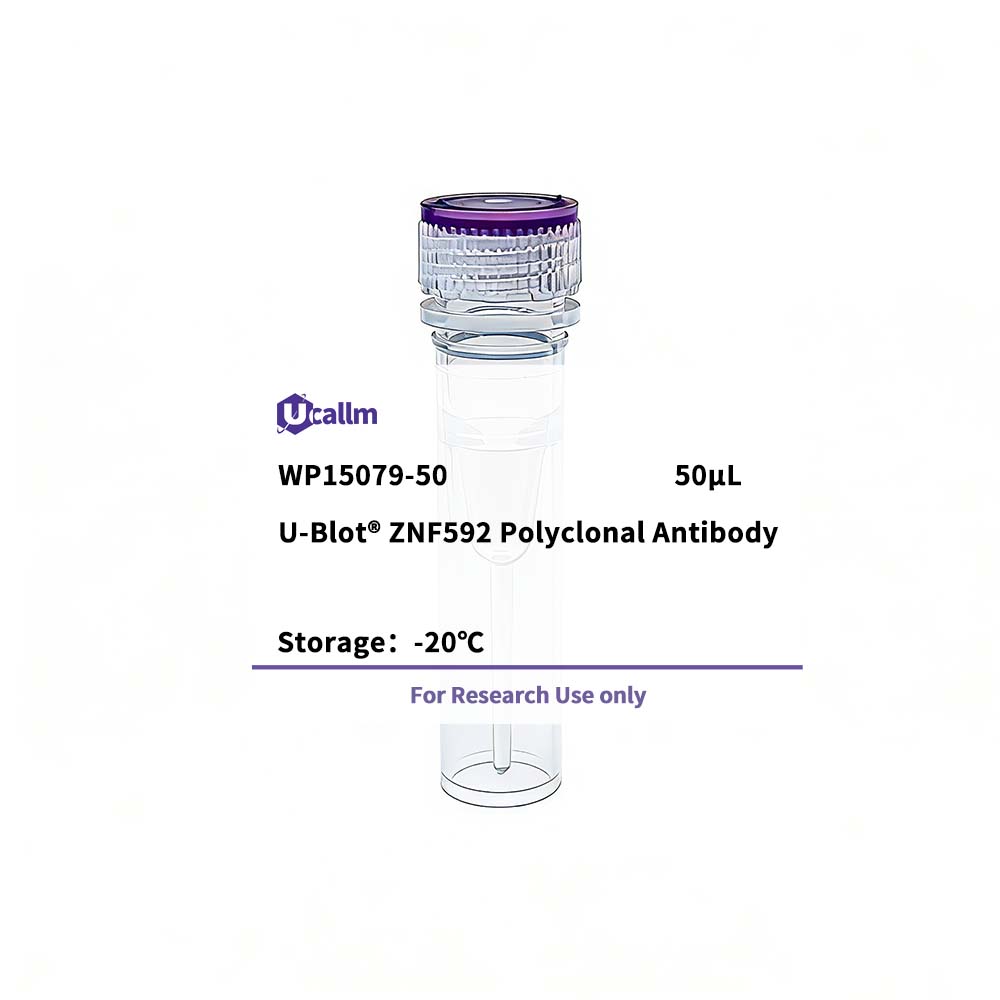
SKU: WP15079 Categories: ,

ZNF592 Polyclonal Antibody

Price range: $268.00 through $328.00

SKU: WP15079-100
Enter the quantity you would like, or drag the panel to find the quantity and price that best for you
Bulk QuoteAuthorize OEM & ODM

Product details

Background:

zinc finger protein 592(ZNF592) Homo sapiens This gene is thought to play a role in a complex developmental pathway and the regulation of genes involved in cerebellar development. Mutations in this gene have been associated with autosomal recessive spinocerebellar ataxia. [provided by RefSeq, Jan 2011],

Specifications

Size50μL/100μL
TargetZNF592
ReactivityHuman, Mouse
ApplicationsWB, IHC, IF, ELISA
MW(Calculated)
MW(Observed)160kD
Host SpeciesRabbit
IsotypeIgG
Conjugate/ModificationUnmodified
Recommended Dilution RatioWB 1:500-1:2000; IHC 1:100-1:300; ELISA 1:40000; IF 1:50-200 / Note: For IHC, we suggest antigen retrieval with TE buffer pH 9.0 (Cat#WT1004)
FormulationLiquid in PBS containing 50% glycerol, 0.5% BSA and 0.02% sodium azide.
PurificationThe antibody was affinity-purified from rabbit antiserum by affinity-chromatography using epitope-specific immunogen.
Storage-15°C to -25°C/1 year(Do not lower than -25°C)
Concentration1 mg/ml
ClonalityPolyclonal
Clone Number
ImmunogenThe antiserum was produced against synthesized peptide derived from human ZNF592. AA range:961-1010
SpecificityZNF592 Polyclonal Antibody detects endogenous levels of ZNF592 protein.
Gene NameZNF592
Protein NameZinc finger protein 592
Other NameZNF592; / KIAA0211; / Zinc finger protein 592
SpeciesHuman
Gene ID9640
UniprotQ92610,
Species.1Mouse
Gene ID.1233410
Uniprot.1Q8BHZ4
Species.2
Gene ID.2
Uniprot.2
Cellular LocalizationNucleus .
Tissue ExpressionWidely expressed, with highest levels in skeletal muscle. Expressed throughout the central nervous system, including in the cerebellum and cerebellar vermis, with higher expression in the substantia nigra. Widely expressed in fetal tissues.
Signaling_pathway
Research Areas
FunctionFunction:May be involved in transcriptional regulation.,PTM:Phosphorylated upon DNA damage, probably by ATM or ATR.,similarity:Belongs to the krueppel C2H2-type zinc-finger protein family.,similarity:Contains 13 C2H2-type zinc fingers.,
Please login to post questions
Back to Top
Product has been added to your cart

