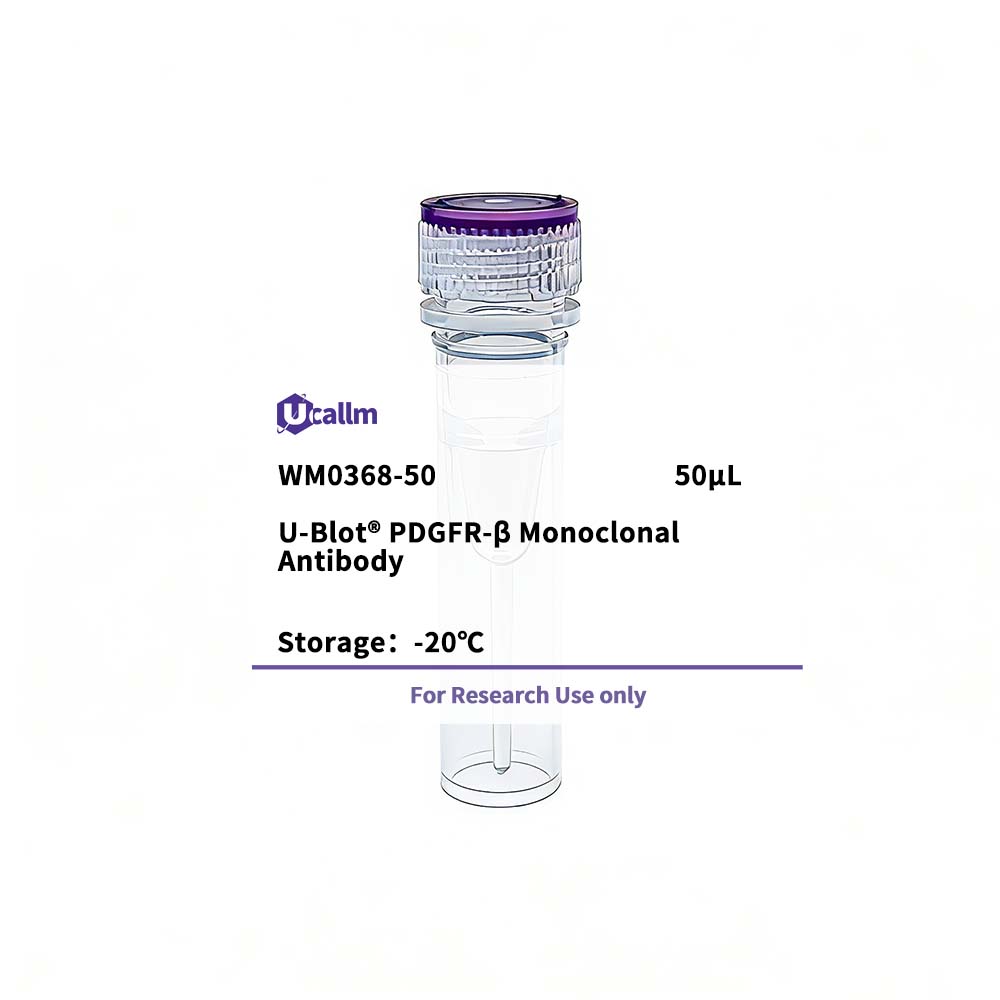
SKU: WM0368 Categories: ,

PDGFR-β Monoclonal Antibody

Price range: $268.00 through $328.00

SKU: WM0368-50
Enter the quantity you would like, or drag the panel to find the quantity and price that best for you
Bulk QuoteAuthorize OEM & ODM

Product details

Background:
This gene encodes a cell surface tyrosine kinase receptor for members of the platelet-derived growth factor family. These growth factors are mitogens for cells of mesenchymal origin. The identity of the growth factor bound to a receptor monomer determines whether the functional receptor is a homodimer or a heterodimer, composed of both platelet-derived growth factor receptor alpha and beta polypeptides. This gene is flanked on chromosome 5 by the genes for granulocyte-macrophage colony-stimulating factor and macrophage-colony stimulating factor receptor; all three genes may be implicated in the 5-q syndrome. A translocation between chromosomes 5 and 12, that fuses this gene to that of the translocation, ETV6, leukemia gene, results in chronic myeloproliferative disorder with eosinophilia. [provided by RefSeq, Jul 2008],


Specifications

Size50μL/100μL
TargetPDGFR-β
ReactivityHuman, Mouse
ApplicationsWB, ELISA
MW(Calculated)
MW(Observed)135-180kD
Host SpeciesMouse
Isotype
Conjugate/ModificationUnmodified
Recommended Dilution RatioWB 1:500-1:2000; ELISA 1:10000; Not yet tested in other applications.
FormulationLiquid in PBS containing 50% glycerol, 0.5% BSA and 0.02% sodium azide.
PurificationAffinity purification
Storage-15°C to -25°C/1 year(Do not lower than -25°C)
Concentration
ClonalityMonoclonal
Clone Number15F3
ImmunogenPurified recombinant fragment of human PDGFR-β expressed in E. Coli.
SpecificityPDGFR-β Monoclonal Antibody detects endogenous levels of PDGFR-β protein.
Gene NamePDGFRB PDGFR PDGFR1
Protein NamePlatelet-derived growth factor receptor beta
Other NamePDGFRB; / PDGFR; / PDGFR1; / Platelet-derived growth factor receptor beta; / PDGF-R-beta; / PDGFR-beta; / Beta platelet-derived growth factor receptor; / Beta-type platelet-derived growth factor receptor; / CD140 antigen-like family member B; / Platelet-deri
SpeciesHuman
Gene ID5159
UniprotP09619,
Species.1Mouse
Gene ID.118596
Uniprot.1P05622
Species.2
Gene ID.2
Uniprot.2
Cellular LocalizationCell membrane; Single-pass type I membrane protein. Cytoplasmic vesicle. Lysosome lumen. After ligand binding, the autophosphorylated receptor is ubiquitinated and internalized, leading to its degradation.
Tissue ExpressionBrain,Spleen,
Signaling_pathwayCellular Processes >> Cellular community - eukaryotes >> Focal adhesion;Cellular Processes >> Cellular community - eukaryotes >> Gap junction;Cellular Processes >> Cell motility >> Regulation of actin cytoskeleton;Human Diseases >> Cancer: overview >> Pathways in cancer;Human Diseases >> Cancer: overview >> MicroRNAs in cancer;Human Diseases >> Cancer: overview >> Central carbon metabolism in cancer;Human Diseases >> Cancer: specific types >> Glioma;Human Diseases >> Cancer: specific types >> Melanoma;Human Diseases >> Cancer: specific types >> Prostate cancer;Environmental Information Processing >> Signal transduction >> MAPK signaling pathway;Environmental Information Processing >> Signal transduction >> Ras signaling pathway;Environmental Information Processing >> Signal transduction >> Rap1 signaling pathway;Environmental Information Processing >> Signal transduction >> JAK-STAT signaling pathway;Environmental Information Processing >> Signal transduction >> Calcium signaling pathway;Environmental Information Processing >> Signal transduction >> Phospholipase D signaling pathway;Environmental Information Processing >> Signal transduction >> PI3K-Akt signaling pathway
Research Areas>>EGFR tyrosine kinase inhibitor resistance; / >>MAPK signaling pathway; / >>Ras signaling pathway; / >>Rap1 signaling pathway; / >>Calcium signaling pathway; / >>Phospholipase D signaling pathway; / >>PI3K-Akt signaling pathway; / >>Focal adhesion; / >>Gap junction; / >>JAK-STAT signaling pathway; / >>Regulation of actin cytoskeleton; / >>Human papillomavirus infection; / >>Pathways in cancer; / >>MicroRNAs in cancer; / >>Glioma; / >>Prostate cancer; / >>Melanoma; / >>Central carbon metabolism in cancer; / >>Choline metabolism in cancer
FunctionCatalytic activity:ATP + a [protein]-L-tyrosine = ADP + a [protein]-L-tyrosine phosphate.,Disease:A chromosomal aberration involving PDGFRB is a cause in many instances of chronic myeloproliferative disorder with eosinophilia (MPE) [MIM:131440]. Translocation t(5; 12) with ETV6 on chromosome 12 creating an PDGFRB-ETV6 fusion protein.,Disease:A chromosomal aberration involving PDGFRB is found in a form of chronic myelomonocytic leukemia (CMML). Translocation t(5; 12)(q33; p13) with EVT6/TEL. It is characterized by abnormal clonal myeloid proliferation and by progression to acute myelogenous leukemia (AML).,Disease:A chromosomal aberration involving PDGFRB may be a cause of acute myelogenous leukemia. Translocation t(5; 14)(q33; q32) with TRIP11. The fusion protein may be involved in clonal evolution of leukemia and eosinophilia.,Disease:A chromosomal aberration involving PDGFRB may be a cause of juvenile myelomonocytic leukemia. Translocation t(5; 17)(q33; p11.2) with SPECC1.,Disease:A chromosomal aberration involving PDGFRB may be the cause of a myeloproliferative disorder (MBD) associated with eosinophilia. Translocation t(1; 5)(q23; q33) that forms a PDE4DIP-PDGFRB fusion protein.,Function:Receptor that binds specifically to PDGFB and PDGFD and has a tyrosine-protein kinase activity. Phosphorylates Tyr residues at the C-terminus of PTPN11 creating a binding site for the SH2 domain of GRB2.,similarity:Belongs to the protein kinase superfamily. Tyr protein kinase family.,similarity:Belongs to the protein kinase superfamily. Tyr protein kinase family. CSF-1/PDGF receptor subfamily.,similarity:Contains 1 protein kinase domain.,similarity:Contains 5 Ig-like C2-type (immunoglobulin-like) domains.,subunit:Homodimer, and heterodimer with PDGFRA. Interacts with APS. The autophosphorylated form interacts directly with SHB and with PIK3C2B, maybe indirectly.,
Please login to post questions
Back to Top
Product has been added to your cart

