SKU: WR5907 Categories: ,

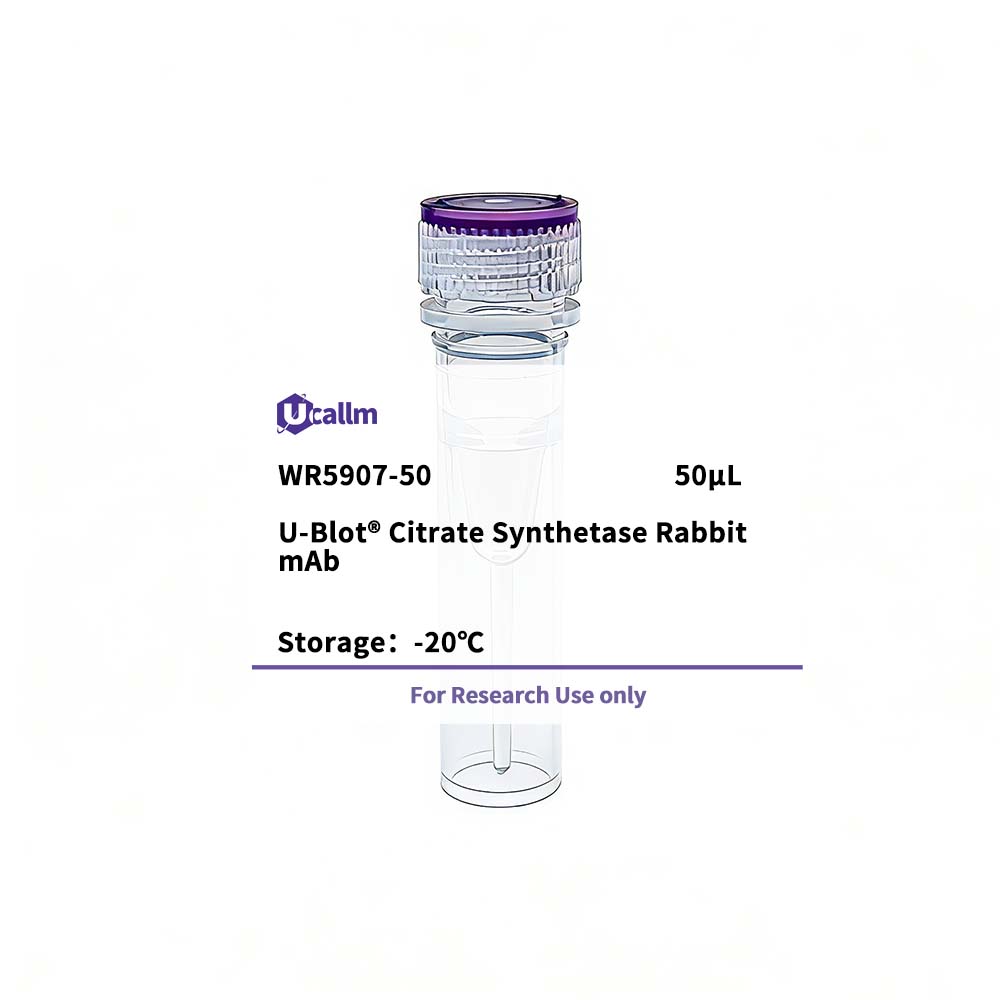
U-Blot® Citrate Synthetase Rabbit mAb

Price range: $268.00 through $328.00

SKU: WR5907-50
Enter the quantity you would like, or drag the panel to find the quantity and price that best for you
Bulk QuoteAuthorize OEM & ODM

Product details

Background:
The protein encoded by this gene is a Krebs tricarboxylic acid cycle enzyme that catalyzes the synthesis of citrate from oxaloacetate and acetyl coenzyme A. The enzyme is found in nearly all cells capable of oxidative metablism. This protein is nuclear encoded and transported into the mitochondrial matrix , where the mature form is found. [provided by RefSeq , Jul 2008] ,


Specifications

Size50μL/100μL
TargetCitrate Synthetase
ReactivityHuman, Mouse, Rat
ApplicationsWB, IHC, IF, ELISA
MW(Calculated)52kD
MW(Observed)45kD
Host SpeciesRabbit
IsotypeIgG,Kappa
Conjugate/ModificationUnmodified
Recommended Dilution RatioWB 1:2000-1:10000; IF 1:200-1:1000; ELISA 1:5000-1:20000;
FormulationPBS, 50% glycerol, 0.05% Proclin 300, 0.05%BSA
PurificationRecombinant Antibody expressed in animal component-free (ACF) media, purified via Protein A affinity chromatography.
Storage-15°C to -25°C/1 year(Do not lower than -25°C)
Concentration
ClonalityMonoclonal
Clone NumberRM1864R
ImmunogenThe specific immunogen used to produce this antibody is proprietary information.
SpecificityEndogenous
Gene NameCS
Protein NameCISY
Other NameCitrate Synthetase
SpeciesHuman
Gene ID1431
UniprotO75390,
Species.1Mouse
Gene ID.112974
Uniprot.1Q9CZU6,
Species.2Rat
Gene ID.2170587
Uniprot.2Q8VHF5
Cellular LocalizationMitochondrion matrix.
Tissue Expression
Signaling_pathway
Research Areas>>Citrate cycle (TCA cycle); / >>Glyoxylate and dicarboxylate metabolism; / >>Metabolic pathways; / >>Carbon metabolism; / >>2-Oxocarboxylic acid metabolism; / >>Biosynthesis of amino acids
FunctionCatalytic activity:Acetyl-CoA + H(2)O + oxaloacetate = citrate + CoA.,miscellaneous:Citrate synthase is found in nearly all cells capable of oxidative metabolism.,online information:Citrate synthase entry,pathway:Carbohydrate metabolism; tricarboxylic acid cycle.,sequence Caution:Intron retention.,similarity:Belongs to the citrate synthase family.,subunit:Homodimer.,
Please login to post questions
Back to Top
Product has been added to your cart

