SKU: WR6040 Categories: ,

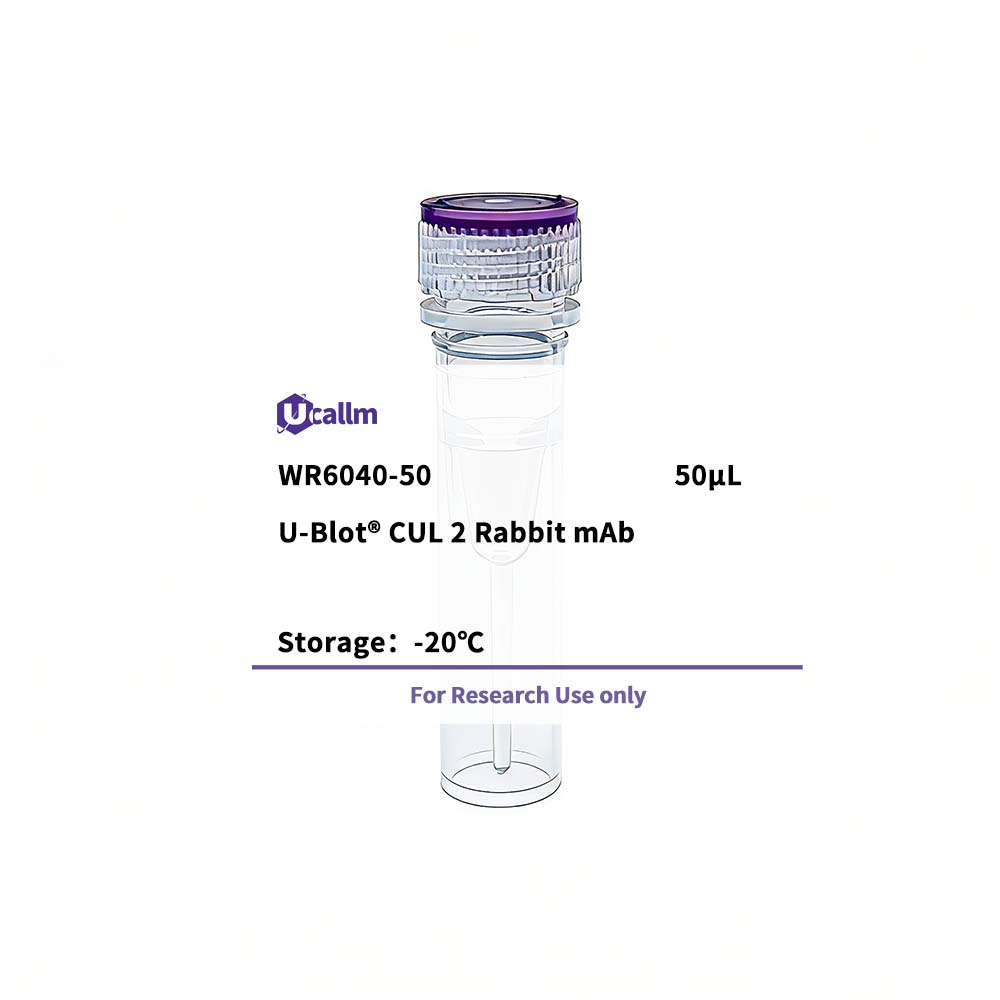
U-Blot® CUL 2 Rabbit mAb

Price range: $268.00 through $328.00

SKU: WR6040-50
Enter the quantity you would like, or drag the panel to find the quantity and price that best for you
Bulk QuoteAuthorize OEM & ODM

Product details

Background:
function:Core component of multiple cullin-RING-based ECS (ElonginB/C-CUL2/5-SOCS-box protein) E3 ubiquitin-protein ligase complexes , which mediate the ubiquitination of target proteins. May serve as a rigid scaffold in the complex and may contribute to catalysis through positioning of the substrate and the ubiquitin-conjugating enzyme. The E3 ubiquitin-protein ligase activity of the complex is dependent on the neddylation of the cullin subunit and is inhibited by the association of the deneddylated cullin subunit with TIP120A/CAND1 (By similarity) . The functional specificity of the ECS complex depends on the substrate recognition component. ECS (VHL) mediates the ubiquitination of hypoxia-inducible factor (HIF) . ,pathway:Protein modification; protein ubiquitination. ,PTM:CBC (VHL) complex formation seems to promote neddylation. Deneddylated via its interaction with the COP9 signalosome (CSN) complex. ,similarity:Belongs to the cullin family. ,subunit:Component of multiple ECS (Elongin BC-CUL2/5-SOCS-box protein) E3 ubiquitin-protein ligase complexes formed of CUL2 , Elongin BC (TCEB1 and TCEB2) , RBX1 and a variable substrate-specific adapter. Component of the ECS (VHL) or CBC (VHL) complex containing VHL. Component of the ECS (MED8) complex with the probable substrate recognition component MED8 (By similarity) . Component of the ECS (PPIL5) complex with the probable substrate recognition component PPIL5. Component of a probable ECS E3 ubiquitin-protein ligase complex containing CUL2 , RBX1 , TCEB1 , TCEB2 and FEM1B. Part of an E3 ubiquitin-protein ligase complex including ZYG11B , CUL2 and Elongin BC. Part of an E3 ubiquitin-protein ligase complex including ZYG11BL , CUL2 and Elongin BC.Interacts with RBX1 , RNF7 , FEM1B and TIP120A/CAND1. Interacts with COPS2 , and MED8 (By similarity) . Interacts with human respiratory syncytial virus (HRSV) protein NS1. ,

Specifications

Size50μL/100μL
TargetCUL-2
ReactivityHuman, Mouse, Rat
ApplicationsWB, IHC, IF, IP, ELISA
MW(Calculated)87kD
MW(Observed)85-90kD
Host SpeciesRabbit
IsotypeIgG,Kappa
Conjugate/ModificationUnmodified
Recommended Dilution RatioIHC 1:200-1:1000; WB 1:5000-1:20000; IF 1:200-1:1000; ELISA 1:5000-1:20000; IP 1:50-1:200; / Note: For IHC, we suggest antigen retrieval with TE buffer pH 9.0 (Cat#WT1004)
FormulationPBS, 50% glycerol, 0.05% Proclin 300, 0.05%BSA
PurificationRecombinant Antibody expressed in animal component-free (ACF) media, purified via Protein A affinity chromatography.
Storage-15°C to -25°C/1 year(Do not lower than -25°C)
Concentration
ClonalityMonoclonal
Clone NumberRM1929R
ImmunogenThe specific immunogen used to produce this antibody is proprietary information.
SpecificityEndogenous
Gene NameCUL2
Protein NameCullin-2
Other NameCUL2; / Cullin-2; / CUL-2
SpeciesHuman
Gene ID8453
UniprotQ13617,
Species.1Mouse
Gene ID.171745
Uniprot.1Q9D4H8
Species.2
Gene ID.2
Uniprot.2
Cellular Localizationnucleoplasm,nucleolus,cytosol,VCB complex,cullin-RING ubiquitin ligase complex,Cul2-RING ubiquitin ligase complex,
Tissue ExpressionBrain,Kidney,Skin,
Signaling_pathwayHuman Diseases >> Cancer: overview >> Pathways in cancer;Human Diseases >> Cancer: specific types >> Renal cell carcinoma;Environmental Information Processing >> Signal transduction >> HIF-1 signaling pathway;Genetic Information Processing >> Folding, sorting and degradation >> Ubiquitin mediated proteolysis
Research Areas>>HIF-1 signaling pathway; / >>Ubiquitin mediated proteolysis; / >>Pathways in cancer; / >>Renal cell carcinoma
FunctionFunction:Core component of multiple cullin-RING-based ECS (ElonginB/C-CUL2/5-SOCS-box protein) E3 ubiquitin-protein ligase complexes, which mediate the ubiquitination of target proteins. May serve as a rigid scaffold in the complex and may contribute to catalysis through positioning of the substrate and the ubiquitin-conjugating enzyme. The E3 ubiquitin-protein ligase activity of the complex is dependent on the neddylation of the cullin subunit and is inhibited by the association of the deneddylated cullin subunit with TIP120A/CAND1 (By similarity). The functional specificity of the ECS complex depends on the substrate recognition component. ECS(VHL) mediates the ubiquitination of hypoxia-inducible factor (HIF).,pathway:Protein modification; protein ubiquitination.,PTM:CBC(VHL) complex formation seems to promote neddylation. Deneddylated via its interaction with the COP9 signalosome (CSN) complex.,similarity:Belongs to the cullin family.,subunit:Component of multiple ECS (Elongin BC-CUL2/5-SOCS-box protein) E3 ubiquitin-protein ligase complexes formed of CUL2, Elongin BC (TCEB1 and TCEB2), RBX1 and a variable substrate-specific adapter. Component of the ECS(VHL) or CBC(VHL) complex containing VHL. Component of the ECS(MED8) complex with the probable substrate recognition component MED8 (By similarity). Component of the ECS(PPIL5) complex with the probable substrate recognition component PPIL5. Component of a probable ECS E3 ubiquitin-protein ligase complex containing CUL2, RBX1, TCEB1, TCEB2 and FEM1B. Part of an E3 ubiquitin-protein ligase complex including ZYG11B, CUL2 and Elongin BC. Part of an E3 ubiquitin-protein ligase complex including ZYG11BL, CUL2 and Elongin BC.Interacts with RBX1, RNF7, FEM1B and TIP120A/CAND1. Interacts with COPS2, and MED8 (By similarity). Interacts with human respiratory syncytial virus (HRSV) protein NS1.,
Please login to post questions
Back to Top
Product has been added to your cart

