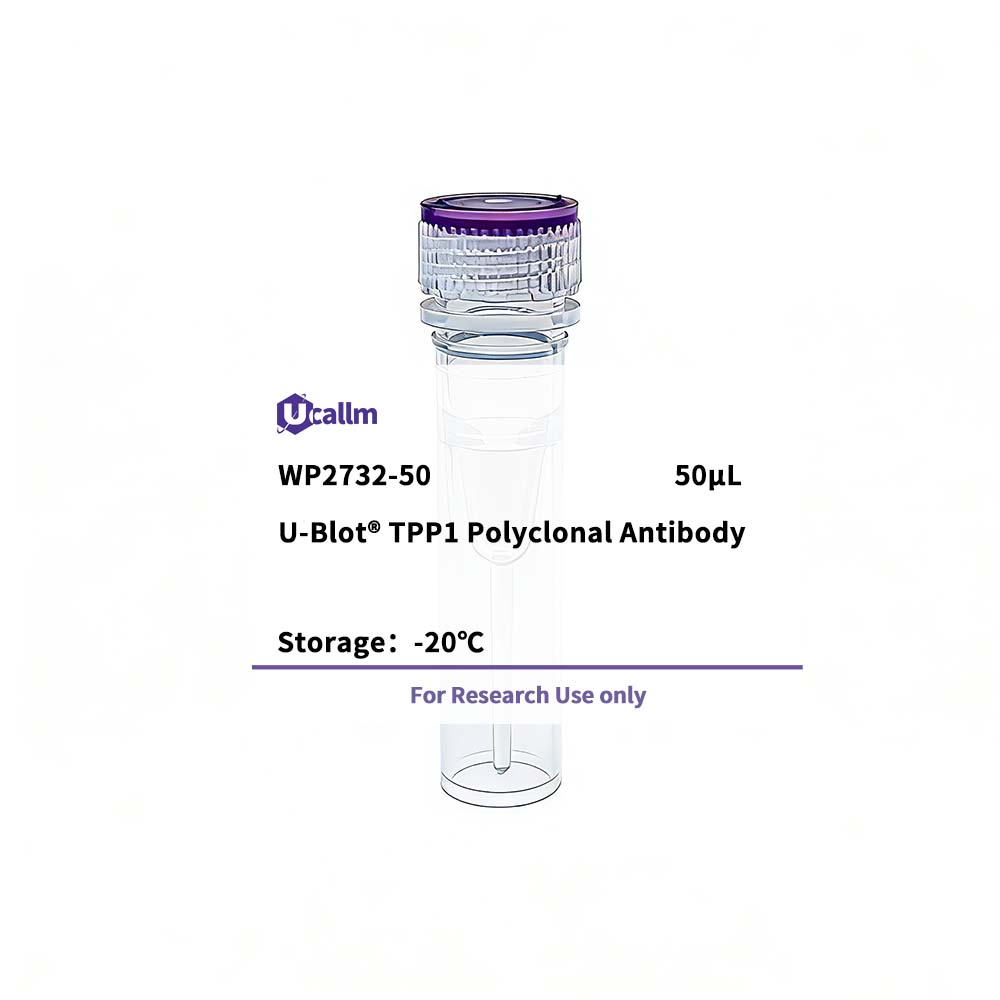
SKU: WP2732 Categories: ,

TPP1 Polyclonal Antibody

Price range: $268.00 through $328.00

SKU: WP2732-100
Enter the quantity you would like, or drag the panel to find the quantity and price that best for you
Bulk QuoteAuthorize OEM & ODM

Product details

Background:

This gene encodes a member of the sedolisin family of serine proteases. The protease functions in the lysosome to cleave N-terminal tripeptides from substrates, and has weaker endopeptidase activity. It is synthesized as a catalytically-inactive enzyme which is activated and auto-proteolyzed upon acidification. Mutations in this gene result in late-infantile neuronal ceroid lipofuscinosis, which is associated with the failure to degrade specific neuropeptides and a subunit of ATP synthase in the lysosome. [provided by RefSeq, Jul 2008],


Specifications

Size50μL/100μL
TargetTPP1
ReactivityHuman, Mouse, Rat
ApplicationsWB, ELISA
MW(Calculated)
MW(Observed)61kD
Host SpeciesRabbit
IsotypeIgG
Conjugate/ModificationUnmodified
Recommended Dilution RatioWB 1:500-2000; ELISA 1:5000-20000
FormulationLiquid in PBS containing 50% glycerol,0.5% BSA and 0.02% sodium azide.
PurificationThe antibody was affinity-purified from rabbit antiserum by affinity-chromatography using epitope-specific immunogen.
Storage-15°C to -25°C/1 year(Do not lower than -25°C)
Concentration1 mg/ml
ClonalityPolyclonal
Clone Number
ImmunogenSynthesized peptide derived from human protein . at AA range: 10-90
SpecificityTPP1 Polyclonal Antibody detects endogenous levels of protein.
Gene NameTPP1 CLN2 GIG1 UNQ267/PRO304
Protein NameTripeptidyl-peptidase 1 (TPP-1) (Cell growth-inhibiting gene 1 protein) (Lysosomal pepstatin-insensitive protease) (LPIC) (Tripeptidyl aminopeptidase) (Tripeptidyl-peptidase I) (TPP-I)
Other Name
SpeciesHuman
Gene ID1200
UniprotO14773,
Species.1Mouse
Gene ID.1
Uniprot.1O89023,
Species.2Rat
Gene ID.2
Uniprot.2Q9EQV6
Cellular LocalizationLysosome . Melanosome . Identified by mass spectrometry in melanosome fractions from stage I to stage IV. .
Tissue ExpressionDetected in all tissues examined with highest levels in heart and placenta and relatively similar levels in other tissues.
Signaling_pathwayCellular Processes >> Transport and catabolism >> Lysosome
Research Areas>>Lysosome
FunctionCatalytic activity:Release of an N-terminal tripeptide from a polypeptide, but also has endopeptidase activity.,Caution:Ref.3 sequence is wrongly reported to originate from bovine.,Disease:Defects in TPP1 are the cause of classical late-infantile neuronal ceroid lipofuscinosis (LINCL) [MIM:204500]; also known as ceroid lipofuscinosis neuronal 2 (CLN2). LINCL is a fatal childhood neurodegenerative disease characterized by progressive visual and mental decline, motor disturbance, epilepsy and behavioral changes. The three main subtypes of childhood NCLs defined by the age of onset, clinical features, and ultrastructural morphology are infantile NCL (INCL), classical late-infantile NCL (LINCL), or juvenile NCL (JNCL), although a number of other distinct variants forms have been described.,Function:Lysosomal serine protease with tripeptidyl-peptidase I activity. May act as a non-specific lysosomal peptidase which generates tripeptides from the breakdown products produced by lysosomal proteinases. Requires substrates with an unsubstituted N-terminus.,online information:Neural Ceroid Lipofuscinoses mutation db,PTM:Activated by autocatalytic proteolytical processing upon acidification.,similarity:Belongs to the peptidase S53 family.,subcellular location:Identified by mass spectrometry in melanosome fractions from stage I to stage IV.,tissue specificity:Detected in all tissues examined with highest levels in heart and placenta and relatively similar levels in other tissues.,
Please login to post questions
Back to Top
Product has been added to your cart
