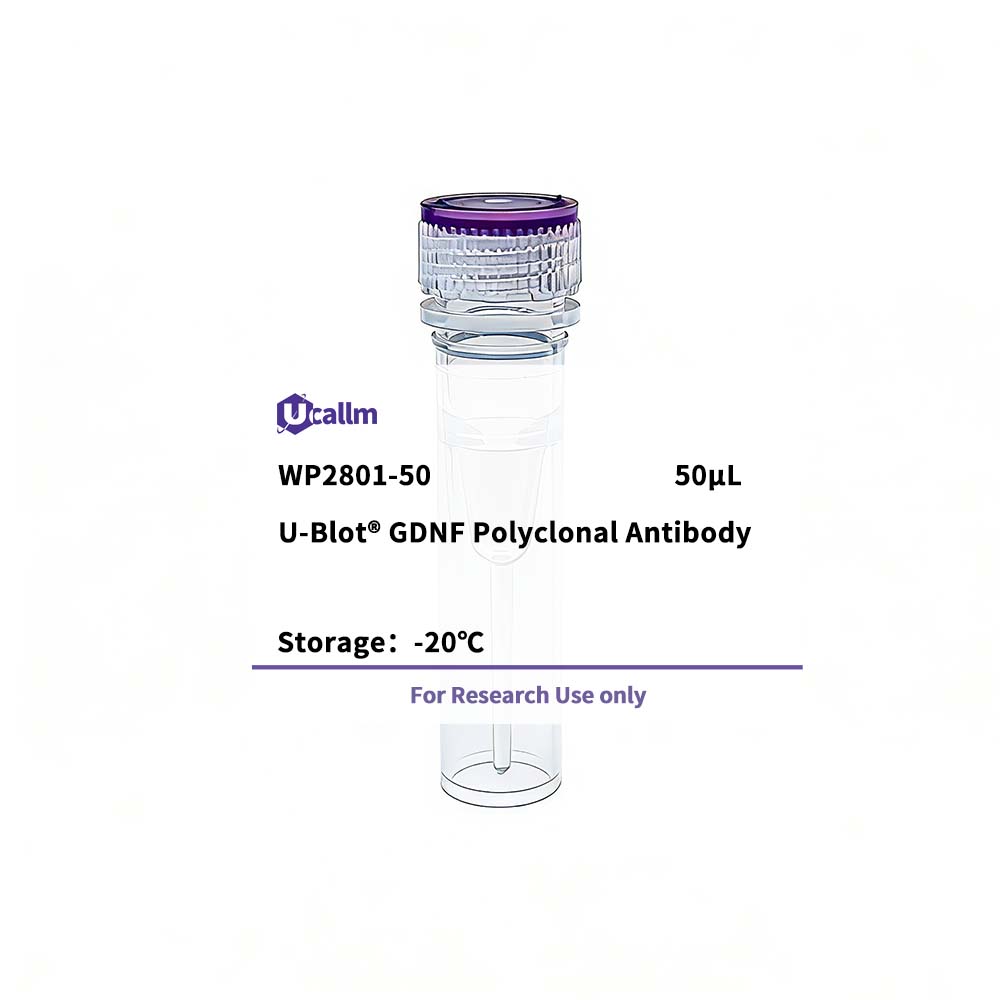
SKU: WP2801 Categories: ,

GDNF Polyclonal Antibody

Price range: $268.00 through $328.00

SKU: WP2801-100
Enter the quantity you would like, or drag the panel to find the quantity and price that best for you
Bulk QuoteAuthorize OEM & ODM

Product details

Background:

This gene encodes a secreted ligand of the TGF-beta (transforming growth factor-beta) superfamily of proteins. Ligands of this family bind various TGF-beta receptors leading to recruitment and activation of SMAD family transcription factors that regulate gene expression. The encoded preproprotein is proteolytically processed to generate each subunit of the disulfide-linked homodimer. The recombinant form of this protein, a highly conserved neurotrophic factor, was shown to promote the survival and differentiation of dopaminergic neurons in culture, and was able to prevent apoptosis of motor neurons induced by axotomy. This protein is a ligand for the product of the RET (rearranged during transfection) protooncogene. Mutations in this gene may be associated with Hirschsprung disease and Tourette syndrome. This gene encodes multiple protein isoforms that may undergo similar proteolytic

Specifications

Size50μL/100μL
TargetGDNF
ReactivityHuman, Mouse, Rat
ApplicationsWB, ELISA
MW(Calculated)
MW(Observed)23kD
Host SpeciesRabbit
IsotypeIgG
Conjugate/ModificationUnmodified
Recommended Dilution RatioWB 1:500-2000; ELISA 1:5000-20000
FormulationLiquid in PBS containing 50% glycerol,0.5% BSA and 0.02% sodium azide.
PurificationThe antibody was affinity-purified from rabbit antiserum by affinity-chromatography using epitope-specific immunogen.
Storage-15°C to -25°C/1 year(Do not lower than -25°C)
Concentration1 mg/ml
ClonalityPolyclonal
Clone Number
ImmunogenSynthesized peptide derived from human protein . at AA range: 100-180
SpecificityGDNF Polyclonal Antibody detects endogenous levels of protein.
Gene NameGDNF
Protein NameGlial cell line-derived neurotrophic factor (hGDNF) (Astrocyte-derived trophic factor) (ATF)
Other Name
SpeciesHuman
Gene ID2668
UniprotP39905,
Species.1Mouse
Gene ID.1
Uniprot.1P48540,
Species.2Rat
Gene ID.2
Uniprot.2Q07731
Cellular LocalizationSecreted .
Tissue ExpressionIn the brain, predominantly expressed in the striatum with highest levels in the caudate and lowest in the putamen. Isoform 2 is absent from most tissues except for low levels in intestine and kidney. Highest expression of isoform 3 is found in pancreatic islets. Isoform 5 is expressed at very low levels in putamen, nucleus accumbens, prefrontal cortex, amygdala, hypothalamus and intestine. Isoform 3 is up-regulated in the middle temporal gyrus of Alzheimer disease patients while isoform 2 shows no change.
Signaling_pathwayEnvironmental Information Processing >> Signal transduction >> MAPK signaling pathway;Environmental Information Processing >> Signal transduction >> Calcium signaling pathway;Environmental Information Processing >> Signal transduction >> PI3K-Akt signaling pathway
Research Areas>>Calcium signaling pathway
FunctionDisease:Defects in GDNF are a cause of congenital central hypoventilation syndrome (CCHS) [MIM:209880]; also known as congenital failure of autonomic control or Ondine curse. CCHS is a rare disorder characterized by abnormal control of respiration in the absence of neuromuscular or lung disease, or an identifiable brain stem lesion. A deficiency in autonomic control of respiration results in inadequate or negligible ventilatory and arousal responses to hypercapnia and hypoxemia.,Disease:Defects in GDNF may be a cause of Hirschsprung disease (HSCR) [MIM:142623]. In association with mutations of RET gene, defects in GDNF may be involved in Hirschsprung disease. This genetic disorder of neural crest development is characterized by the absence of intramural ganglion cells in the hindgut, often resulting in intestinal obstruction.,Function:Neurotrophic factor that enhances survival and morphological differentiation of dopaminergic neurons and increases their high-affinity dopamine uptake.,induction:By cAMP, tetradecanoyl 12-phorbol acetate and fibroblast growth factor 2.,similarity:Belongs to the TGF-beta family. GDNF subfamily.,subunit:Homodimer; disulfide-linked.,tissue specificity:In the brain, predominantly expressed in the striatum with highest levels in the caudate and lowest in the putamen.,
Please login to post questions
Back to Top
Product has been added to your cart

