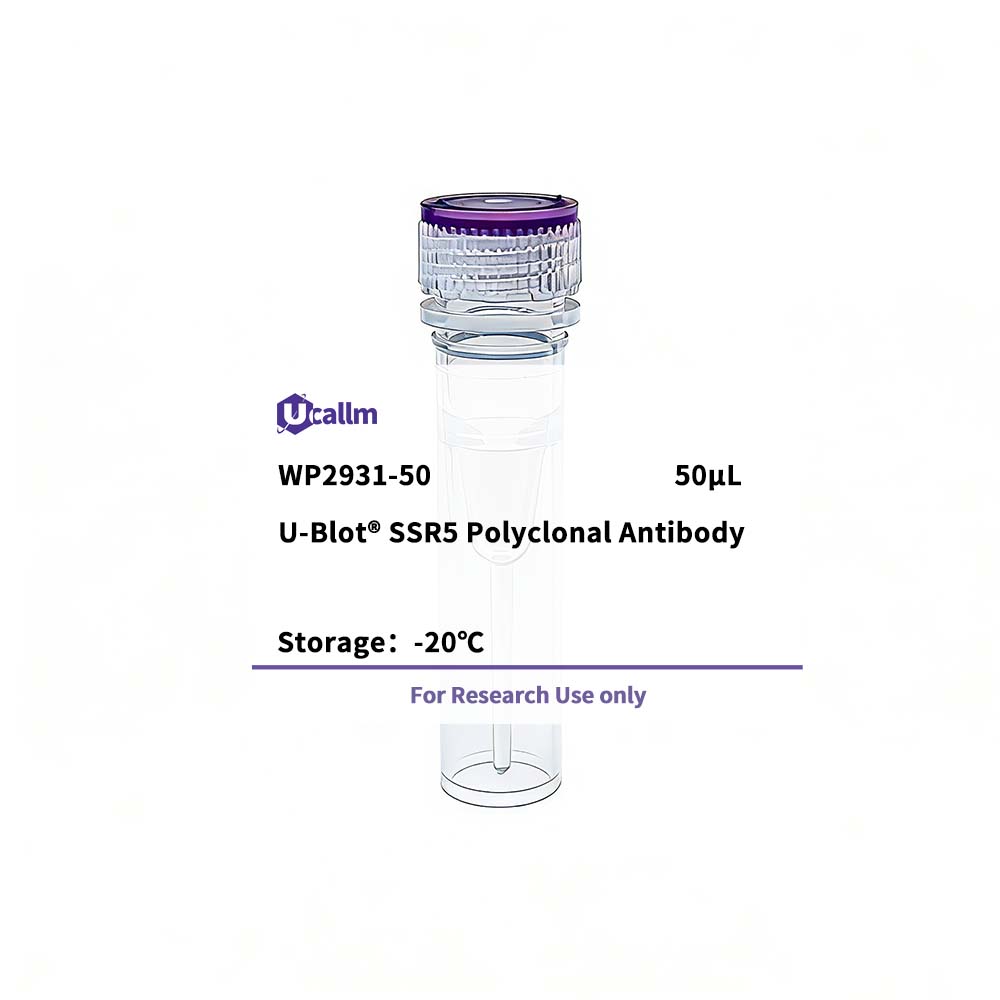
SKU: WP2931 Categories: ,

SSR5 Polyclonal Antibody

Price range: $268.00 through $328.00

SKU: WP2931-100
Enter the quantity you would like, or drag the panel to find the quantity and price that best for you
Bulk QuoteAuthorize OEM & ODM

Product details

Background:

Somatostatin and its related peptide cortistatin exert multiple biological actions on normal and tumoral tissue targets by interacting with somatostatin receptors (SSTRs). The protein encoded by this gene is one of the SSTRs, which is a multi-pass membrane protein and belongs to the G-protein coupled receptor 1 family. The activity of this receptor is mediated by G proteins which inhibit adenylyl cyclase, and different regions of this receptor molecule are required for the activation of different signaling pathways. A mutation in this gene results in somatostatin analog resistance. Alternatively spliced transcript variants have been identified in this gene.[provided by RefSeq, Feb 2010],

Specifications

Size50μL/100μL
TargetSSR5
ReactivityHuman, Mouse, Rat
ApplicationsWB, ELISA
MW(Calculated)
MW(Observed)40kD
Host SpeciesRabbit
IsotypeIgG
Conjugate/ModificationUnmodified
Recommended Dilution RatioWB 1:500-2000; ELISA 1:5000-20000
FormulationLiquid in PBS containing 50% glycerol,0.5% BSA and 0.02% sodium azide.
PurificationThe antibody was affinity-purified from rabbit antiserum by affinity-chromatography using epitope-specific immunogen.
Storage-15°C to -25°C/1 year(Do not lower than -25°C)
Concentration1 mg/ml
ClonalityPolyclonal
Clone Number
ImmunogenSynthesized peptide derived from human protein . at AA range: 270-350
SpecificitySSR5 Polyclonal Antibody detects endogenous levels of protein.
Gene NameSSTR5
Protein NameSomatostatin receptor type 5 (SS-5-R) (SS5-R) (SS5R)
Other Name
SpeciesHuman
Gene ID6755
UniprotP35346,
Species.1Mouse
Gene ID.1
Uniprot.1O08858,
Species.2Rat
Gene ID.2
Uniprot.2P30938
Cellular LocalizationCell membrane; Multi-pass membrane protein.
Tissue ExpressionAdult pituitary gland, heart, small intestine, adrenal gland, cerebellum and fetal hypothalamus. No expression in fetal or adult kidney, liver, pancreas, uterus, spleen, lung, thyroid or ovary.
Signaling_pathwayOrganismal Systems >> Endocrine system >> Growth hormone synthesis, secretion and action;Environmental Information Processing >> Signal transduction >> cAMP signaling pathway
Research Areas>>cAMP signaling pathway; / >>Neuroactive ligand-receptor interaction; / >>Growth hormone synthesis, secretion and action
FunctionFunction:Receptor for somatostatin 28 and to a lesser extent for somatostatin-14. The activity of this receptor is mediated by G proteins which inhibit adenylyl cyclase.,similarity:Belongs to the G-protein coupled receptor 1 family.,tissue specificity:Adult pituitary gland, heart, small intestine, adrenal gland, cerebellum and fetal hypothalamus. No expression in fetal or adult kidney, liver, pancreas, uterus, spleen, lung, thyroid or ovary.,
Please login to post questions
Back to Top
Product has been added to your cart
