SKU: WP14711 Categories: ,

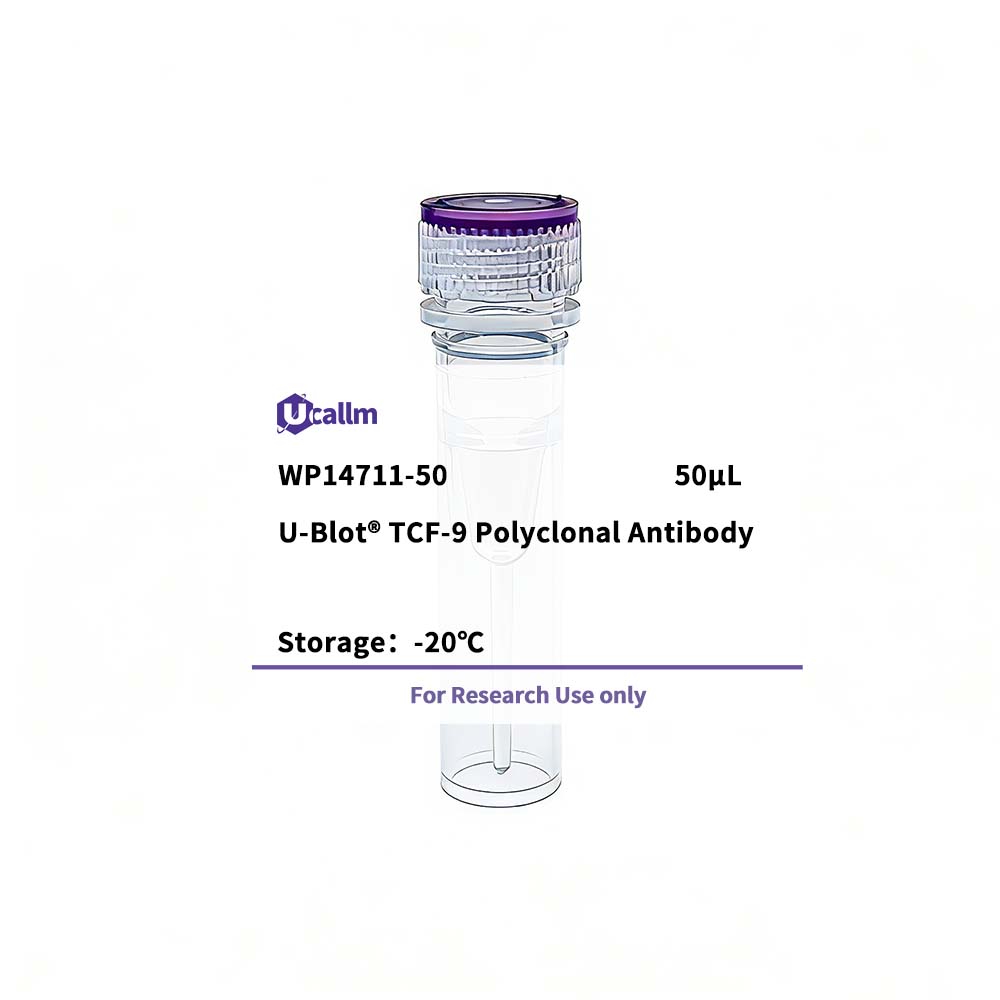
TCF-9 Polyclonal Antibody

Price range: $268.00 through $328.00

SKU: WP14711-100
Enter the quantity you would like, or drag the panel to find the quantity and price that best for you
Bulk QuoteAuthorize OEM & ODM

Product details

Background:

The first mRNA transcript isolated for this gene was part of an artificial chimera derived from two distinct gene transcripts and a primer used in the cloning process (see Genbank accession M29204). A positively charged amino terminus present only in the chimera was determined to bind GC-rich DNA, thus mistakenly thought to identify a transcription factor gene. [provided by RefSeq, Jul 2008],

Specifications

Size50μL/100μL
TargetTCF-9
ReactivityHuman, Mouse
ApplicationsWB, ELISA
MW(Calculated)
MW(Observed)80kD
Host SpeciesRabbit
IsotypeIgG
Conjugate/ModificationUnmodified
Recommended Dilution RatioWB 1:500-1:2000; ELISA 1:20000; Not yet tested in other applications.
FormulationLiquid in PBS containing 50% glycerol, 0.5% BSA and 0.02% sodium azide.
PurificationThe antibody was affinity-purified from rabbit antiserum by affinity-chromatography using epitope-specific immunogen.
Storage-15°C to -25°C/1 year(Do not lower than -25°C)
Concentration1 mg/ml
ClonalityPolyclonal
Clone Number
ImmunogenThe antiserum was produced against synthesized peptide derived from human GCF. AA range:141-190
SpecificityTCF-9 Polyclonal Antibody detects endogenous levels of TCF-9 protein.
Gene NameGCFC2
Protein NameGC-rich sequence DNA-binding factor 2
Other NameGCFC2; / C2orf3; / GCF; / TCF9; / GC-rich sequence DNA-binding factor 2; / GC-rich sequence DNA-binding factor; / Transcription factor 9; / TCF-9
SpeciesHuman
Gene ID6936
UniprotP16383,
Species.1Mouse
Gene ID.1
Uniprot.1Q8BKT3
Species.2
Gene ID.2
Uniprot.2
Cellular LocalizationNucleus, nucleoplasm . Nucleus, nucleolus .
Tissue ExpressionWidely expressed in tissues and cell lines.
Signaling_pathway
Research Areas
FunctionFunction:Factor that represses transcription. It binds to the GC-rich sequences (5'-GCGGGGC-3') present in the epidermal growth factor receptor, beta-actin, and calcium-dependent protease promoters.,sequence Caution:Contaminating sequence. The N-terminus matches the 2q37.3 region.,similarity:Belongs to the GCF family.,tissue specificity:Widely expressed in tissues and cell lines.,
Please login to post questions
Back to Top
Product has been added to your cart


