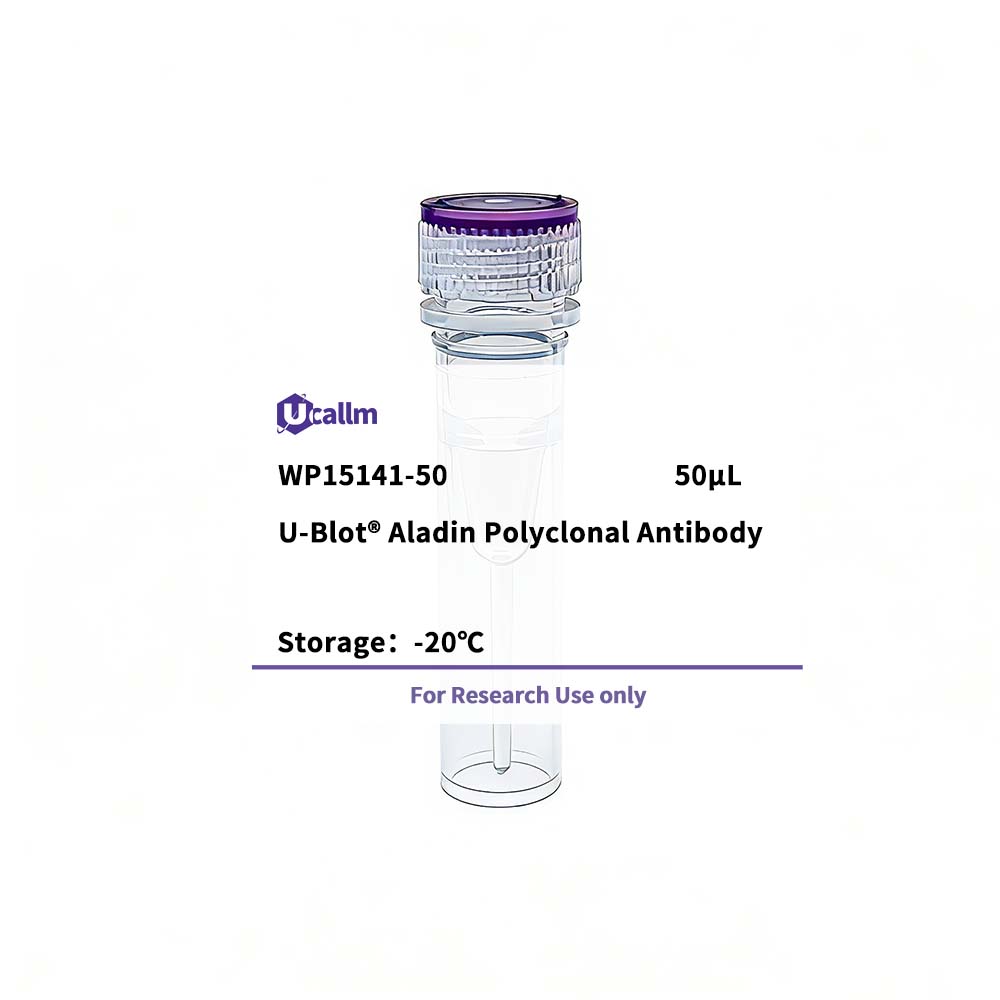
SKU: WP15141 Categories: ,

Aladin Polyclonal Antibody

Price range: $268.00 through $328.00

SKU: WP15141-100
Enter the quantity you would like, or drag the panel to find the quantity and price that best for you
Bulk QuoteAuthorize OEM & ODM

Product details

Background:

The protein encoded by this gene is a member of the WD-repeat family of regulatory proteins and may be involved in normal development of the peripheral and central nervous system. The encoded protein is part of the nuclear pore complex and is anchored there by NDC1. Defects in this gene are a cause of achalasia-addisonianism-alacrima syndrome (AAAS), also called triple-A syndrome or Allgrove syndrome. Two transcript variants encoding different isoforms have been found for this gene. [provided by RefSeq, Mar 2010],


Specifications

Size50μL/100μL
TargetAladin
ReactivityHuman, Rat
ApplicationsWB, ELISA
MW(Calculated)
MW(Observed)59kD
Host SpeciesRabbit
IsotypeIgG
Conjugate/ModificationUnmodified
Recommended Dilution RatioWB 1:500-1:2000; ELISA 1:40000; Not yet tested in other applications.
FormulationLiquid in PBS containing 50% glycerol, 0.5% BSA and 0.02% sodium azide.
PurificationThe antibody was affinity-purified from rabbit antiserum by affinity-chromatography using epitope-specific immunogen.
Storage-15°C to -25°C/1 year(Do not lower than -25°C)
Concentration1 mg/ml
ClonalityPolyclonal
Clone Number
ImmunogenSynthesized peptide derived from Aladin . at AA range: 360-440
SpecificityAladin Polyclonal Antibody detects endogenous levels of Aladin protein.
Gene NameAAAS
Protein NameAladin
Other NameAAAS; / ADRACALA; / GL003; / Aladin; / Adracalin
SpeciesHuman
Gene ID8086
UniprotQ9NRG9,
Species.1Mouse
Gene ID.1
Uniprot.1P58742
Species.2
Gene ID.2
Uniprot.2
Cellular LocalizationNucleus, nuclear pore complex . Cytoplasm, cytoskeleton, spindle pole . Nucleus envelope . In metaphase cells localizes within the spindle with some accumulation around spindle poles, with the highest concentration between the centrosome and metaphase plate (PubMed:26246606). The localization to the spindle is microtubule-mediated (PubMed:26246606). .
Tissue ExpressionWidely expressed (PubMed:11159947, PubMed:16022285). Particularly abundant in cerebellum, corpus callosum, adrenal gland, pituitary gland, gastrointestinal structures and fetal lung (PubMed:11159947).
Signaling_pathwayGenetic Information Processing >> Translation >> Nucleocytoplasmic transport
Research Areas>>Nucleocytoplasmic transport
FunctionDisease:Defects in AAAS are the cause of achalasia-addisonianism-alacrima syndrome (AAAS) [MIM:231550]; also known as triple-A syndrome or Allgrove syndrome. AAAS is an autosomal recessive disorder characterized by adreno-corticotropic hormone (ACTH)-resistant adrenal failure, achalasia of the esophageal cardia and alacrima. The syndrome is associated with variable and progressive neurological impairment involving the central, peripheral, and autonomic nervous system. Other features such as palmoplantar hyperkeratosis, short stature, facial dysmorphy and osteoporosis may also be present.,Function:Plays a role in the normal development of the peripheral and central nervous system.,similarity:Contains 4 WD repeats.,tissue specificity:Widely expressed. Particularly abundant expression is found in cerebellum, corpus callosum, adrenal gland, pituary gland, gatsrointestinal structures and fetal lung.,
Please login to post questions
Back to Top
Product has been added to your cart