

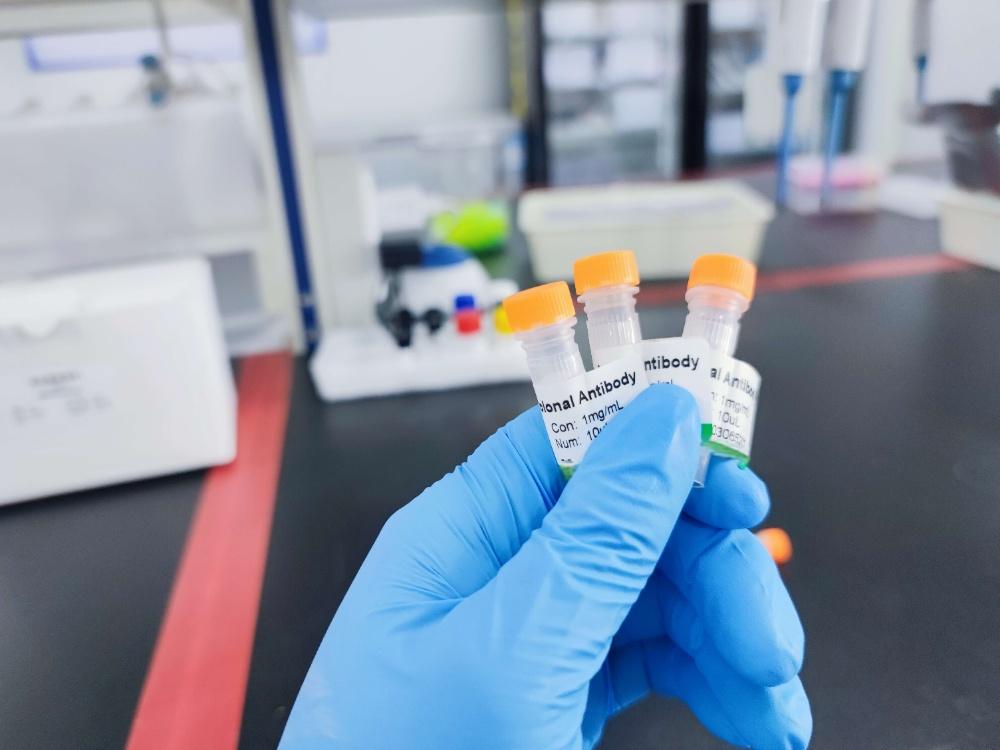
Conjugating Horseradish Peroxidase (HRP) to antibodies is key in today’s molecular diagnostics and research. This process needs precision, special knowledge, and the right techniques for antibody conjugation.
Scientists in immunology and diagnostics use this method to improve detection in many fields. It makes molecular detection more sensitive and specific across different research areas.
Knowing how to conjugate HRP helps scientists create better diagnostic tools and research methods. Our guide will cover the main techniques and things to consider for a successful enzyme-antibody bond.
Key Takeaways
- HRP conjugation enhances molecular detection sensitivity
- Precise enzyme-antibody linking requires specialized techniques
- Conjugation impacts diagnostic and research capabilities
- Multiple methods exist for successful HRP attachment
- Careful optimization ensures optimal conjugate performance
Understanding Enzyme-Antibody Conjugation
Enzyme-antibody conjugation is key in modern biology and research. We explore the complex world of hrp labeling and enzyme-antibody methods. These are driving forces in scientific progress.
What is HRP?
Horseradish Peroxidase (HRP) is a glycoprotein enzyme with special traits. Its small size allows for precise work in biology. HRP is known for:
- Small molecular weight
- High stability across various pH ranges
- Exceptional catalytic efficiency
- Ability to generate detectable signals
Importance of HRP in Immunology
HRP’s role in immunology is huge. It helps in making tests and research better. Its special features make it great for finding specific molecules.
Overview of Antibody Function
Antibodies are proteins that find and stick to certain molecules. When paired with HRP, they become top tools for science. This pairing is crucial for many studies.
Together, HRP and antibodies form a strong base for science. They are used in many areas, from tests to deep research.
The Role of HRP in Biological Applications
Horseradish peroxidase (HRP) antibody conjugates have changed biological research a lot. They help in making new tests and joining molecules together. These tools let scientists study complex systems very well.
Diagnostic Applications
In medical tests, HRP conjugates are key for finding disease markers. They are very good at:
- Finding cancer early
- Screening for infections
- Keeping track of chronic diseases
Therapeutic Applications
HRP-antibody conjugates help in making treatments that target specific problems. Immunoassay development helps in making drugs work better, especially in:
- Cancer treatments
- Personalized medicine
- Targeting specific cells
Research Applications
Scientists use bioconjugation strategies with HRP conjugates to make signals stronger. They are used in:
- Western blotting
- ELISA tests
- Studying protein locations
- Looking into cell signals
These advanced tools help scientists learn more about life. They make it easier to study complex systems.
Methods for Conjugating HRP to Antibodies
Protein crosslinking is key in making antibodies work better. Many ways exist to attach horseradish peroxidase (HRP) to antibodies. Each method has its own benefits and uses.
Choosing the right method is important. It involves knowing the different ways to improve how enzymes and antibodies work together.
Direct Conjugation Methods
Direct methods are simple for attaching HRP to antibodies. They include:
- Reductive amination using cyanoborohydride
- Chemical crosslinking with glutaraldehyde
- Direct chemical modification of protein surfaces
Indirect Conjugation Approaches
Indirect methods are more complex but precise. They include:
- SMCC-activated HRP with 2-MEA-activated antibody
- Biotin-streptavidin intermediate systems
- Heterobifunctional crosslinker methods
Choosing the Right Method
Choosing a method depends on several things:
| Parameter | Considerations |
|---|---|
| Antibody Type | Structural integrity, functional groups |
| Desired Application | Research, diagnostic, or therapeutic use |
| Available Resources | Equipment, chemical reagents, expertise |
Researchers must carefully evaluate these factors to ensure optimal conjugation efficiency and maintain the functional characteristics of both the enzyme and antibody.
Steps for Conjugation Process
Learning how to conjugate HRP to antibody is a detailed process. It needs precision and careful technique. The steps for labeling HRP with antibodies are crucial for research and diagnostic use.
Creating a strong enzyme-antibody bond is key. Researchers must follow each step carefully to get the best results.
Preparation of HRP and Antibody
Before starting, there are important steps to take:
- Purify both HRP and antibody to remove contaminants
- Determine the exact protein concentrations
- Choose the right buffer systems
- Adjust the pH for the best conjugation
Conjugation Reactions
The heart of labeling HRP involves bonding molecules. Researchers use chemical crosslinking to keep the enzyme and antibody intact.
- Choose the right crosslinking agents
- Control the reaction temperature
- Watch the reaction’s progress
- Find the best molar ratios
Purification of Conjugates
The last step is to refine the molecular structure. The best methods include:
- Size exclusion chromatography
- Affinity-based separation
- Ultrafiltration
SoluLINK bioconjugation technology offers a complete solution. It provides an “All-in-One” kit for a smooth conjugation process.
Factors Affecting Conjugation Efficiency
Getting enzyme-antibody conjugation right is all about controlling key factors. Bioconjugation strategies need careful tweaking for top-notch results in labs and diagnostics.
It’s important to grasp the complex factors at play in conjugation. Here are the main elements that affect how well enzymes and antibodies work together:
pH and Buffer Conditions
The chemical setting greatly affects how well conjugation works. Maleimide reactions, for example, work best at pH 6.5-7.5. Even small pH changes can mess with protein interactions and stability.
- Optimal pH range: 6.5-7.5
- Buffer composition affects protein structure
- Maintain consistent ionic strength
Concentration Ratios
Getting the right amounts of enzyme and antibody is key. Wrong ratios can lower binding efficiency or cause clumping.
- Determine ideal enzyme-to-antibody ratio
- Use spectrophotometric measurements
- Minimize excess unbound molecules
Incubation Time and Temperature
Controlling time and temperature is crucial for conjugation. These factors affect how molecules interact and the quality of the final product.
Here are some tips for achieving the best results:
- Standard incubation temperatures: 4°C-37°C
- Typical reaction times: 1-4 hours
- Minimize protein degradation
Assessing Conjugation Success
Checking if HRP-antibody conjugation worked well is key for good molecular diagnostics. Scientists need to use detailed methods to make sure their conjugates are top-notch.
Analytical Techniques for Conjugate Characterization
There are many advanced ways to check HRP-antibody conjugates. These methods help scientists confirm their tools work right.
- Spectrophotometry for concentration measurements
- Gel electrophoresis for structural analysis
- Mass spectrometry for precise molecular characterization
Determining Binding Affinity
It’s important to check how well conjugates bind. ELISA and surface plasmon resonance give detailed info on how well they work.
| Technique | Key Measurement | Precision Level |
|---|---|---|
| ELISA | Antibody-Antigen Interaction | High |
| Surface Plasmon Resonance | Real-Time Binding Kinetics | Very High |
Functional Validation of Conjugates
It’s crucial to test if conjugates still work well. This means they can still bind to antigens and have enzyme activity. Testing them thoroughly helps find the best conjugates for molecular diagnostics.
Troubleshooting Common Issues
Working with antibody conjugation techniques can be tricky. Researchers often face problems during protein crosslinking. These issues can affect the success of their experiments.
Knowing the common problems helps scientists find good solutions. This way, they can make enzyme-antibody conjugation work well.
Low Conjugation Yield Challenges
There are many reasons for low conjugation efficiency. Some main issues include:
- Suboptimal reaction pH levels
- Incompatible buffer conditions
- Inappropriate enzyme-to-antibody ratios
- Contaminated reagent sources
Strategies for Maintaining Conjugate Activity
To keep enzymatic and antibody functions active, scientists need to optimize their methods. Important steps include:
- Monitoring reaction temperature
- Controlling incubation duration
- Selecting appropriate crosslinking agents
- Implementing precise purification methods
Addressing Specificity Concerns
Non-specific binding can ruin research results. Experimental precision demands meticulous attention to conjugation specificity. To solve this, researchers can:
- Use high-quality purification techniques
- Implement rigorous washing protocols
- Conduct comprehensive binding affinity tests
By tackling these common problems, scientists can improve their antibody conjugation techniques. This makes their experiments more reliable.
Comparison of HRP Conjugation with Other Enzymes
Enzyme-antibody conjugation is key in making tests for diseases. Scientists pick enzymes based on what works best for their tests. We look at how different enzymes compare in this important area.

100μL Antibody
Choosing the right enzyme is a big deal. Each enzyme has its own strengths that affect how well tests work.
Benefits of HRP in Enzyme Conjugation
- Exceptional stability across multiple storage conditions
- High turnover rate for sensitive detection
- Versatile compatibility with various detection systems
- Rapid signal generation
Comparative Analysis of Enzyme Performance
| Enzyme | Sensitivity | Stability | Signal Intensity |
|---|---|---|---|
| Horseradish Peroxidase (HRP) | High | Excellent | Strong |
| Alkaline Phosphatase | Moderate | Good | Moderate |
| β-Galactosidase | Low | Limited | Weak |
Limitations and Considerations
HRP is great, but there are things to think about. Things like pH, what substrates are available, and how you detect are important when choosing an enzyme.
Use Cases for Enzyme Conjugates
- Diagnostic immunoassay development
- Molecular biology research
- Protein interaction studies
- Clinical diagnostic applications
Knowing the details about each enzyme helps scientists make better choices. This is important for their work in studying diseases.
Future Directions in HRP Conjugation Research
The field of HRP-antibody conjugation is changing fast. New research is making big steps in molecular diagnostics and immunodetection assays. Scientists are finding new ways to do things that could change how we do science and medicine.
New technologies like SoluLINK bioconjugation are making a big difference. They help enzymes and antibodies work together better. This means we can make diagnostic tools that are more accurate and sensitive. People are really excited about using these tools in nanotechnology and personalized medicine.
Immunodetection assays are getting better, thanks to new ways of making antibodies work. These new methods will help us find diseases faster and more accurately. This could make diagnosing diseases quicker and more effective, helping patients get better sooner.
As research keeps going, we’ll see even better tools for diagnosing and studying diseases. The work on HRP-antibody conjugation is very important. It could change how we understand and treat diseases.
References and further readings:
1.Hnasko, R. M. (2015). Bioconjugation of antibodies to horseradish peroxidase (HRP). In ELISA: Methods and Protocols (pp. 43–50). Springer.
https://link.springer.com/protocol/10.1007/978-1-4939-2742-5_42.Van Weemen, B. K., Schuurs, A., & Oostermeijer, M. W. (1974). Immunoassay using antibody–enzyme conjugates. FEBS Letters, 43(2), 215–218.
https://www.sciencedirect.com/science/article/pii/0014579374810033
3.Winston, S. E., Fuller, S. A., & Evelegh, M. J. (2000). Conjugation of enzymes to antibodies. In Current Protocols in Molecular Biology (Chapter 11). Wiley.
https://currentprotocols.onlinelibrary.wiley.com/doi/10.1002/0471142727.mb1101s504.Guesdon, J. L., et al. (1978). Coupling of enzymes to antibodies and antigens. Scandinavian Journal of Immunology, 8(3), 199–210.
https://www.researchgate.net/publication/229451294_Coupling_of_Enzymes_to_Antibodies_and_Antigens
FAQ
What is Horseradish Peroxidase (HRP) and why is it important in immunoassays?
Horseradish Peroxidase (HRP) is a key enzyme in molecular diagnostics and immunology. It’s vital for detecting signals in tests like ELISA and Western blotting. This is because it works fast, is stable, and can create color reactions.
What are the primary methods for conjugating HRP to antibodies?
There are two main ways to link HRP to antibodies:
• Direct methods: Using reductive amination or crosslinkers
• Indirect methods: Through secondary antibodies or biotin-streptavidin systems
The best method depends on the research needs, antibody type, and application.
What factors affect the efficiency of HRP-antibody conjugation?
Several factors impact conjugation success:
• pH and buffer conditions
• Concentration of HRP and antibodies
• Incubation time and temperature
• Proper protein preparation
• Choosing the right crosslinking chemistry
How can researchers validate HRP-antibody conjugates?
Validation uses various techniques:
• Spectrophotometry for measuring concentration
• Gel electrophoresis to check conjugation
• Mass spectrometry for structure analysis
• ELISA to test binding
• Functional assays to confirm enzymatic and antigen-binding functions
What are common challenges in HRP-antibody conjugation?
Challenges include:
• Low conjugation yield
• Reduced enzymatic or antibody activity
• Non-specific binding
• Cross-reactivity
• Keeping proteins stable during conjugation
What are the advantages of using HRP compared to other enzymes?
HRP has many benefits:
• High turnover rate
• Exceptional stability
• Works well with many detection systems
• Cost-effective
• Sensitive in amplifying signals
• Versatile for various immunoassay platforms
What are potential applications of HRP-antibody conjugates?
HRP-antibody conjugates have many uses:
• Diagnosing diseases by detecting biomarkers
• Researching therapies, including targeted drug delivery
• Studying cancer treatments
• Locating proteins
• Amplifying signals in molecular detection
What emerging trends exist in HRP-antibody conjugation research?
New trends include:
• Site-specific conjugation methods
• Advanced crosslinking chemistries
• Nanotechnology integration
• Personalized medicine diagnostics
• Point-of-care testing
• Improved sensitivity in molecular detection
Leo Bios
Hello, I’m Leo Bios. As an assistant lecturer, I teach cellular and
molecular biology to undergraduates at a regional US Midwest university. I started as a research tech in
a biotech startup over a decade ago, working on molecular diagnostic tools. This practical experience
fuels my teaching and writing, keeping me engaged in biology’s evolution.

Leave a Comment
Your email address will not be published. Required fields are marked *