SKU: WP2932 Categories: ,

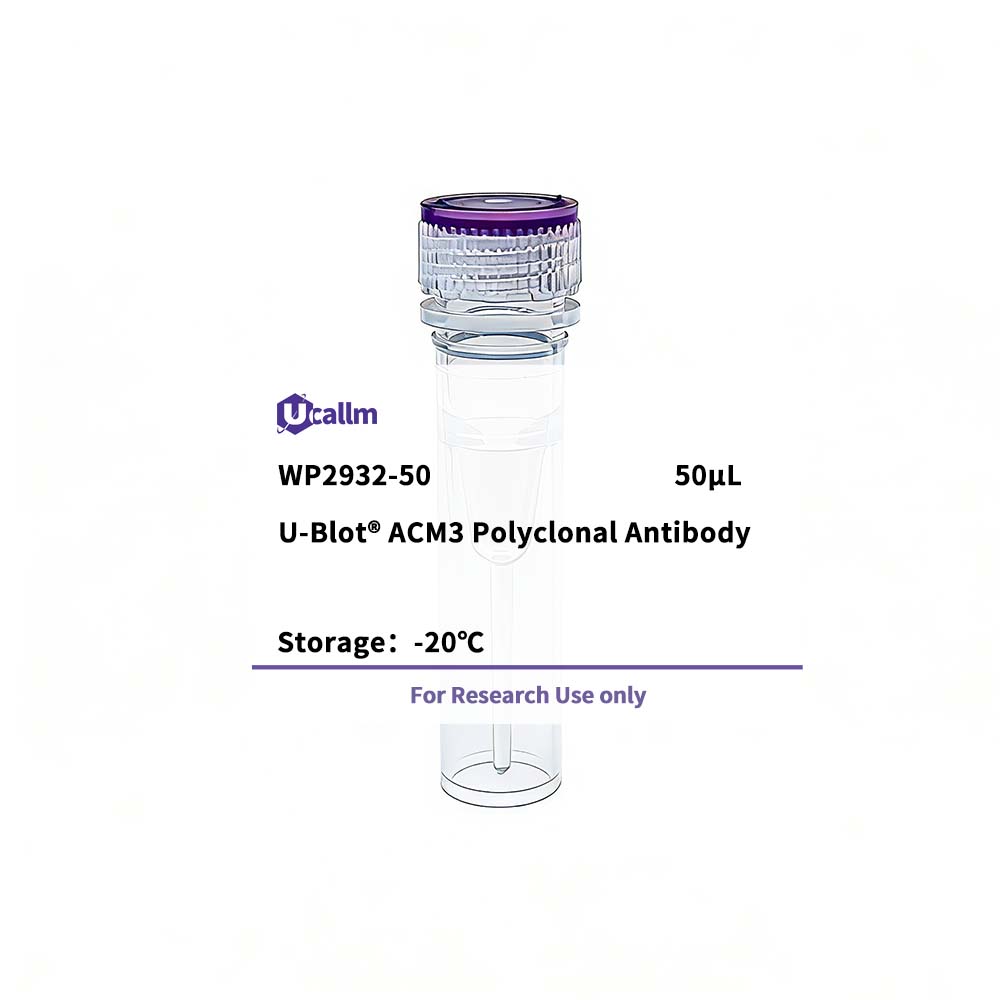
ACM3 Polyclonal Antibody

Price range: $268.00 through $328.00

SKU: WP2932-100
Enter the quantity you would like, or drag the panel to find the quantity and price that best for you
Bulk QuoteAuthorize OEM & ODM

Product details

Background:

The muscarinic cholinergic receptors belong to a larger family of G protein-coupled receptors. The functional diversity of these receptors is defined by the binding of acetylcholine and includes cellular responses such as adenylate cyclase inhibition, phosphoinositide degeneration, and potassium channel mediation. Muscarinic receptors influence many effects of acetylcholine in the central and peripheral nervous system. The muscarinic cholinergic receptor 3 controls smooth muscle contraction and its stimulation causes secretion of glandular tissue. [provided by RefSeq, Jul 2008],

Specifications

Size50μL/100μL
TargetACM3
ReactivityHuman, Mouse, Rat
ApplicationsWB, ELISA
MW(Calculated)
MW(Observed)64kD
Host SpeciesRabbit
IsotypeIgG
Conjugate/ModificationUnmodified
Recommended Dilution RatioWB 1:500-2000; ELISA 1:5000-20000
FormulationLiquid in PBS containing 50% glycerol,0.5% BSA and 0.02% sodium azide.
PurificationThe antibody was affinity-purified from rabbit antiserum by affinity-chromatography using epitope-specific immunogen.
Storage-15°C to -25°C/1 year(Do not lower than -25°C)
Concentration1 mg/ml
ClonalityPolyclonal
Clone Number
ImmunogenSynthesized peptide derived from human protein . at AA range: 270-350
SpecificityACM3 Polyclonal Antibody detects endogenous levels of protein.
Gene NameCHRM3
Protein NameMuscarinic acetylcholine receptor M3
Other Name
SpeciesHuman
Gene ID1131
UniprotP20309,
Species.1Mouse
Gene ID.1
Uniprot.1Q9ERZ3,
Species.2Rat
Gene ID.2
Uniprot.2P08483
Cellular LocalizationCell membrane; Multi-pass membrane protein . Cell junction, synapse, postsynaptic cell membrane; Multi-pass membrane protein . Basolateral cell membrane; Multi-pass membrane protein . Endoplasmic reticulum membrane; Multi-pass membrane protein . Colocalizes with TMEM147 in the endoplasmic reticulum (ER) membrane. TMEM147 impairs its trafficking to the cell membrane leading to its retention in the ER membrane. .
Tissue ExpressionBrain,Teratocarcinoma,
Signaling_pathwayCellular Processes >> Cell motility >> Regulation of actin cytoskeleton;Organismal Systems >> Endocrine system >> Insulin secretion;Organismal Systems >> Nervous system >> Cholinergic synapse;Human Diseases >> Neurodegenerative disease >> Alzheimer disease;Human Diseases >> Neurodegenerative disease >> Pathways of neurodegeneration - multiple diseases;Environmental Information Processing >> Signal transduction >> Calcium signaling pathway
Research Areas>>Calcium signaling pathway; / >>Neuroactive ligand-receptor interaction; / >>Cholinergic synapse; / >>Taste transduction; / >>Regulation of actin cytoskeleton; / >>Insulin secretion; / >>Salivary secretion; / >>Gastric acid secretion; / >>Pancreatic secretion; / >>Alzheimer disease; / >>Pathways of neurodegeneration - multiple diseases
FunctionFunction:The muscarinic acetylcholine receptor mediates various cellular responses, including inhibition of adenylate cyclase, breakdown of phosphoinositides and modulation of potassium channels through the action of G proteins. Primary transducing effect is Pi turnover.,similarity:Belongs to the G-protein coupled receptor 1 family.,
Please login to post questions
Back to Top
Product has been added to your cart

