SKU: WP3232 Categories: ,

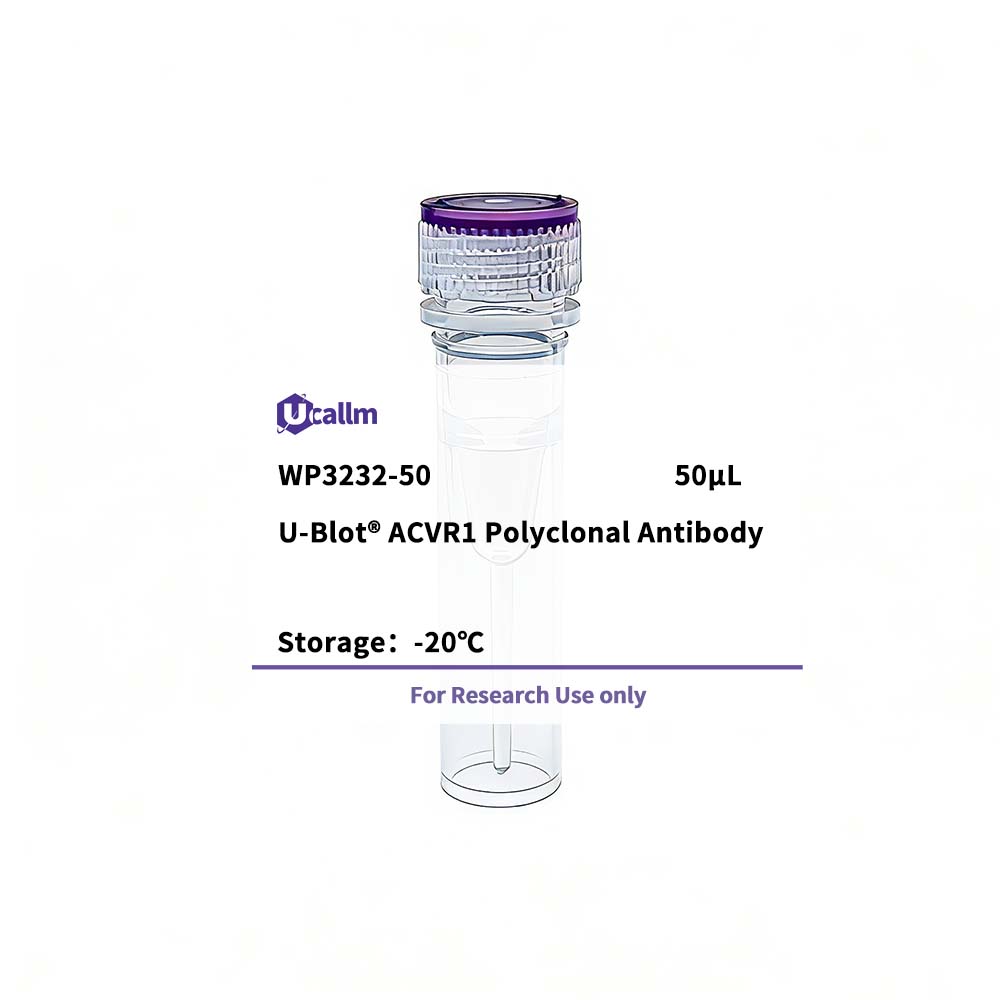
ACVR1 Polyclonal Antibody

Price range: $268.00 through $328.00

SKU: WP3232-100
Enter the quantity you would like, or drag the panel to find the quantity and price that best for you
Bulk QuoteAuthorize OEM & ODM

Product details

Background:

Activins are dimeric growth and differentiation factors which belong to the transforming growth factor-beta (TGF-beta) superfamily of structurally related signaling proteins. Activins signal through a heteromeric complex of receptor serine kinases which include at least two type I ( I and IB) and two type II (II and IIB) receptors. These receptors are all transmembrane proteins, composed of a ligand-binding extracellular domain with cysteine-rich region, a transmembrane domain, and a cytoplasmic domain with predicted serine/threonine specificity. Type I receptors are essential for signaling; and type II receptors are required for binding ligands and for expression of type I receptors. Type I and II receptors form a stable complex after ligand binding, resulting in phosphorylation of type I receptors by type II receptors. This gene encodes activin A type I receptor which signals a particular

Specifications

Size50μL/100μL
TargetACVR1
ReactivityHuman, Mouse, Rat
ApplicationsWB, ELISA
MW(Calculated)
MW(Observed)55kD
Host SpeciesRabbit
IsotypeIgG
Conjugate/ModificationUnmodified
Recommended Dilution RatioWB 1:500-2000; ELISA 1:5000-20000
FormulationLiquid in PBS containing 50% glycerol,0.5% BSA and 0.02% sodium azide.
PurificationThe antibody was affinity-purified from rabbit antiserum by affinity-chromatography using epitope-specific immunogen.
Storage-15°C to -25°C/1 year(Do not lower than -25°C)
Concentration1 mg/ml
ClonalityPolyclonal
Clone Number
ImmunogenSynthesized peptide derived from part region of human protein
SpecificityACVR1 Polyclonal Antibody detects endogenous levels of protein.
Gene NameACVR1 ACVRLK2
Protein NameActivin receptor type-1 (Activin receptor type I) (ACTR-I) (Activin receptor-like kinase 2) (ALK-2) (Serine/threonine-protein kinase receptor R1) (SKR1) (TGF-B superfamily receptor type I) (TSR-I)
Other Name
SpeciesHuman
Gene ID90
UniprotQ04771,
Species.1Mouse
Gene ID.1
Uniprot.1P37172,
Species.2Rat
Gene ID.2
Uniprot.2P80201
Cellular LocalizationMembrane; Single-pass type I membrane protein.
Tissue ExpressionExpressed in normal parenchymal cells, endothelial cells, fibroblasts and tumor-derived epithelial cells.
Signaling_pathwayCellular Processes >> Cellular community - eukaryotes >> Signaling pathways regulating pluripotency of stem cells;Environmental Information Processing >> Signal transduction >> TGF-beta signaling pathway;Environmental Information Processing >> Signaling molecules and interaction >> Cytokine-cytokine receptor interaction
Research Areas>>Cytokine-cytokine receptor interaction; / >>TGF-beta signaling pathway; / >>Signaling pathways regulating pluripotency of stem cells; / >>Fluid shear stress and atherosclerosis
FunctionCatalytic activity:ATP + [receptor-protein] = ADP + [receptor-protein] phosphate.,cofactor:Magnesium or manganese.,Disease:Defects in ACVR1 are a cause of fibrodysplasia ossificans progressiva (FOP) [MIM:135100]. FOP is a rare autosomal dominant disorder of skeletal malformations and progressive extraskeletal ossification. Heterotopic ossification in FOP begins in childhood and can be induced by trauma or may occur without warning. Bone formation is episodic and progressive, leading to extra-articular ankylosis of all major joints of the axial and appendicular skeleton, rendering movement impossible.,Function:On ligand binding, forms a receptor complex consisting of two type II and two type I transmembrane serine/threonine kinases. Type II receptors phosphorylate and activate type I receptors which autophosphorylate, then bind and activate SMAD transcriptional regulators. Receptor for activin. May be involved for left-right pattern formation during embryogenesis.,similarity:Belongs to the protein kinase superfamily.,similarity:Belongs to the protein kinase superfamily. TKL Ser/Thr protein kinase family. TGFB receptor subfamily.,similarity:Contains 1 GS domain.,similarity:Contains 1 protein kinase domain.,tissue specificity:Expressed in normal parenchymal cells, endothelial cells, fibroblasts and tumor-derived epithelial cells.,
Please login to post questions
Back to Top
Product has been added to your cart


