SKU: WM0474 Categories: ,

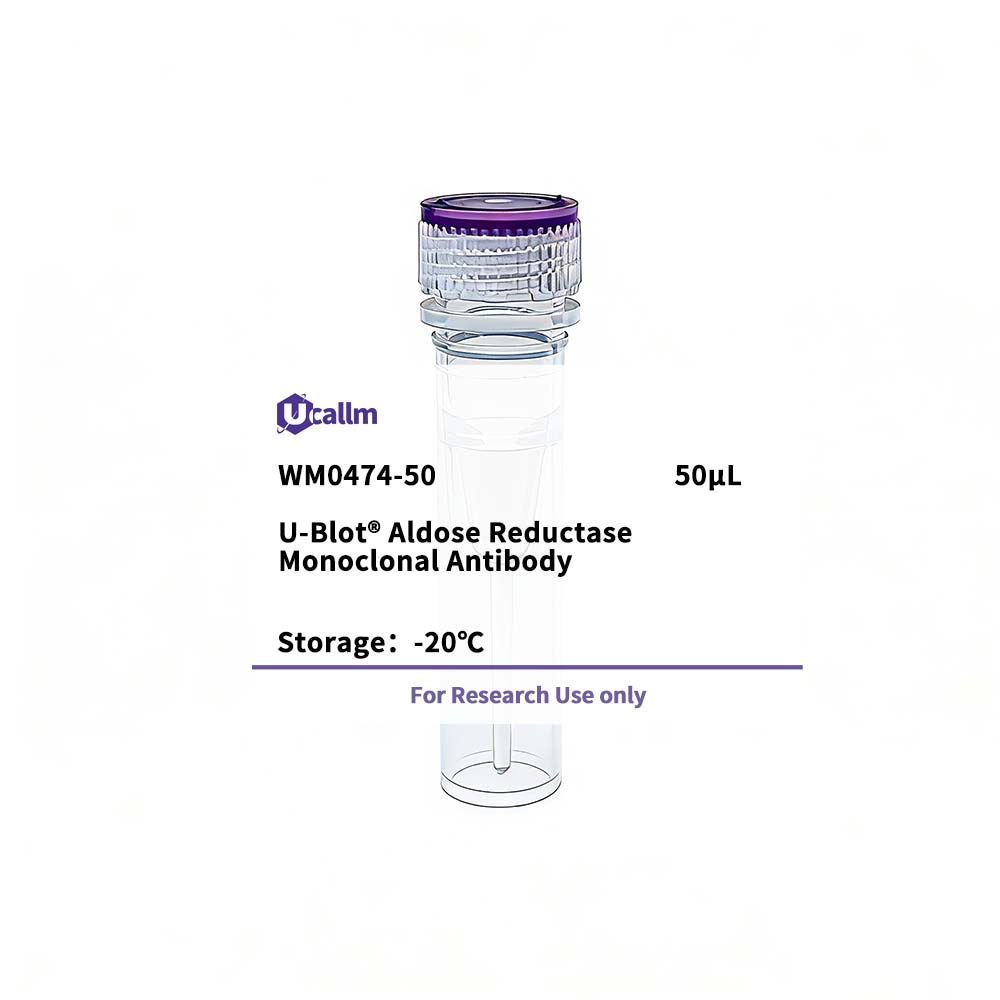
Aldose Reductase Monoclonal Antibody

Price range: $268.00 through $328.00

SKU: WM0474-50
Enter the quantity you would like, or drag the panel to find the quantity and price that best for you
Bulk QuoteAuthorize OEM & ODM

Product details

Background:
This gene encodes a member of the aldo/keto reductase superfamily, which consists of more than 40 known enzymes and proteins. This member catalyzes the reduction of a number of aldehydes, including the aldehyde form of glucose, and is thereby implicated in the development of diabetic complications by catalyzing the reduction of glucose to sorbitol. Multiple pseudogenes have been identified for this gene. The nomenclature system used by the HUGO Gene Nomenclature Committee to define human aldo-keto reductase family members is known to differ from that used by the Mouse Genome Informatics database. [provided by RefSeq, Feb 2009],

Specifications

Size50μL/100μL
TargetAKR1B1
ReactivityHuman, Mouse, Dog
ApplicationsWB
MW(Calculated)36kD
MW(Observed)
Host SpeciesMouse
Isotype
Conjugate/ModificationUnmodified
Recommended Dilution RatioWB 1:1000-1:2000; Not yet tested in other applications.
FormulationLiquid in PBS containing 50% glycerol, 0.5% BSA and 0.02% sodium azide.
PurificationAffinity purification
Storage-15°C to -25°C/1 year(Do not lower than -25°C)
Concentration
ClonalityMonoclonal
Clone Number12D6
ImmunogenPurified recombinant human Aldose Reductase protein fragments expressed in E.coli.
SpecificityAldose Reductase Monoclonal Antibody detects endogenous levels of Aldose Reductase protein.
Gene NameAKR1B1
Protein NameAldose reductase
Other NameAKR1B1; / ALDR1; / Aldose reductase; / AR; / Aldehyde reductase; / Aldo-keto reductase family 1 member B1
SpeciesHuman
Gene ID231
UniprotP15121,
Species.1Mouse
Gene ID.111677
Uniprot.1P45376,
Species.2Rat
Gene ID.224192
Uniprot.2P07943
Cellular LocalizationCytoplasm.
Tissue ExpressionHighly expressed in embryonic epithelial cells (EUE) in response to osmotic stress.
Signaling_pathway
Research Areas>>Pentose and glucuronate interconversions; / >>Fructose and mannose metabolism; / >>Galactose metabolism; / >>Glycerolipid metabolism; / >>Folate biosynthesis; / >>Metabolic pathways
FunctionCatalytic activity:Alditol + NAD(P)(+) = aldose + NAD(P)H.,Disease:In diabetes and galactosemia, increased AR activity leads to high levels of sorbitol and galactitol, respectively, in the cells of many tissues. Accumulation of sugar alcohols has been shown to cause osmotic cataracts in the lens. AR is also thought to play a key role in diabetic complications of three other target tissues, namely, nerve, kidney and retina.,enzyme regulation:Cys-299 may regulate the kinetic and inhibition properties of the enzyme, but does not participate in catalysis.,Function:Catalyzes the NADPH-dependent reduction of a wide variety of carbonyl-containing compounds to their corresponding alcohols with a broad range of catalytic efficiencies.,similarity:Belongs to the aldo/keto reductase family.,subunit:Monomer.,tissue specificity:Highly expressed in embryonic epithelial cells (EUE) in response to osmotic stress.,
Please login to post questions
Back to Top
Product has been added to your cart