SKU: WP2100 Categories: ,

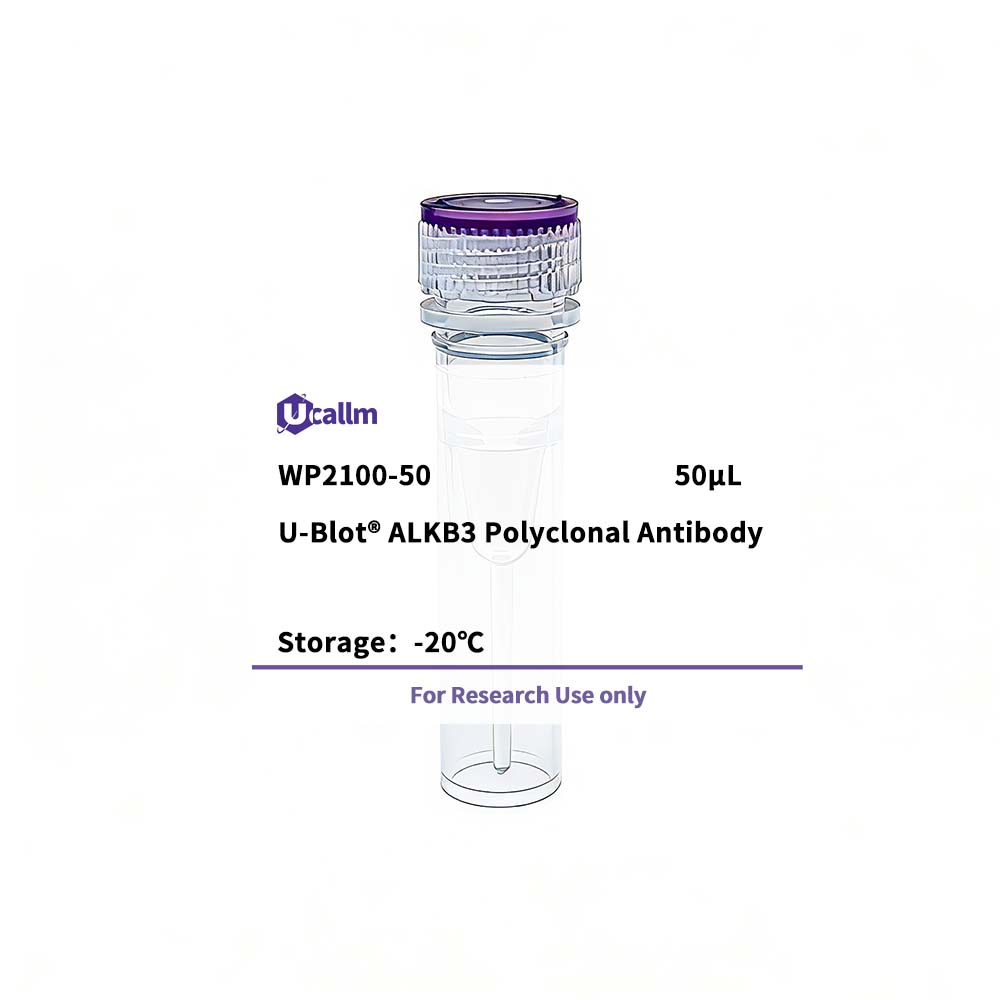
ALKB3 Polyclonal Antibody

Price range: $268.00 through $328.00

SKU: WP2100-100
Enter the quantity you would like, or drag the panel to find the quantity and price that best for you
Bulk QuoteAuthorize OEM & ODM

Product details

Background:

The Escherichia coli AlkB protein protects against the cytotoxicity of methylating agents by repair of the specific DNA lesions generated in single-stranded DNA. ALKBH2 (MIM 610602) and ALKBH3 are E. coli AlkB homologs that catalyze the removal of 1-methyladenine and 3-methylcytosine (Duncan et al., 2002 [PubMed 12486230]).[supplied by OMIM, Mar 2008],


Specifications

Size50μL/100μL
TargetALKB3
ReactivityHuman, Mouse, Rat
ApplicationsWB, ELISA
MW(Calculated)
MW(Observed)31kD
Host SpeciesRabbit
IsotypeIgG
Conjugate/ModificationUnmodified
Recommended Dilution RatioWB 1:500-2000; ELISA 1:5000-20000
FormulationLiquid in PBS containing 50% glycerol,0.5% BSA and 0.02% sodium azide.
PurificationThe antibody was affinity-purified from rabbit antiserum by affinity-chromatography using epitope-specific immunogen.
Storage-15°C to -25°C/1 year(Do not lower than -25°C)
Concentration1 mg/ml
ClonalityPolyclonal
Clone Number
ImmunogenSynthesized peptide derived from human protein . at AA range: 110-190
SpecificityALKB3 Polyclonal Antibody detects endogenous levels of protein.
Gene NameALKBH3 ABH3 DEPC1
Protein NameAlpha-ketoglutarate-dependent dioxygenase alkB homolog 3 (Alkylated DNA repair protein alkB homolog 3) (DEPC-1) (Prostate cancer antigen 1)
Other Name
SpeciesHuman
Gene ID221120
UniprotQ96Q83,
Species.1Mouse
Gene ID.1
Uniprot.1Q8K1E6,
Species.2Rat
Gene ID.2
Uniprot.2Q5XIC8
Cellular LocalizationNucleus . Cytoplasm . Colocalizes with ASCC2 and ASCC3 in nuclear foci when cells have been exposed to alkylating agents that cause DNA damage (PubMed:29144457). Predominantly localizes to the nucleus. .
Tissue ExpressionUbiquitous. Detected in heart, pancreas, skeletal muscle, thymus, testis, ovary, spleen, prostate, small intestine, peripheral blood leukocytes, urinary bladder and colon.
Signaling_pathway
Research Areas
Functioncofactor:Binds 1 Fe(2+) ion per subunit.,enzyme regulation:Activated by ascorbate.,Function:Dioxygenase that repairs alkylated DNA containing 1-methyladenine and 3-methylcytosine by oxidative demethylation. Has a strong preference for single-stranded DNA. May also act on RNA. Requires molecular oxygen, alpha-ketoglutarate and iron.,similarity:Belongs to the alkB family.,tissue specificity:Detected in heart, pancreas, skeletal muscle, thymus, testis, ovary, spleen, prostate, small intestine, peripheral blood leukocytes, urinary bladder and colon.,
Please login to post questions
Back to Top
Product has been added to your cart

