SKU: WP2443 Categories: ,

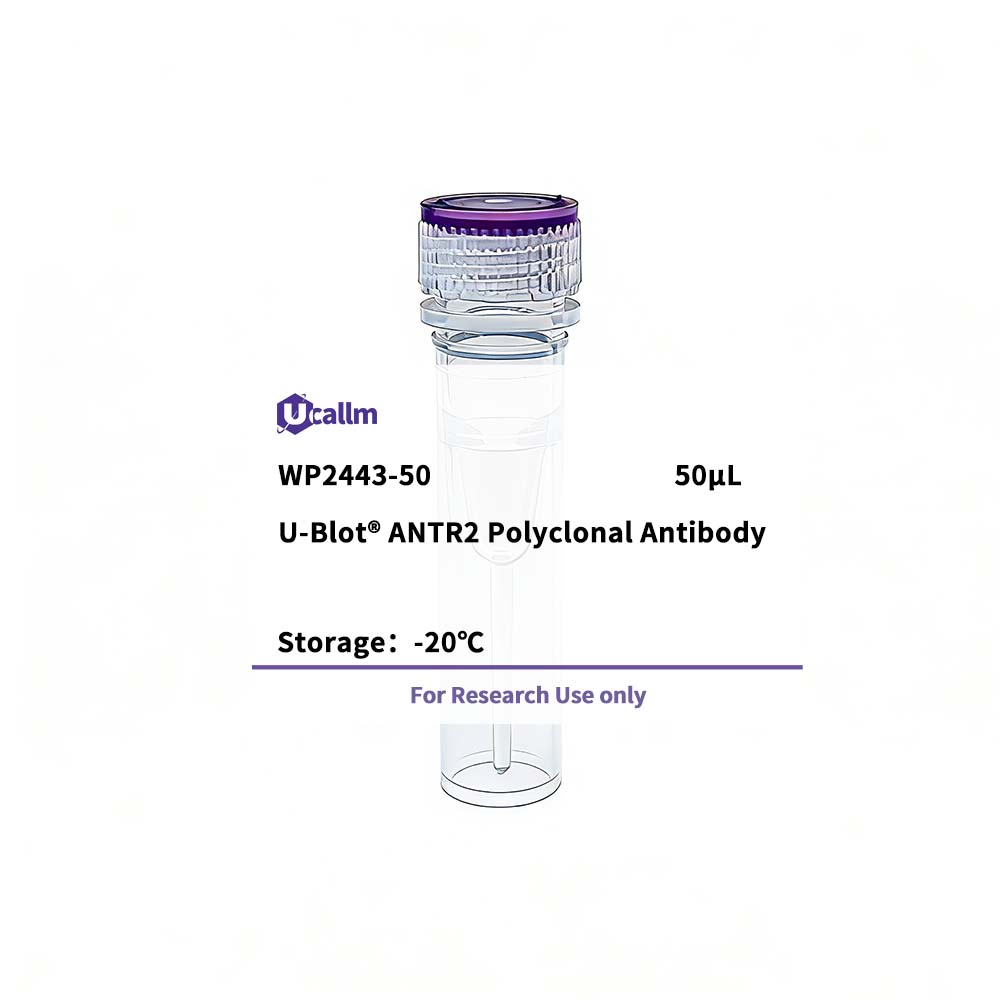
ANTR2 Polyclonal Antibody

Price range: $268.00 through $328.00

SKU: WP2443-100
Enter the quantity you would like, or drag the panel to find the quantity and price that best for you
Bulk QuoteAuthorize OEM & ODM

Product details

Background:

This gene encodes a receptor for anthrax toxin. The protein binds to collagen IV and laminin, suggesting that it may be involved in extracellular matrix adhesion. Mutations in this gene cause juvenile hyaline fibromatosis and infantile systemic hyalinosis. Multiple transcript variants encoding different isoforms have been found for this gene. [provided by RefSeq, Mar 2009],


Specifications

Size50μL/100μL
TargetANTR2
ReactivityHuman, Mouse
ApplicationsWB, ELISA
MW(Calculated)
MW(Observed)53kD
Host SpeciesRabbit
IsotypeIgG
Conjugate/ModificationUnmodified
Recommended Dilution RatioWB 1:500-2000; ELISA 1:5000-20000
FormulationLiquid in PBS containing 50% glycerol,0.5% BSA and 0.02% sodium azide.
PurificationThe antibody was affinity-purified from rabbit antiserum by affinity-chromatography using epitope-specific immunogen.
Storage-15°C to -25°C/1 year(Do not lower than -25°C)
Concentration1 mg/ml
ClonalityPolyclonal
Clone Number
ImmunogenSynthesized peptide derived from part region of human protein
SpecificityANTR2 Polyclonal Antibody detects endogenous levels of protein.
Gene NameANTXR2 CMG2
Protein NameAnthrax toxin receptor 2 (Capillary morphogenesis gene 2 protein) (CMG-2)
Other Name
SpeciesHuman
Gene ID118429
UniprotP58335,
Species.1Mouse
Gene ID.1
Uniprot.1Q6DFX2
Species.2
Gene ID.2
Uniprot.2
Cellular Localization[Isoform 1]: Cell membrane; Single-pass type I membrane protein . Expressed at the cell surface. .; [Isoform 2]: Endoplasmic reticulum membrane; Single-pass type I membrane protein . Expressed predominantly within the endoplasmic reticulum and not at the plasma membrane. .; [Isoform 3]: Secreted .
Tissue ExpressionExpressed in prostate, thymus, ovary, testis, pancreas, colon, heart, kidney, lung, liver, peripheral blood leukocytes, placenta, skeletal muscle, small intestine and spleen.
Signaling_pathwayOrganismal Systems >> Immune system >> NOD-like receptor signaling pathway
Research Areas>>NOD-like receptor signaling pathway
FunctionDisease:Defects in ANTXR2 are the cause of infantile systemic hyalinosis (ISH) [MIM:236490]. This autosomal recessive syndrome is similar to JHF, but has an earlier onset and a more severe course. Symptoms appear at birth or within the first months of life, with painful, swollen joint contractures, osteopenia, osteoporosis and livid red hyperpigmentation over bony prominences. Patients develop multiple subcutaneous skin tumors and gingival hypertrophy. Hyaline deposits in multiple organs, recurrent infections and intractable diarrhea often lead to death within the first 2 years of life. Surviving children may suffer from severely reduced mobility due to joint contractures.,Disease:Defects in ANTXR2 are the cause of juvenile hyaline fibromatosis (JHF) [MIM:228600]. JHF is an autosomal recessive syndrome that is similar to ISH but takes a milder course. It is characterized by hyaline deposition in the dermis, multiple subcutaneous skin tumors and gingival hypertrophy, followed by progressive joint contractions, osteopenia and osteoporosis that may lead to a severe limitation of mobility.,Domain:Binding to PA seems to be effected through the VWA domain.,Function:Necessary for cellular interactions with laminin and the extracellular matrix.,miscellaneous:Upon binding of the protective antigen (PA) of Bacillus anthracis the complex moves to glycosphingolipid-rich lipid rafts, where it is internalized via a clathrin-dependent pathway.,similarity:Belongs to the ATR family.,similarity:Contains 1 VWFA domain.,subcellular location:Expressed at the cell surface.,subcellular location:Expressed predominantly within the endoplasmic reticulum and not at the plasma membrane.,subunit:Binds laminin, and possibly also collagen type IV. Binds to the protective antigen (PA) of Bacillus anthracis in a divalent cation-dependent manner, with the following preference: calcium > manganese > magnesium > zinc. Binding of PA leads to heptamerization of the receptor-PA complex.,tissue specificity:Expressed in prostate, thymus, ovary, testis, pancreas, colon, heart, kidney, lung, liver, peripheral blood leukocytes, placenta, skeletal muscle, small intestine and spleen.,
Please login to post questions
Back to Top
Product has been added to your cart
